













Finding an authentic vintage guitar can feel like a quest through history. The difference between a true collectible and a standard used instrument lies in details like manufacturing era, craftsmanship, and original components. For collectors and musicians interested in the rich legacy of brands like Gibson, Fender, and Martin, understanding these distinctions is vital. This guide breaks down what defines a vintage guitar today and provides expert insights on identifying authenticity, rarity, and market trends.
Table of Contents
- What Defines A Vintage Guitar Today
- Types Of Vintage Guitars And Key Eras
- Identifying Authentic Vintage Guitars
- Value, Rarity, And Market Trends
- Pitfalls And Myths To Avoid When Collecting
Key Takeaways
| Point | Details |
|---|---|
| Vintage Guitar Definition | A vintage guitar is defined by its historical significance, craftsmanship, and collectible value, typically produced between 1920 and 1965. |
| Key Characteristics | Authentic vintage guitars possess original components, quality craftsmanship, and a connection to musical history, influencing their value. |
| Market Dynamics | The vintage guitar market is growing, expected to exceed $600 million by 2025, driven by rarity and historical significance. |
| Myths to Avoid | Collectors should be aware that age does not guarantee quality or value; thorough research is crucial for informed purchasing decisions. |
What Defines a Vintage Guitar Today
A vintage guitar represents more than just an aged musical instrument – it embodies a precise combination of historical significance, craftsmanship, and collectible value. Vintage guitars from specific historical eras typically originate between the 1920s and 1960s, when manufacturing techniques and musical innovation converged to create extraordinary instruments.
Several key characteristics distinguish authentic vintage guitars from standard used instruments:
- Manufacturing Period: Typically created between 1920-1965, representing golden ages of guitar production
- Craftsmanship Quality: Hand-constructed with superior materials and meticulous attention to detail
- Original Components: Featuring unmodified hardware, original electronic components, and minimal restoration
- Historical Provenance: Demonstrable connection to significant musical moments or legendary performers
The collectible nature of vintage guitars extends beyond mere age. Instrument condition, rarity, and historical context dramatically influence their value. Guitars from legendary manufacturers like Gibson and Fender during pre-CBS production periods are particularly prized by collectors and musicians seeking exceptional tonal qualities.
Pro tip: Research the specific manufacturing year and original production run of a vintage guitar to accurately assess its potential value and historical significance.
Types of Vintage Guitars and Key Eras
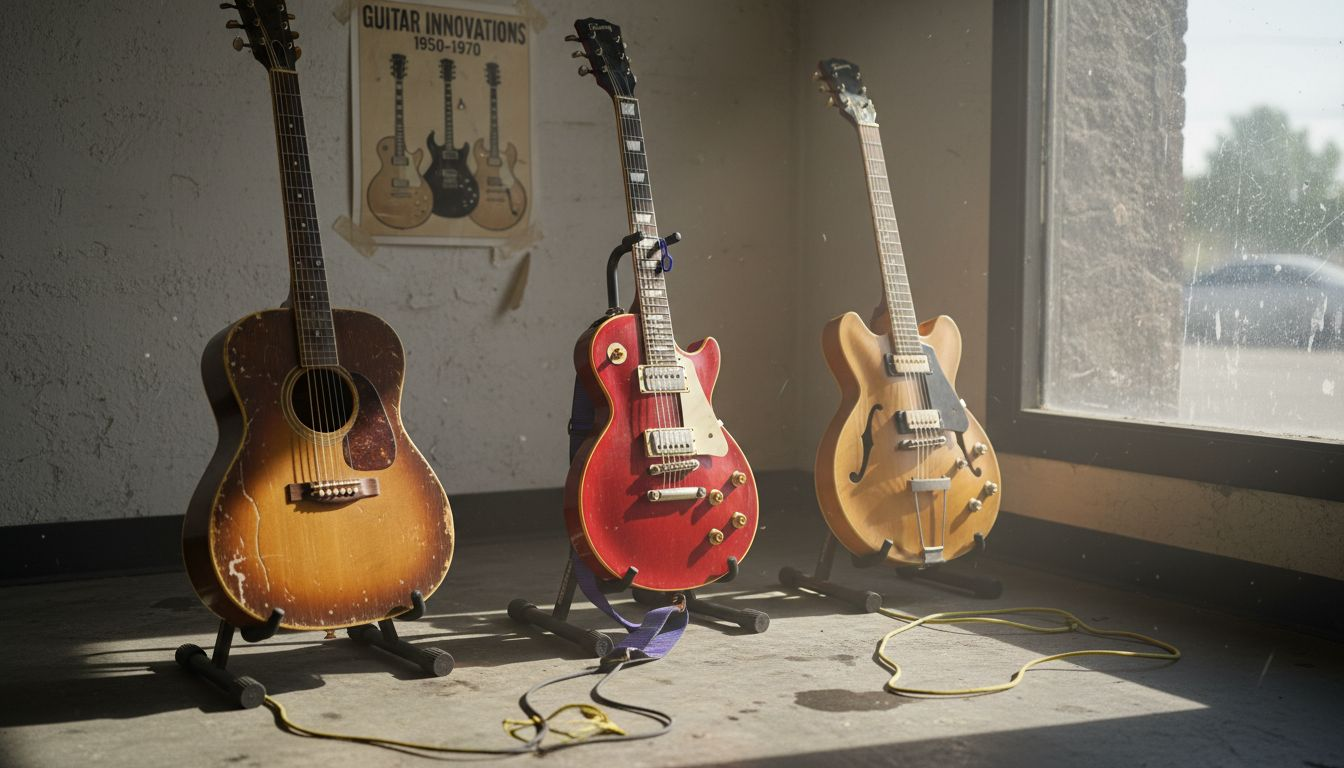
Vintage guitars represent a fascinating spectrum of musical instruments, with each era bringing unique characteristics and significant historical guitar developments. The landscape of vintage guitars can be broadly divided into several pivotal periods that shaped musical instrument design and performance.
Key eras of vintage guitar production include:
- Pre-War Period (1920-1945): Characterized by handcrafted acoustic guitars from manufacturers like Martin and Gibson
- Golden Electric Era (1950-1965): Rise of iconic electric models such as Fender Stratocaster and Gibson Les Paul
- Transitional Period (1965-1975): Emergence of mass production techniques and broader manufacturing innovations
Acoustic and electric guitars each have distinct vintage subcategories. Acoustic vintage guitars typically include:
- Pre-war Martin and Gibson models
- Handcrafted instruments with superior wood selection
- Rare models with unique construction techniques
Electric vintage guitars feature legendary models like:
- Fender Telecaster and Stratocaster
- Gibson Les Paul Standard
- Early Gibson ES series
These instruments are not merely musical tools but historical artifacts representing technological innovation, cultural shifts, and artistic expression. Collectors and musicians prize these guitars for their exceptional craftsmanship, unique tonal qualities, and connection to pivotal moments in musical history.
Here is a summary comparing major vintage guitar eras and their iconic models:
| Era | Defining Features | Iconic Models | Manufacturers |
|---|---|---|---|
| Pre-War (1920–1945) | Handcrafted, acoustic innovation | Martin 000-28, Gibson L-5 | Martin, Gibson |
| Golden Electric (1950–1965) | Electric revolution, high demand | Fender Stratocaster, Gibson Les Paul | Fender, Gibson |
| Transitional (1965–1975) | Mass production, new tech approaches | Gibson ES-335, Fender Telecaster | Gibson, Fender |
Vintage guitars are living documents of musical evolution, capturing the spirit of their time through meticulous design and exceptional sound quality.
Pro tip: Authenticate vintage guitars by examining original hardware, checking serial numbers, and understanding the specific production characteristics of each historical era.
Identifying Authentic Vintage Guitars
Authenticity is the cornerstone of vintage guitar collecting, requiring meticulous examination of guitar identification details. Determining a guitar’s genuine vintage status involves a comprehensive analysis of multiple critical factors beyond surface-level aesthetics.
Key authentication methods include:
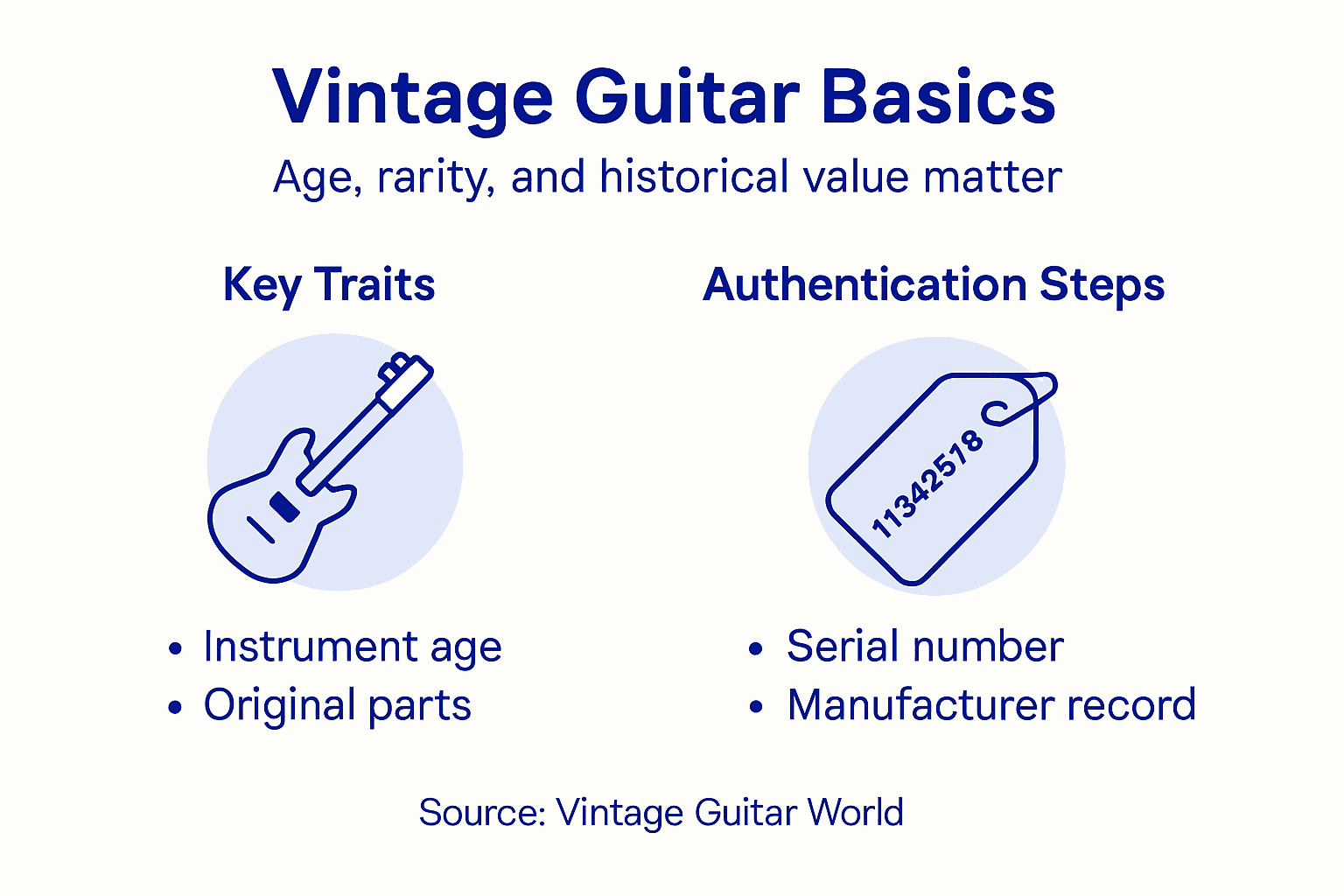
- Serial Number Verification: Cross-referencing manufacturer records
- Hardware Inspection: Examining original components and manufacturing techniques
- Wood and Construction Analysis: Evaluating material quality and craftsmanship
- Provenance Documentation: Tracing the instrument’s historical ownership
Critical Identification Markers for vintage guitars encompass several sophisticated evaluation points:
- Precise headstock logo examination
- Original finish and finish age assessment
- Neck joint and construction period indicators
- Electronic component authenticity
- Precise wood grain and materials matching
Manufacturers like Gibson, Fender, and Martin have distinctive production characteristics that experienced collectors and experts meticulously analyze. Each brand possesses unique identifying markers that distinguish genuine vintage instruments from reproductions.
Authenticity in vintage guitars is not just about age, but about preserving a precise moment in musical craftsmanship and technological innovation.
Pro tip: Always consult multiple expert sources and obtain professional authentication before making significant vintage guitar investments.
Value, Rarity, and Market Trends
The vintage guitar market represents a dynamic investment landscape, with global market trends demonstrating remarkable growth. Collectors and musicians alike view these instruments as both artistic treasures and financial assets, creating a sophisticated marketplace driven by rarity, historical significance, and musical heritage.
Key market dynamics include:
- Market Valuation: Over $600 million globally in 2025
- Growth Projection: 4.26% Compound Annual Growth Rate (CAGR)
- Segment Dominance: Electric vintage guitars representing 58% of market transactions
- Sales Channels: 45% of sales occurring through online marketplaces
Factors Influencing Vintage Guitar Values:
- Originality and preservation of original components
- Limited production run quantities
- Historical significance of specific models
- Connection to legendary musicians
- Condition and maintenance quality
Regional markets play a crucial role in vintage guitar valuation. North America and Europe remain the primary markets, with collectors and investors showing increasing sophistication in their purchasing strategies. The most sought-after guitars typically originate from limited production runs in the late 1950s and early 1960s, with some rare models commanding extraordinary prices at international auctions.
Vintage guitars are not just musical instruments, but tangible pieces of cultural and musical history that appreciate in value over time.
Pro tip: Diversify your vintage guitar investment by focusing on multiple manufacturers and understanding the specific historical context of each instrument.
Pitfalls and Myths to Avoid When Collecting
Vintage guitar collecting is a nuanced field fraught with misconceptions, and understanding critical myths versus market realities is essential for serious collectors. Many enthusiasts enter the market with romanticized expectations that can lead to costly mistakes.
Common myths collectors should be wary of include:
- Age Equals Quality: Not all old guitars are superior
- Brand Name Guarantee: Prestigious brands don’t automatically ensure value
- Unmodified Always Means Better: Some modifications can enhance instrument value
- Investment Guarantees: Vintage guitars are not guaranteed financial investments
Red Flags in Vintage Guitar Collecting:
- Significant component replacements
- Undocumented restoration work
- Lack of verifiable provenance
- Incomplete maintenance records
- Unauthentic hardware replacements
Market sophistication requires deep research and expert consultation. Collectors must understand that value derives from originality, condition, and historical significance rather than simple age or superficial aesthetics. The vintage guitar market can be volatile, with potential investment bubbles and significant risks of counterfeit instruments.
The following table highlights common vintage guitar myths versus modern realities:
| Common Myth | Market Reality | Collector Advice |
|---|---|---|
| Older means higher quality | Quality depends on maker and condition | Research provenance and materials |
| Brand always guarantees value | Not all branded guitars are highly valued | Value depends on rarity and demand |
| Unmodified is always supreme | Sensitive, well-done mods can add value | Document all changes thoroughly |
| Vintage always gains value | Market can fluctuate, no guarantee | Invest prudently and diversify |
Authenticity and thorough documentation matter more than romantic narratives about an instrument’s history.
Pro tip: Always engage multiple expert appraisers and obtain comprehensive authentication before making significant vintage guitar purchases.
Discover Authentic Vintage Guitars with Confidence
Understanding what truly defines a vintage guitar and navigating authenticity challenges can feel overwhelming. This article highlights key pain points like distinguishing original components, verifying provenance, and appreciating the unique craftsmanship from distinct eras. If you seek to embrace the rich history and exceptional tonal qualities of a genuine vintage guitar without worrying about forgeries or restorations, expert guidance is essential.
At Vintage Guitar World, we specialize in providing a curated selection of high-quality vintage and handcrafted guitars, each thoroughly evaluated for authenticity and condition. Whether you are drawn to the golden electric era models or pre-war acoustics, our collection addresses the concerns discussed by offering detailed descriptions, provenance verification, and professional certification services.

Explore our exclusive range today and take the next step toward owning a timeless musical masterpiece. Visit our shop to experience unparalleled quality and craftsmanship backed by expert support, ensuring your vintage guitar journey is confident and rewarding.
Frequently Asked Questions
What defines a vintage guitar?
A vintage guitar is typically defined as an instrument made between the 1920s and 1960s, characterized by high-quality craftsmanship, original components, and significant historical provenance.
What are the main types of vintage guitars?
Vintage guitars can be broadly categorized into acoustic and electric types, each with distinct characteristics influenced by their historical production eras, such as the Pre-War Period, the Golden Electric Era, and the Transitional Period.
How can I authenticate a vintage guitar?
To authenticate a vintage guitar, examine the serial number against manufacturer records, inspect the hardware for original components, assess the wood and construction quality, and verify provenance documentation of ownership and history.
What factors influence the value of a vintage guitar?
The value of a vintage guitar is influenced by factors such as originality and condition, rarity based on production runs, historical significance related to musicians, and the overall quality of craftsmanship and materials used.