













Chasing vintage guitar perfection often means walking a line between pure tone and reliable playability. For serious collectors and professional musicians, understanding what defines value and desirability in 2026 is key. The rise of the neo-vintage revival reflects a shift toward instruments blending pre-war authenticity with modern build standards. This guide uncovers essential trends, model eras, and price dynamics shaping investment strategies for electric guitar enthusiasts seeking legendary sound and lasting worth.
Table of Contents
- Defining Vintage Guitar Trends In 2026
- Popular Models And In-Demand Eras
- Key Factors Shaping Guitar Value
- Market Pricing, Investment, And Resale
- Collector Insights And Avoiding Pitfalls
Key Takeaways
| Point | Details |
|---|---|
| Market Trends | The vintage guitar market in 2026 emphasizes a blend of authenticity and modern reliability, with collectors seeking playable instruments that echo vintage characteristics. |
| Buyer Segments | There are distinct buyer segments: professional musicians prioritize reliability, collectors seek authenticity, and investors focus on rarity and documentation. |
| Valuation Factors | Guitar value is influenced by rarity, model significance, condition, and provenance, with authenticity verification being crucial for investment decisions. |
| Resale Dynamics | Prices for collector-grade instruments are rising steadily, while mid-range pieces from the 1970s and 1980s primarily hold value; understanding market trends is essential for smart purchasing. |
Defining Vintage Guitar Trends in 2026
Vintage guitar collecting in 2026 revolves around a fascinating contradiction: players and collectors are simultaneously chasing authenticity while demanding modern reliability. The neo-vintage revival has become the dominant force shaping the market, with serious players seeking instruments that capture the tonal qualities and aesthetic character of pre-war guitars without the maintenance headaches that traditionally came with genuine vintage pieces. This shift reflects deeper changes in how musicians value their instruments. Rather than viewing vintage guitars as museum pieces to be locked away, the 2026 collector wants a working instrument that performs night after night while maintaining the soul and voice that make vintage instruments legendary.
The global guitar market is experiencing robust growth driven by rising music education, increased disposable income in emerging markets, and renewed interest across multiple genres where guitars remain integral to the sound. What separates 2026 from previous years is how this growth specifically benefits vintage segments. Archtop guitars exemplify this trend perfectly. Archtop design trends emphasize blending historical craftsmanship with contemporary build standards, creating instruments that appeal to purists attracted to authentic vintage tonal qualities while appreciating modern construction techniques that ensure longevity. You’ll see collectors increasingly drawn to specific eras known for particular sonic characteristics, with pre-war instruments commanding premium prices specifically because their construction methods created tonal properties that modern manufacturing struggles to replicate.
What makes 2026 distinctive is the segmentation occurring within the vintage market itself. Professional touring musicians prioritize reliability and playability above all else, driving demand for restored vintage instruments with modern appointments like upgraded electronics or refined fretwork. Serious collectors and tone chasers, meanwhile, pursue originality and authenticity, sometimes accepting higher maintenance requirements in exchange for unaltered vintage specification. Investment-minded buyers occupy a third segment, focusing on instruments with documented provenance and rarity factors that suggest appreciation potential. These aren’t competing trends; they’re distinct market forces creating opportunity across different collector profiles and budgets.
Pro tip: Before investing heavily in vintage guitars, identify which segment you actually belong to—performer, collector, or investor—since this determines which instruments represent genuine value versus which will simply drain your wallet through restoration costs and diminished playability.
Here’s a comparison of the main vintage guitar buyer profiles in 2026:
| Buyer Type | Primary Goal | Top Instrument Priority | Common Budget Range |
|---|---|---|---|
| Professional Musician | Reliable performance | Playability upgrades | $2,000 – $10,000 |
| Collector/Tone Chaser | Historical authenticity | Original features & finish | $10,000 – $100,000+ |
| Investor | Asset appreciation | Provenance & rarity | $15,000 – $200,000+ |
Popular Models and In-Demand Eras
If you’re serious about vintage guitars, you need to understand that not all decades created equal instruments. The market has clear preferences, and they’re shaped by a combination of sonic legend, scarcity, and historical significance. Electric guitars dominate vintage transactions, and within that category, specific models from specific years command astronomical prices. The reason isn’t nostalgia alone. These instruments represent peak manufacturing techniques combined with materials that are no longer readily available.
Vintage guitars aged 30 years or more form the foundation of serious collecting, but the truly sought-after instruments come from much earlier. The 1958 to 1961 Gibson Les Paul Standard represents the holy grail for many players and collectors. These particular years occupy a unique position in guitar history. The combination of solid body construction innovation, hand-wired electronics, and the specific tonewoods used during that production window created an instrument that defined rock and roll itself. A 1959 Les Paul Standard in good condition can fetch six figures at auction, not because of hype, but because Gibson produced only a handful compared to the thousands of players who want one. The scarcity is real and quantifiable.

The 1960s remain absolutely critical for understanding vintage value today. This decade gave us iconic Fender Stratocasters from the early years, Telecasters with specific neck characteristics, and continued excellence from Gibson’s lineup. What separated the 1960s from later decades was the transition period itself. Early 60s Fenders used different neck construction than late 60s models. Gibson shifted from solid bodies to semi-hollow designs and back again. These variations matter enormously to tone-focused collectors. A 1965 Fender Stratocaster occupies a different value tier than a 1967 or 1969, despite appearing similar to untrained eyes. The specific year determines whether the neck is the preferred thick slab or the thinner construction that followed.
Beyond the obvious trophy pieces, collectors in 2026 are increasingly focused on accessible vintage segments. Solid playing instruments from the 1970s and 1980s offer exceptional value for performers. These guitars cost a fraction of their 1950s counterparts while still delivering authentic vintage tone and character. Japanese-made instruments from brands like Ibanez, Fender Japan, and Tokai have gained collector traction as people recognize their actual quality and playability. The market is stratifying: ultra-rare pre-1965 pieces for wealthy collectors, mid-range 1970s and 1980s instruments for working musicians, and rediscovered Japanese models for value-conscious players building serious rigs.
Pro tip: Research specific serial numbers and production years before purchasing, as the difference between a 1959 and 1960 Gibson, or an early versus late year Fender, can mean tens of thousands of dollars in value fluctuation.
The table below outlines how decades impact vintage guitar desirability:
| Era | Defining Features | Market Appeal |
|---|---|---|
| 1950s-early 60s | Hand-built, rare woods, iconic tones | Most sought-after, highest auction prices |
| Late 1960s | Model changes, mixed build quality | Collectible, value varies by year |
| 1970s-1980s | Mass production, durable hardware | Affordable entry vintage, rising in value |
| 1980s (Japan) | Quality craftsmanship, consistency | Gaining traction among new collectors |
Key Factors Shaping Guitar Value
Vintage guitar value doesn’t exist in a vacuum. It’s determined by a specific set of measurable factors that experienced collectors understand intuitively but newcomers often overlook. Guitar values in 2026 are fundamentally driven by rarity, model and year significance, condition, and provenance authenticity. But understanding what these factors actually mean when you’re evaluating a specific instrument requires deeper knowledge. A 1959 Les Paul Standard commands six figures not just because it’s old, but because Gibson manufactured only a few thousand during that specific production window, and most have been played hard for decades. The ones that survive in excellent condition become extraordinarily rare, and rarity multiplies value exponentially.
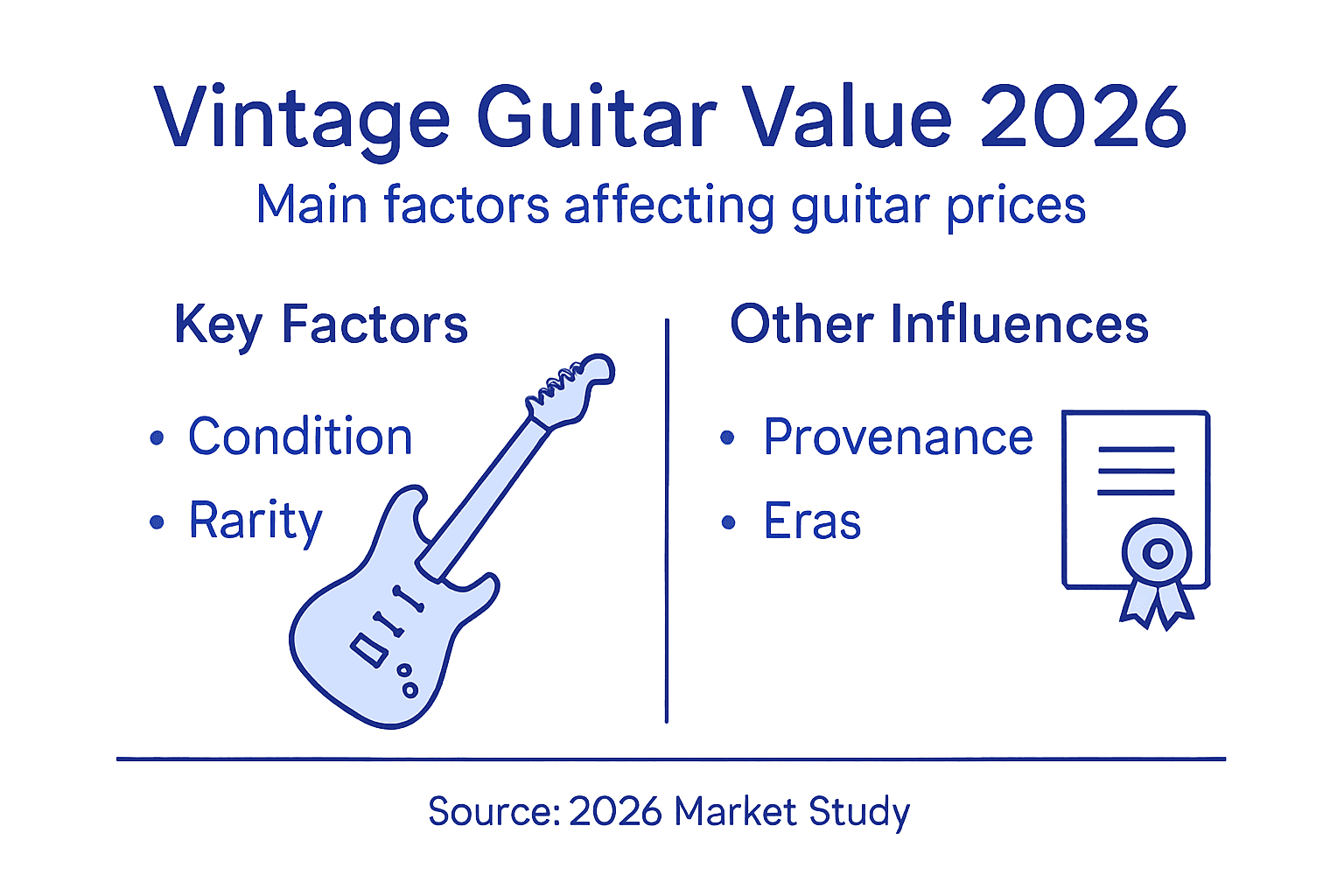
Condition represents your most tangible value variable. Two guitars from the same year and model can differ dramatically in price based on fret wear, finish checking, hardware originality, and electronics integrity. A player’s relic with significant wear might cost half as much as a mint example, even if both play identically. Provenance authenticity matters just as much. Can you trace the guitar’s ownership history? Does it have original documentation, case, or accessories? Collectors pay premiums for instruments with verified histories because provenance eliminates uncertainty and confirms authenticity. This becomes critical when forgeries exist in the market. A documented 1960 Stratocaster with clear ownership records outprices an undocumented “believed to be 1960” instrument significantly. When evaluating whether to purchase, always verify authenticity through multiple channels and demand documentation.
Craftsmanship superiority and cultural significance create the emotional premium that collectors willingly pay. Vintage guitars, particularly pre-1965 instruments, represent peak manufacturing techniques combined with materials that are simply unavailable today. The specific wood selection, hand-wired electronics, and construction methods created tonal characteristics that became legendary through their use on iconic recordings. A 1961 Gibson ES-335 holds value not just because it plays well, but because that exact model appears on recordings that defined jazz and rock music. Investment potential further shapes 2026 valuations. Players increasingly view guitars as tangible assets with historical significance, especially amid economic uncertainty. Guitars don’t depreciate like cars. They appreciate. This perspective shifts purchasing psychology from “hobby expense” to “asset acquisition.”
Beyond these primary factors, sustainability consciousness and historical accuracy now influence collector decisions. Younger buyers specifically seek instruments that represent honest craftsmanship and authentic vintage character rather than modern reproductions. This creates two distinct market segments: traditional collectors pursuing investment returns, and values-driven players seeking instruments with genuine history and soul.
Pro tip: Always obtain a professional appraisal and authenticity verification before making significant purchases, as the difference between original and refinished, or genuine and forged, can easily represent 50 to 70 percent of the stated asking price.
Market Pricing, Investment, and Resale
The vintage guitar market has matured significantly. The vintage guitar market was valued at over $620 million in 2025 and continues growing at approximately 4.26% annually through 2033. This isn’t speculative bubble territory. These numbers reflect genuine demand from collectors, professional musicians, and investment-minded buyers who recognize vintage guitars as tangible assets. Electric guitars dominate resale transactions, commanding premiums that reflect both their cultural significance and scarcity. The market dynamics have shifted dramatically in the last five years. Twenty years ago, vintage guitar pricing relied heavily on personal relationships, local dealers, and word-of-mouth networks. Today, price transparency exists globally, meaning a 1965 Fender Stratocaster in Tokyo competes directly with one in Nashville based on condition, provenance, and documentation.
Online platforms now account for nearly half of all sales, fundamentally changing how guitars move through the market. This democratization has advantages and disadvantages. Advantages include broader access to inventory, real-time price comparison, and elimination of regional markup disparities. Disadvantages include increased competition driving prices upward for desirable pieces and making it harder for casual sellers to navigate the marketplace. Auction houses remain critical for ultra-premium instruments, where collector-grade examples regularly fetch hundreds of thousands of dollars. A 1959 Gibson Les Paul Standard sold at auction in 2023 for over $500,000. These headline sales create market anchoring effects that influence pricing across all tiers. When a specific model reaches new price records at auction, comparable instruments immediately become more valuable in the secondary market.
Average resale values for collector-grade instruments have increased significantly year-over-year, and this trend appears sustainable. The key distinction in 2026 is understanding which instruments appreciate and which simply hold value. Trophy pieces from the 1950s and early 1960s continue appreciating steadily. Mid-range vintage instruments from the 1970s and 1980s primarily hold value, rarely declining significantly unless they require major restoration. Japanese-made instruments have surprisingly strong appreciation curves as collectors recognize their actual quality and playability relative to pricing. Investment strategy matters enormously. Purchasing a $3,000 instrument hoping for 30% appreciation annually is unrealistic. Purchasing a $30,000 collector-grade piece with documented provenance and expecting 5 to 8% annual appreciation aligns with historical market performance.
Condition and originality drive resale multiples more dramatically than any other factor. A refurbished vintage guitar depreciates more severely than original examples, even if it plays identically. Buyers explicitly pay premiums for originality and authenticity, recognizing that future resale will be easier and more profitable with documented original specifications.
Pro tip: Track comparable sales through auction results and online marketplaces for three to six months before purchasing, as establishing accurate market comparables prevents overpaying and ensures better resale positioning down the road.
Collector Insights and Avoiding Pitfalls
Experienced vintage guitar collectors learn their lessons through expensive mistakes. The most common pitfall is purchasing without proper authentication. Forged and artificially aged guitars exist in the market, and distinguishing genuine vintage instruments from convincing counterfeits requires expertise you simply cannot develop overnight. Verifying authenticity and assessing condition carefully protects your investment and ensures future resale value. Start by examining serial numbers against manufacturer records, inspecting for period-correct hardware and electronics, and looking for wear patterns that match the instrument’s claimed age. If you cannot personally verify these details, hire a professional appraiser before committing money. The $500 appraisal fee pays for itself if you avoid purchasing a $20,000 counterfeit.
Restoration represents the second major pitfall that catches collectors off guard. A beautifully restored vintage guitar looks fantastic, but original condition commands dramatically higher prices among serious collectors. Many restoration projects strip resale value by 30 to 50 percent compared to original examples, even though the restored guitar plays better and looks cleaner. This creates a frustrating dynamic where someone spent thousands restoring an instrument only to discover they destroyed its investment potential. Before purchasing a vintage guitar showing heavy wear, research what a professional restoration would cost and factor that against purchasing an already restored example. Sometimes buying the restored guitar makes financial sense. Sometimes you’re better off finding an original example in rougher condition that collectors actually value.
Market timing and economic sensitivity present a third category of pitfalls. Vintage guitar prices fluctuate based on broader economic conditions, interest rates, and cultural trends. During economic contractions, collectors often liquidate instruments to raise cash, flooding the market with inventory and suppressing prices. During expansions, prices climb as disposable income increases. Purchasing during downturns positions you better for long-term appreciation than buying during peaks. This doesn’t require market-timing expertise. Simply track whether prices have been rising or falling for the past 12 to 18 months before making major purchases. Additionally, recognize that certain models and eras go in and out of fashion. Archtop guitars experienced a resurgence in collector interest from 2018 onwards. Offset Fenders like Jazzmasters and Jaguars exploded in value over the last decade. These trend cycles create opportunities if you understand what’s currently undervalued versus overheated.
Expert consultation separates successful collectors from frustrated ones. Professional guitar appraisers, experienced dealers, and collector communities on forums and social media platforms provide invaluable perspective. Most experts genuinely want to help newcomers avoid pitfalls. Building relationships with reputable dealers gives you access to inventory before public listing and honest assessment of whether specific pieces represent good value.
Pro tip: Join collector communities, attend vintage guitar shows, and build relationships with professional appraisers before making major purchases so you have trusted resources for authentication and market guidance.
Unlock the Full Potential of Vintage Guitar Collecting in 2026
Navigating the complex world of vintage guitars can be daunting. Whether you are a professional musician seeking reliable playability, a collector chasing historical authenticity, or an investor focused on provenance and rarity, understanding market trends and guitar value factors is essential. The challenges of authentication, condition evaluation, and investment timing that the article highlights demand expert support and carefully curated selections.
At Vintage Guitar World, we specialize in offering quality vintage guitars that meet these distinct needs. Our extensive collection includes rare and well-maintained instruments meticulously evaluated by experts committed to preserving originality and playability. We provide detailed product histories and professional valuation services to help you make confident decisions aligned with your goals.
Explore our curated selection and gain access to trusted guidance that bridges vintage guitar heritage with modern reliability. Don’t miss the chance to own iconic pieces that fit your player profile or collector ambitions perfectly. Start your journey with Vintage Guitar World today by visiting our main site and discover guitars that embody authentic craftsmanship and enduring value.
Frequently Asked Questions
What are the main trends in vintage guitar collecting for 2026?
In 2026, vintage guitar collecting is characterized by a neo-vintage revival, where players seek authentic tonal qualities combined with modern reliability. Collectors are focusing on instruments that can be actively used while still preserving vintage aesthetics and sound.
How does condition impact the value of vintage guitars?
The condition of a vintage guitar is a crucial factor in determining its value. Two identical models from the same year can differ significantly in price based on wear, finish checking, and hardware originality. Instruments in mint condition can command much higher prices than player’s relics with significant wear.
What factors should I consider when investing in vintage guitars?
When investing in vintage guitars, consider rarity, model significance, condition, and provenance authenticity. Understanding these factors helps in evaluating potential investments and ensures that you make informed decisions about what instruments represent true value.
Why is provenance important in the vintage guitar market?
Provenance is vital because it verifies the ownership history and authenticity of the instrument. Guitars with documented provenance often sell for higher prices than those without due to reduced uncertainty and a confirmed lineage, which adds value to collectors and investors alike.
Recommended
- The history of the electric guitar
- Used guitar or vintage guitar before a new instrument from a luthier
- Why we love vintage guitars – Vintage Guitar World
- Brief history of the guitar from Vintage Guitar World
- What Is Vintage Fashion? Complete Style Breakdown – ChillStitchApparel
- 10 designer buys that are worth the investment | B Woman