













Choosing between vintage acoustic and electric guitars often sparks debate among collectors and professional musicians. These iconic instruments are much more than wood and wire—they reflect changing technology, historical trends, and artistic expression from the early 20th century onward. Understanding the fundamental differences in construction and sound helps you appreciate how these guitars shaped genres, influenced legendary performers, and continue to define what collectors prize most in musical heritage.
Table of Contents
- Defining Acoustic and Electric Vintage Guitars
- Construction and Materials: Key Differences
- Sound Profiles and Playing Techniques
- Historical Significance and Iconic Models
- Value, Collectibility, and Investment Considerations
Key Takeaways
| Point | Details |
|---|---|
| Understanding Differences | Acoustic and electric guitars have fundamentally different constructions and sound production mechanisms, affecting their appeal to collectors and musicians. |
| Importance of Condition | The condition and originality of vintage guitars determine their value, with original parts significantly enhancing worth. |
| Historical Significance | Certain models have become cultural icons, and their historical context can greatly influence market value and collectibility. |
| Provenance Matters | Documentation of ownership history can significantly boost a guitar’s value, making provenance a key consideration for collectors. |
Defining Acoustic and Electric Vintage Guitars
Vintage guitar collecting requires understanding the fundamental differences between acoustic and electric instruments. These two categories represent distinct technological approaches to sound production, each with its own historical development and sonic characteristics.
An acoustic guitar is a hollow wooden instrument that produces sound naturally through resonance. When you pluck a string, the vibrations travel through the bridge into the hollow body cavity, which amplifies and projects the sound. This mechanical resonance has remained the core principle for centuries, making acoustic guitars relatively unchanged in their basic design principles.
An electric guitar operates on completely different principles. These instruments typically feature solid bodies and depend on pickups and electronic amplification to produce sound. Rather than relying on a resonant chamber, electric guitars capture string vibrations magnetically and send them through amplifiers. The electric guitar emerged in the 1930s to solve a practical problem: acoustic guitars simply weren’t loud enough in ensemble settings.
The distinction matters deeply for collectors because it shapes every aspect of the instrument. Body construction, wood selection, hardware, and electronics all differ fundamentally between these types. The evolution of electric guitar technology reveals how manufacturers developed entirely new approaches to instrument design when amplification became possible.
Vintage examples from each category tell different stories about musical history. An acoustic guitar from the 1920s reflects traditional craftsmanship and materials science. A vintage electric from the 1950s represents innovation born from electrical engineering advances. Understanding these distinctions helps you appreciate why a 1960s solid-body electric and a vintage classical acoustic, though both guitars, occupy completely different spaces in musical heritage.

Both types offer immense value to collectors, but they appeal to different players and applications. Acoustic vintage guitars suit fingerstyle players and those seeking traditional, unplugged tones. Electric vintage instruments attract rock musicians, jazz players, and anyone wanting that amplified character that defined modern popular music.
Here’s a concise comparison between vintage acoustic and electric guitars:
| Aspect | Vintage Acoustic Guitar | Vintage Electric Guitar |
|---|---|---|
| Sound Projection | Natural resonance, unplugged volume | Relies on amplification and pickups |
| Historical Milestone | Traditional craftsmanship, pre-1930s | Technological innovation, 1930s onward |
| Collector Appeal | Folk, jazz, and classical enthusiasts | Rock, blues, and modern genres |
| Typical Construction | Solid wood body and bracing | Solid or semi-hollow body, electronics |
Pro tip: When evaluating vintage guitars, identify whether you’re holding an acoustic or electric first, then research what that specific type was designed for during its era—this context dramatically improves your understanding of the instrument’s original purpose and current market value.
Construction and Materials: Key Differences
The way a guitar is built determines how it sounds and how long it lasts. Acoustic and electric vintage guitars take fundamentally different approaches to construction, reflecting their opposing design philosophies.
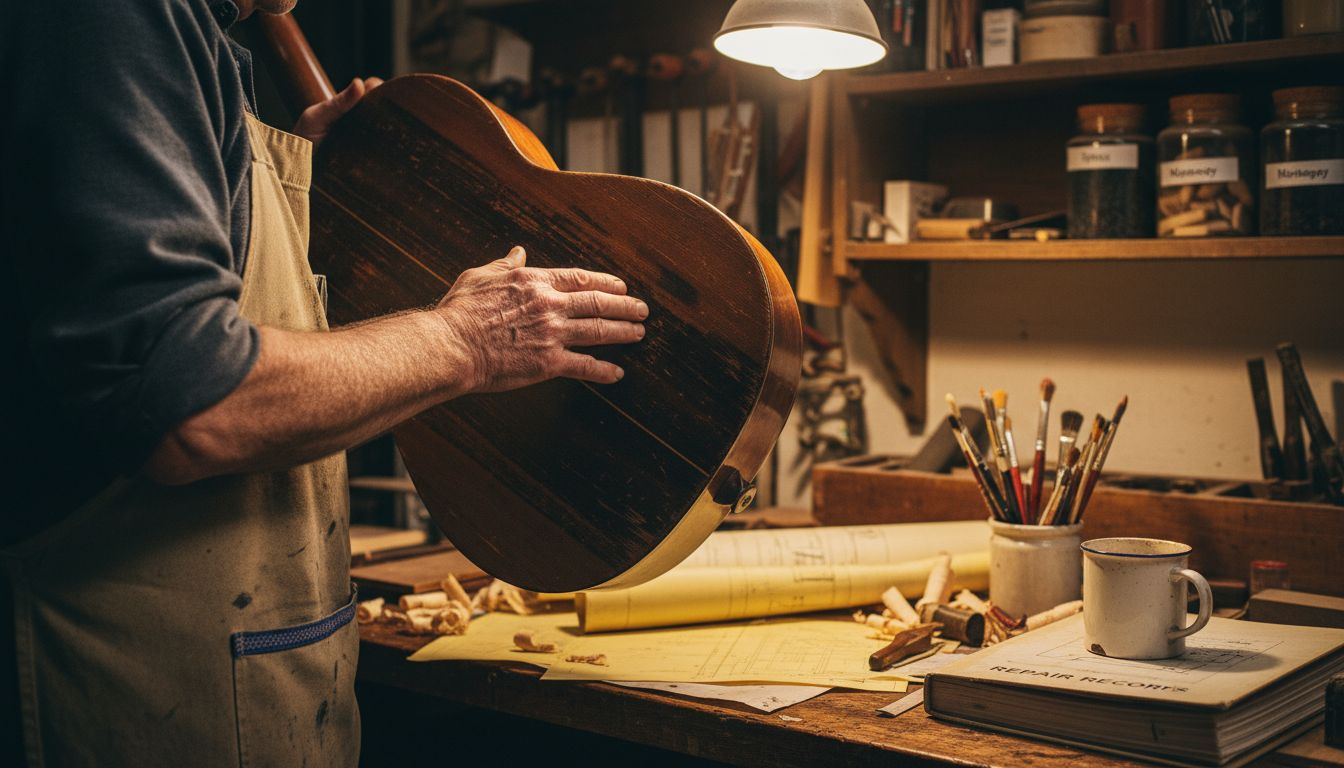
Acoustic guitars prioritize tonewoods above almost everything else. The top, back, and sides are crafted from carefully selected woods like spruce, mahogany, and rosewood. Tonewoods shape acoustic guitar sound by resonating and projecting vibrations naturally. Spruce tops flex to project sound outward, while mahogany backs and sides contribute warmth and sustain. Pre-war acoustic guitars often feature solid wood construction throughout, making them particularly prized by collectors today.
Electric guitars take a completely different path. Their solid bodies require less resonance since amplification handles the sound projection. This means builders can use whatever wood suits their needs without worrying about tonal properties. Many vintage electrics feature hardwood bodies paired with metal hardware, pickups, and electronics. The wood matters less for tone and more for durability and weight distribution.
The internal structure shows another critical difference. Acoustic guitars use bracing patterns inside the body to strengthen the wood while maintaining flexibility for resonance. Electric guitars rarely need internal bracing because solid bodies provide inherent strength. Pre-war acoustic models lacked metal truss rods, relying instead on careful wood selection and bracing design to prevent warping.
Pickups and electronics fundamentally distinguish electric guitars from their acoustic cousins. Magnetic pickups capture string vibrations and convert them to electrical signals. Acoustic guitars have no electronic components by design. This technological divide shapes maintenance, repair, and how collectors evaluate condition and value.
Sustainability concerns now influence how vintage guitars are sourced and valued. Traditional tonewoods face harvesting restrictions, making older acoustic guitars more desirable to collectors who appreciate their construction methods. Understanding these material differences helps you assess authenticity, condition, and investment potential.
Pro tip: Examine the wood grain and hardware closely when inspecting vintage guitars—acoustic guitars should show consistent wood quality throughout the body, while electrics should have solid hardwood construction with original pickups and electronics as key value indicators.
Sound Profiles and Playing Techniques
The sound you get from a vintage guitar depends heavily on its construction and how you play it. Acoustic and electric instruments produce fundamentally different sonic characters that shape your playing approach entirely.
Acoustic guitars deliver warm, resonant tones that feel organic and immediate. The hollow body naturally amplifies string vibrations, creating a full spectrum of harmonic overtones. When you play an acoustic vintage guitar, you hear the wood responding directly to your touch. This makes them ideal for fingerpicking, where individual notes need clarity and definition. The sustain comes naturally from the instrument itself, without any electronic help.
Electric guitars sound completely different. Electric guitar playing features sustained tones manipulated through amplifiers and effects, opening up techniques impossible on acoustics. A vintage electric can sustain a single note far longer than any acoustic could manage. This extended sustain enables bending, where you push strings sharp to create expressive pitch slides. Techniques like tapping and distortion-heavy playing emerged directly from electric guitar capabilities.
The playing techniques differ dramatically between the two types. Acoustic guitars favor traditional approaches like strumming patterns and fingerstyle guitar methods that highlight the instrument’s natural tone. Electric guitars enable rock techniques including power chords, complex bends, and rapid-fire picking that would be clumsy or ineffective on an acoustic.
Vintage acoustic guitars often shine in jazz, folk, and classical contexts where the instrument’s voice must project naturally. Vintage electrics defined rock and roll, blues, and modern genres where amplified sustain and manipulated tones became essential to the sound.
Understanding these sonic differences helps you match the right vintage guitar to your playing style. A 1950s electric won’t give you the pure acoustic tone you need for fingerstyle folk, and an acoustic vintage model won’t deliver the sustain required for rock bending techniques.
Pro tip: Listen to recordings of the same vintage guitar model played both acoustically and amplified to hear how dramatically the sound character changes, then match your playing preferences to the instrument type that delivers the sonic character you want.
Historical Significance and Iconic Models
Vintage guitar collecting revolves around understanding the instruments that shaped modern music. Certain models transcended their original purpose to become cultural artifacts, defining entire genres and earning legendary status among musicians and collectors worldwide.
Martin and Gibson dominate the acoustic guitar world historically. Pre-war Martin acoustics represent the gold standard for vintage acoustic guitars, prized for their superior craftsmanship and tonal qualities. These instruments accompanied folk singers, jazz musicians, and country legends who needed unplugged projection. Gibson’s acoustic models, particularly from the 1930s and 1940s, competed directly with Martins and earned devoted followings. Collectors today seek these pre-war models specifically because they represent peak craftsmanship before manufacturing became more industrial.
The electric guitar story centers on innovation and rebellion. The electric guitar emerged in the 1930s to address volume challenges in bands. By the 1950s, Fender and Gibson had created instruments that transformed popular music. The Fender Stratocaster debuted in 1954 and became the most imitated electric guitar design ever created. Its iconic contoured body and innovative tremolo system made it instantly recognizable and culturally significant.
Gibson’s Les Paul arrived in 1952 and cemented the company’s electric legacy. This solid-body powerhouse became synonymous with rock and blues, used by legends who defined genres. The Les Paul’s warmth, sustain, and aesthetic appeal made it timeless. Gretsch and Rickenbacker also created iconic electric models that shaped music history, though with smaller but devoted collector bases.
These instruments matter because they represent specific moments in music evolution. A 1930s Martin acoustic embodies folk and country traditions. A 1959 Gibson Les Paul connects directly to rock and roll’s explosion. Iconic models command premium prices because their historical significance transcends their function as mere instruments.
The craftsmanship and design principles from these golden eras influence modern guitar making. Collectors value them not just for playability but as tangible pieces of music history that you can actually use and hear.
Pro tip: Research the specific year and model of any vintage guitar you’re considering, as production dates dramatically affect both authenticity and value—a 1954 Stratocaster differs significantly from a 1964 model despite sharing the same design name.
Value, Collectibility, and Investment Considerations
Vintage guitars represent more than musical instruments. They function as tangible investments that appreciate when properly selected and maintained, attracting both musicians and collectors seeking financial returns alongside sonic rewards.
Age alone doesn’t guarantee value. A guitar must be over 30 years old to qualify as vintage, but this baseline tells only part of the story. Vintage guitar value depends on brand, model, condition, and market trends. A 1975 production-line acoustic won’t command premium prices, while a 1952 Gibson Les Paul in good condition might sell for tens of thousands. The difference lies in craftsmanship, rarity, and cultural significance.
Condition profoundly affects collectibility and price. A well-preserved pre-war Martin acoustic retains its original finish, hardware, and internal bracing. Original parts matter significantly. Refinished necks, replaced tuners, or repaired cracks reduce value substantially because restoration work signals previous damage. Collectors pay premiums for original condition, even if that means minor cosmetic wear.
Provenance and documentation strengthen investment potential dramatically. If you can trace ownership history or connect an instrument to a notable musician, value increases substantially. Authenticated documentation proves originality and historical significance. Without provenance, even rare models become harder to sell at premium prices.
Brand prestige drives collectibility across the market. Pre-war acoustic models from Martin and Gibson command higher prices than equivalent instruments from lesser-known makers. Similarly, 1950s and 1960s Fender Stratocasters and Gibson Les Pauls consistently appreciate because demand from players and collectors remains strong. Market trends shift, but these iconic models maintain stable or growing value over decades.
Rarity creates competitive bidding among serious collectors. Limited production runs, unusual finishes, or regional manufacturing variations increase desirability. A vintage guitar produced in small numbers becomes more valuable than common models, assuming condition and brand reputation remain constant.
Below is a summary of factors influencing vintage guitar value for collectors:
| Factor | Impact on Value | Collector Focus |
|---|---|---|
| Condition | Original parts increase value | Preference for minimal repairs |
| Brand & Model | Prestigious brands command more | Sought-after legendary models |
| Provenance | Celebrity or historic links | Awards premium pricing |
| Rarity | Limited runs are more valuable | Boosts competitiveness |
Pro tip: Get professional authentication and condition assessment from reputable vintage guitar specialists before purchasing any expensive vintage instrument, as documentation of originality and condition directly impacts resale value and authenticity claims.
Discover the True Essence of Vintage Guitar Craftsmanship
Navigating the world of vintage acoustic and electric guitars can be overwhelming when you’re looking for the perfect instrument that matches your style and honors a rich tonal heritage. Whether you are drawn to the warm resonance of an acoustic or the amplified sustain of an electric, understanding their unique construction, historical significance, and sound profiles is crucial to making an informed choice. At Vintage Guitar World, we recognize these challenges and offer a curated selection of expertly evaluated vintage guitars that embody the stories and qualities detailed in “Acoustic vs Electric Vintage Guitars: Tonal Heritage Unveiled.”

Step into a collection where craftsmanship meets history and find vintage acoustic and electric guitars with original parts, authentic condition, and pedigree. Don’t miss the chance to elevate your collection or musical journey today. Explore our expertly curated offerings now at Vintage Guitar World shop. Dive deeper into guitar heritage, craftsmanship, and buying guidance on our informative product descriptions and resources to ensure your investment is as timeless as the music you create.
Frequently Asked Questions
What is the main difference between acoustic and electric vintage guitars?
Acoustic guitars produce sound naturally through their hollow bodies, relying on resonance. In contrast, electric guitars use pickups and amplifiers to generate sound, requiring solid bodies and electronic components for sound projection.
How do the construction materials differ between acoustic and electric vintage guitars?
Acoustic guitars prioritize tonewoods like spruce and mahogany for their construction, emphasizing natural sound. Electric guitars, however, often use various woods mainly for durability, with less emphasis on tonal properties since amplification handles sound projection.
What playing techniques are best suited for acoustic and electric vintage guitars?
Acoustic guitars are ideal for fingerstyle and strumming due to their warm, resonant tones. Electric guitars support techniques like bending and tapping, which take advantage of extended sustain and manipulated tones through electronic effects.
Why are certain vintage guitar models more valuable than others?
Vintage guitar value depends on several factors, including brand prestige, model rarity, condition, and provenance. Iconic models, particularly those with rich historical significance, often command higher prices due to demand and craftsmanship.