














TL;DR:
- Guitar playability depends on technical setup and ergonomic fit, influenced by neck profile, string action, fret condition, and body shape. Proper assessment requires measuring string height, neck relief, and testing comfort over extended playing, especially while standing. Factors like hand size and playing style also impact what “good” playability means for each individual.
Guitar playability is defined as the ease and comfort with which a player can fret, strum, and perform on an instrument, shaped by a combination of technical setup and ergonomic fit. The core factors are neck profile, scale length, string action height, and fret condition. These elements work together to determine how much effort your fretting hand needs and how naturally the guitar responds. Understanding what defines guitar playability gives you the power to evaluate any instrument on your own terms, not just by how it looks or what it costs.
What defines guitar playability: the technical foundation
Guitar playability rests on four measurable physical factors. Each one affects how much effort you spend on the instrument rather than on the music.
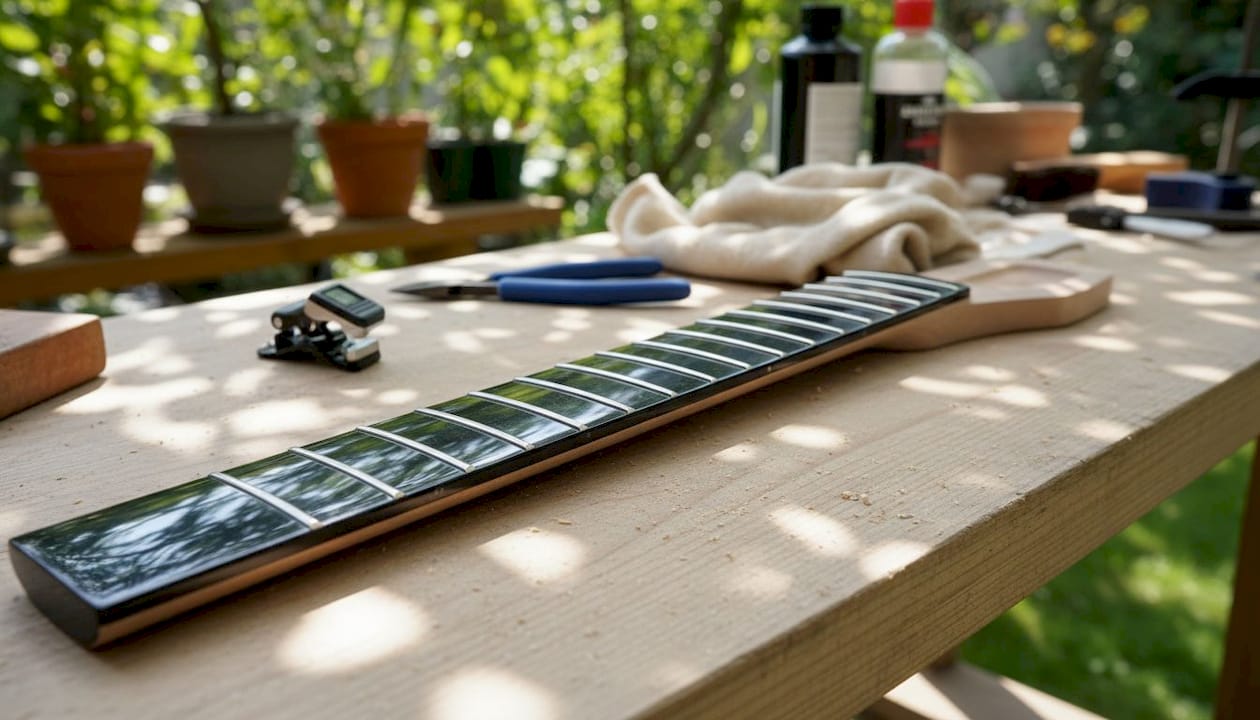
Neck profile and scale length are the starting point. The neck profile is the cross-sectional shape of the neck, ranging from a slim C-shape to a thick D or V-shape. A profile that matches your hand size reduces tension in the thumb and palm. Scale length, the distance from the nut to the saddle, controls string tension and fret spacing. A shorter scale length produces looser string tension, which makes bending and fretting easier, especially for players with smaller hands.
String action is the height of the strings above the frets. Action is measured at the 12th fret, and neck relief is checked at the 8th or 9th fret while holding the string down at the 1st and last frets. These two measurements together tell you whether the neck geometry is correct before you touch the bridge.
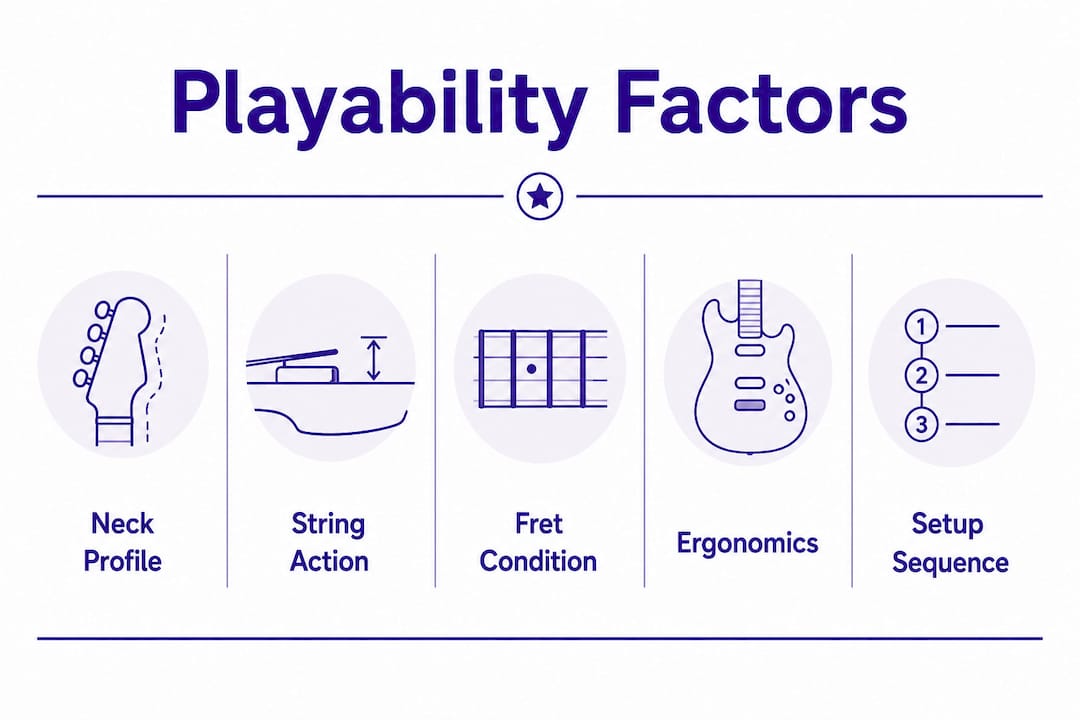
Fret condition matters more than most players realize. Worn, flat-topped frets increase the contact area between string and fret, which raises the effective action and creates dead spots. Even a well-adjusted guitar with worn frets will feel sluggish and unresponsive.
The setup sequence is non-negotiable. Always start with neck relief at the truss rod, then address nut slot depth, then adjust string action at the bridge, and finish with intonation. Skipping steps or working out of order creates compounding problems that are harder to diagnose.
- Neck relief: adjust the truss rod first to establish correct bow
- Nut slot depth: nut slot height is checked by pressing the string at the 3rd fret and measuring the gap at the 1st fret
- String action: raise or lower the saddle after nut and neck are correct
- Intonation: fine-tune last, once all other variables are stable
Pro Tip: Never adjust the bridge saddle before confirming the truss rod and nut are set correctly. A low saddle on a neck with too much relief will still buzz, and you will waste time chasing the wrong problem.
How does ergonomics affect guitar playability?
Ergonomic comfort is as critical as technical setup. A guitar with perfect technical setup can still be unplayable if the body shape causes shoulder strain or the neck thickness cramps your fretting hand.
Neck thickness and shape directly affect how long you can play without fatigue. A thick neck forces the thumb further back, which strains the flexor tendons over time. Players with smaller hands often find that a slim C-profile or a modern D-profile reduces cramping during extended sessions. The key is matching the neck to your hand, not to a trend or a price point.
Body shape and weight distribution change how the guitar sits against you. A guitar that neck-dives when you release the neck forces your fretting hand to support the instrument instead of fretting cleanly. Contoured body edges reduce pressure on the forearm and ribcage, which matters most during long rehearsals or performances.
Playing position reveals ergonomic problems that a short seated test misses. Testing while standing with a strap at your actual performance height exposes balance issues and strap button placement problems. A guitar that feels fine sitting down can pull your shoulder forward uncomfortably when you stand.
- Neck thickness: thinner profiles reduce hand fatigue for smaller hands
- Body contours: beveled edges lower forearm pressure during long sessions
- Weight: heavier guitars cause shoulder and back fatigue over time
- Strap button position: affects balance and neck angle when standing
- Body depth: deeper bodies push the neck further from your body, which changes wrist angle
Pro Tip: Play the guitar for at least 20 minutes standing up before you decide it fits you. Fatigue and discomfort that appear after 15 minutes are reliable signals of poor ergonomic fit, not just unfamiliarity.
How to test guitar playability effectively
Testing playability requires more than a quick strum in a shop. A reliable assessment covers both technical measurements and physical feedback over time.
- Check string action at the 12th fret. Press the string down and measure the gap between the bottom of the string and the top of the fret. Low action that produces fret buzz signals either too little neck relief or a saddle that is too low.
- Assess neck relief. Hold the low E string down at the 1st fret and the last fret simultaneously. The gap at the 7th or 8th fret should show a slight bow. A completely flat neck buzzes in the middle positions. Too much bow raises action across the board.
- Check the nut. Press the string at the 3rd fret and look at the gap above the 1st fret. The string should barely clear the fret. A nut cut too high makes the first three frets stiff and tiring to play.
- Play for an extended session. Short tests hide fatigue. Play for 20 to 30 minutes using the techniques you actually use, including bends, chord transitions, and single-note runs.
- Distinguish setup problems from fit problems. Fret buzz and intonation issues are setup problems a technician can fix. Neck thickness causing hand cramps or body shape causing shoulder pain are fit problems that no setup can solve.
Guitar setup and playability are closely linked, but they are not the same thing. A correct setup creates the conditions for good playability. Whether the guitar actually fits you is a separate question that only extended playing can answer.
Common misconceptions about what affects guitar playability
The most widespread misconception is that lower action always means better playability. Lower action is not always superior. The highest action that still feels effortless to you produces better note clarity and sustain than action set so low that notes choke out under hard picking. Fatigue signals a failing setup just as reliably as fret buzz does.
“Playability is a balance of comfort and reliability tailored to the individual player’s build and style. There is no universal number that works for everyone.” This is the expert consensus among professional luthiers and setup technicians, and it is the reason why copying another player’s exact setup rarely produces the same result for you.
A second misconception is that a professional setup is a one-time fix. Guitars move with temperature and humidity changes. A setup that was correct in july can be noticeably different by january if the instrument lives in a dry heated room. Seasonal checks are part of maintaining playability, not a sign that something went wrong.
Playing style also changes what counts as good playability. A fingerstyle player who uses a light touch can work with lower action than a flatpicker who drives the strings hard. A slide player needs higher action than either. Playability varies widely by player, and custom fit matters more than any generic specification.
The role of strings is also underestimated. String gauge affects tension, which changes how the neck sits and how the action feels. Switching from light to medium gauge strings without readjusting the truss rod and saddle height will change the playability of an otherwise well-set guitar.
Key Takeaways
Guitar playability is determined by the combined effect of neck profile, string action, fret condition, and ergonomic fit, with no single factor overriding the others.
| Point | Details |
|---|---|
| Setup sequence matters | Always adjust neck relief first, then nut depth, then action, then intonation. |
| Action measurement | Measure string height at the 12th fret and neck relief at the 7th or 8th fret. |
| Ergonomics are non-negotiable | Physical discomfort from neck shape or body weight signals poor fit that no setup can fix. |
| Low action is not always best | The highest action that feels effortless produces better clarity and sustain than ultra-low action. |
| Test while standing | Play for at least 20 minutes standing up to reveal balance and fatigue issues a seated test misses. |
What I’ve learned from years of handling vintage instruments
After handling hundreds of vintage and handcrafted guitars, the single most consistent finding is this: players underestimate how much their physical build shapes what “good playability” means for them. A guitar that a professional with large hands describes as perfectly set up can feel like a workout for a player with a smaller hand span. The measurements matter, but they are a starting point, not a verdict.
The second thing I’ve learned is that most players tolerate poor playability for too long. They assume the discomfort is a skill gap rather than a setup or fit problem. A guitar that causes hand cramps after 20 minutes is not building your technique. It is building bad habits and, eventually, injury risk.
The most common setup mistakes I see are skipping the nut and going straight to the saddle, and adjusting the truss rod in large increments instead of small quarter-turn movements. Both errors create new problems faster than they solve old ones.
My honest recommendation: get a professional setup on any guitar you plan to play seriously, then use that as your baseline. From there, make small personal adjustments and pay attention to how your hand and shoulder feel after a full hour of playing. That feedback is more reliable than any spec sheet.
— Vintage
Vintage guitars and the playability that time refines
Vintage guitars often carry a playability quality that is hard to replicate. Decades of careful use, professional setups, and natural wood aging produce instruments that feel broken in rather than stiff. The neck has settled, the frets have been leveled and dressed by skilled hands, and the body resonates freely.

At Vintage-guitar-world, every instrument in the collection is evaluated for setup quality and ergonomic condition before it reaches a buyer. If you want to experience the difference that thoughtful craftsmanship and proper setup make, browsing the types of vintage guitars available gives you a direct look at instruments built and maintained with playability in mind. Each listing includes detailed setup notes and condition assessments so you know exactly what you are getting.
FAQ
What is guitar playability?
Guitar playability is the ease and comfort with which a player can fret and perform on an instrument. It is determined by neck profile, string action, scale length, fret condition, and ergonomic fit.
How do I measure string action for playability?
Measure string height at the 12th fret between the bottom of the string and the top of the fret. Check neck relief at the 7th or 8th fret while holding the string down at the 1st and last frets simultaneously.
Does lower action always improve playability?
No. Action set too low causes fret buzz and choked notes. The highest action that still feels effortless to you produces better note clarity and sustain than the lowest possible action.
How does the guitar neck affect playability?
Neck profile shape and thickness determine how much tension your fretting hand carries. A profile that does not match your hand size causes fatigue and cramping, regardless of how well the rest of the guitar is set up.
How often should I have my guitar set up?
A professional setup check at least once a year is standard practice. Seasonal humidity and temperature changes shift neck relief and action, so a guitar that played well in summer may need adjustment by winter.