













TL;DR:
- Guitar setup involves precise adjustments of components to optimize playability and tone for each player. It includes balancing neck relief, string action, intonation, and pickup height, which interact to affect overall feel. Regular professional setups and environmental awareness extend the instrument’s performance and lifespan.
Guitar setup is the precise adjustment of an instrument’s components to deliver optimal playability and performance tailored to a player’s style. The role of guitar setup in playability goes far beyond fixing a buzzing string. A well-executed setup touches neck relief, string action, nut slot height, intonation, and pickup height. Each adjustment interacts with the others, and getting them right transforms how a guitar feels under your hands. Whether you play a vintage flamenco or a modern electric, setup is the single biggest factor separating an instrument that fights you from one that plays itself.
What are the key components adjusted during a guitar setup?
A guitar setup is a system of interdependent adjustments, not a single fix. Experienced technicians emphasize that multiple adjustments interact, requiring a balanced approach rather than changing one variable in isolation.
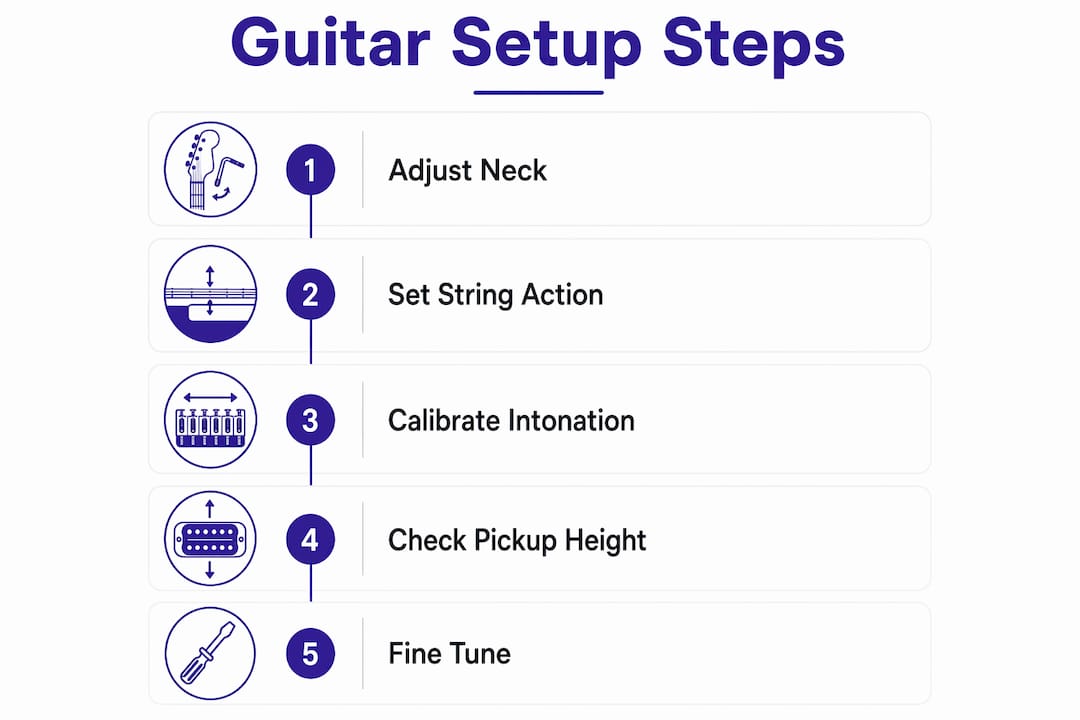
Neck relief is the slight forward bow built into the neck by the truss rod. Too much bow creates high action in the middle of the neck. Too little creates fret buzz across the lower positions. The truss rod controls this curve, and even a quarter-turn changes how the strings respond across the full fretboard.
String action is the height of the strings above the frets, measured at the nut and the bridge saddle. Lowering string action makes fretting easier but raises the risk of fret buzz. Raising it reduces buzz but demands more finger pressure. This is a direct trade-off, and the right balance depends entirely on your touch.
Intonation determines whether your guitar plays in tune across the entire fretboard, not just at open strings. A guitar with poor intonation sounds correct at the nut but drifts sharp or flat by the 12th fret. Saddle position at the bridge controls intonation, and it must be set after action is finalized.
Pickup height on electric guitars affects output level and string pull. Pickups set too close to the strings create magnetic drag that kills sustain and muddies tone. Pickups set too far away lose volume and definition.
- Neck relief: controlled by the truss rod, affects buzz and string clearance
- Nut slot depth: affects open-string action and tuning stability
- Bridge saddle height: sets playing action and affects tone transfer
- Intonation: saddle position calibrated per string for fretboard accuracy
- Pickup height: balances output, sustain, and tonal clarity on electric guitars
Pro Tip: Always adjust neck relief before touching the bridge saddle. Changing the truss rod shifts the action height, so setting the saddle first means you will likely need to redo it.
How does guitar setup impact different playing styles?
The ideal guitar setup is player-specific. It balances ease of play with fret buzz avoidance, tuned to your touch and technique. A setup that works perfectly for a fingerstyle jazz player will feel wrong to a metal guitarist.

Players who favor fast picking, shredding, or lead work typically prefer lower action. The reduced string height means less finger travel per note, which directly translates to speed and accuracy. A properly executed setup removes physical obstacles like high action, reducing player fatigue and increasing accuracy over long sessions.
Players who strum aggressively or use heavy picks need higher action. Hard strumming pushes strings further off the fretboard, and low action causes constant buzzing under that kind of attack. Acoustic players in particular often run slightly higher action to let the top breathe and project volume without choking.
Here is how setup preferences break down by playing style:
- Fast lead and shredding: Low action (around 1.5–2mm on the high E at the 12th fret), light strings, minimal neck relief
- Fingerstyle and classical: Medium action with precise nut slots, wider neck profiles for finger separation
- Aggressive strumming and rhythm: Higher action to handle string deflection without buzz
- Slide guitar: High action to prevent the slide from contacting frets
- Acoustic flatpicking: Medium to high action for projection and dynamic range
Fret size also changes the feel. Taller frets require less finger pressure to fret a note cleanly, which suits fast players. Lower, vintage-style frets give more contact with the wood and suit players who want precise intonation control. Neck profile, whether a C, D, or V shape, affects hand fatigue over long playing sessions more than most players realize.
How do environmental factors affect guitar setup and playability?
Wood moves. That is the core fact every guitarist needs to accept. Frets and the neck respond dynamically to humidity and temperature changes, influencing setup stability and requiring regular adjustments for optimal playability.
Maintaining relative humidity between 45% and 55% is the standard recommendation for guitar storage. Below that range, wood shrinks, fret ends protrude past the fretboard edges, and action drops as the neck backbows. Above it, wood swells, action rises, and the neck develops excess relief. Both extremes push the guitar out of its setup window.
| Humidity level | Effect on neck | Effect on action | Recommended response |
|---|---|---|---|
| Below 45% | Backbow, fret ends sharp | Action drops, buzz increases | Humidify storage area |
| 45%–55% | Stable | Stable | Maintain current setup |
| Above 55% | Excess relief | Action rises | Dehumidify, check truss rod |
Players in climates with extreme seasonal shifts may need setups twice a year to compensate for wood movement. That is not a sign of a poor instrument. It is a sign of a natural material responding to its environment.
String condition also matters. Daily players should change strings every 3–4 weeks. Casual players can go 6–8 weeks. Dead strings lose their elasticity, which throws off intonation and makes the guitar feel sluggish. Player sweat accelerates corrosion, especially on wound strings, which is why coated strings last longer for players with high skin acidity.
Pro Tip: Keep a small digital hygrometer in your guitar case or storage room. Catching humidity swings early costs nothing. Fixing a cracked top or a warped neck costs a lot.
For a full routine on protecting your instrument from environmental damage, the acoustic guitar preservation guide at Vintage-guitar-world covers the process step by step.
When should you get a professional setup versus doing it yourself?
A professional guitar setup typically costs between $50 and $80. That price delivers more noticeable playability improvements than most hardware upgrades at the same price point. For a budget instrument that feels unplayable out of the box, a professional setup is often the best money you can spend.
Signs that your guitar needs a professional setup:
- Persistent fret buzz that does not go away after basic adjustments. Buzzing does not always mean poor setup. It can also signal fret wear or climate-induced warping, which a technician can diagnose accurately.
- Tuning instability where the guitar drifts out of tune quickly, especially after bending strings. This often points to nut slot issues or saddle problems.
- Discomfort or hand fatigue after short playing sessions. High action is the most common culprit, and it is entirely fixable.
- Intonation problems where chords sound increasingly out of tune as you move up the neck.
- Recent climate changes if you moved the guitar from a dry winter environment to a humid summer one.
Safe DIY adjustments include cleaning and lubricating the nut slots with graphite, tightening loose tuning machine screws, and changing strings. Truss rod adjustments are manageable with care, but quarter-turn increments and patience are non-negotiable. Bridge saddle height on acoustic guitars involves filing bone or synthetic material, which is irreversible. That work belongs with a professional.
After a professional setup, guitars often need incremental adjustments as the wood settles into its new position. Experienced players keep a set of Allen keys and a string action gauge nearby for minor fine-tuning between full setups. The guitar setup process guide at Vintage-guitar-world explains exactly what to expect at each stage.
Key Takeaways
A properly executed guitar setup is the most cost-effective way to improve playability, reduce fatigue, and extend the life of any instrument.
| Point | Details |
|---|---|
| Setup is a system | Neck relief, action, intonation, and pickup height all interact and must be adjusted together. |
| Setup is player-specific | Lower action suits fast players; higher action suits aggressive strummers and slide players. |
| Environment shifts setup | Keep humidity at 45%–55% and plan for biannual setups in climates with extreme seasonal changes. |
| Professional setup delivers clear value | A $50–$80 professional setup improves playability more than most hardware upgrades at the same cost. |
| Maintenance extends setup life | Change strings every 3–4 weeks for daily players and monitor humidity to preserve your setup between visits. |
What I have learned from years of watching setups transform guitars
Most players underestimate how much a setup changes the experience of playing. Setup does not make you a better musician. What it does is remove mechanical obstacles so your technique can actually show up. I have seen players blame their own ability for months, only to pick up the same guitar after a proper setup and play with noticeably more confidence and less strain.
The biggest misconception I encounter is that fret buzz means the setup is bad. Buzz is information. It tells you where the guitar is out of balance, whether that is a high fret, a humidity problem, or action that is simply too low for the player’s touch. Chasing zero buzz at all costs usually means raising action until the guitar becomes harder to play. The real goal is the lowest action that works for your specific technique.
One thing seasoned players do that beginners rarely consider: they adapt their setup seasonally. A guitar set up in july in a humid climate will feel different in january when the heat comes on and dries out the air. Keeping a hygrometer and making small truss rod corrections twice a year keeps the instrument in its sweet spot year-round. For vintage instruments especially, this kind of proactive care is what separates a guitar that lasts generations from one that develops irreversible damage.
The players who get the most from their instruments are not always the most technically gifted. They are the ones who pay attention to what the guitar is telling them and act on it early.
— Vintage
Guitars worth setting up right
Every insight in this article applies most powerfully to instruments built with quality materials and real craftsmanship. A well-executed setup on a poorly made guitar has limits. A well-executed setup on a quality vintage or handcrafted instrument unlocks everything the builder intended.

Vintage-guitar-world carries a curated selection of vintage and handcrafted guitars that respond beautifully to proper setup and maintenance. Each instrument is evaluated for playability, structural integrity, and tonal quality before it reaches a buyer. The site also provides expert appraisal, certification, and guidance for players who want to understand exactly what they are acquiring. If you are looking for an instrument that rewards the care described here, the Vintage-guitar-world shop is the right place to start.
FAQ
What does a guitar setup actually include?
A guitar setup covers neck relief adjustment via the truss rod, string action at the nut and bridge, intonation calibration at the saddle, and pickup height on electric guitars. These adjustments work together to optimize how the guitar feels and sounds for a specific player.
How often does a guitar need a professional setup?
Most players benefit from a setup once a year. Players in climates with extreme seasonal shifts may need two setups per year to account for wood movement caused by humidity and temperature changes.
Can a setup fix fret buzz completely?
Not always. Fret buzz can come from low action, uneven frets, or climate-induced neck warping. A technician can identify the actual cause and address it correctly, since lowering action further to chase buzz often makes the problem worse.
Is a guitar setup worth it on a budget instrument?
A professional setup costing $50–$80 delivers more noticeable playability improvement than most hardware upgrades at the same price. Budget guitars often leave the factory with high action and poor intonation, and a setup corrects both.
What is the safest DIY guitar maintenance task?
Changing strings and lubricating nut slots with graphite are the safest tasks for players to handle themselves. Truss rod adjustments require care and small incremental turns. Bridge saddle filing on acoustics is irreversible and belongs with a professional.