












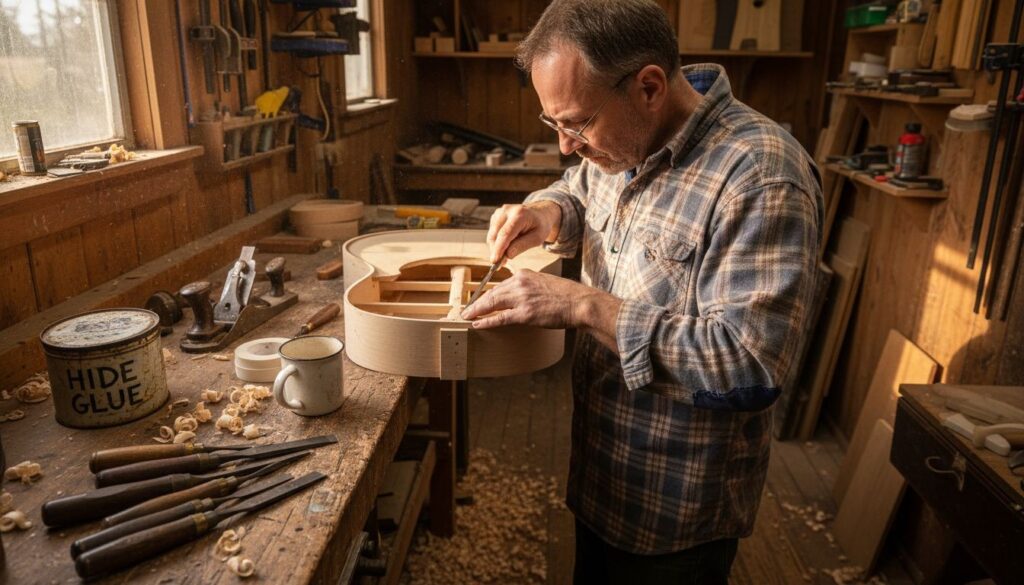

Expensive doesn’t always mean expertly handcrafted. Many guitarists assume price tags guarantee artisan quality, yet subtle manufacturing methods and material choices separate true vintage masterpieces from factory replicas. This guide reveals the microscopic details, tonewood secrets, and construction techniques that define superior craftsmanship, empowering you to confidently identify and invest in guitars that deliver exceptional sound, playability, and lasting value.
Table of Contents
- Introduction To Guitar Craftsmanship
- Material Selection And Acoustic Properties
- Craftsmanship Techniques And Acoustic Impact
- Identification Of Craftsmanship Details In Vintage Guitars
- Common Misconceptions About Guitar Craftsmanship
- Impact Of Craftsmanship On Guitar Value
- Practical Guidance For Assessing Guitar Craftsmanship
- Explore Expert Vintage Guitars At Vintage Guitar World
- Frequently Asked Questions About Guitar Craftsmanship
Key takeaways
| Point | Details |
|——-|———||
| Craftsmanship defines value | Manual skill and traditional methods create unique tonal properties and drive market appreciation. |
| Material selection matters | Tonewood density and finish type directly influence resonance, aging behavior, and sound character. |
| Microscopic details reveal authenticity | Neck joint tolerances under 0.1mm and hand-inlay work distinguish genuine handmade guitars. |
| Price doesn’t guarantee quality | Up to 25% of luxury guitars use machine production, contradicting price assumptions. |
| Practical inspection enables confidence | Testing bracing, joinery, and finish empowers informed purchase decisions. |
Introduction to guitar craftsmanship
Guitar craftsmanship encompasses the manual skill, traditional methods, and artistic intuition artisans apply to create instruments that sing. Unlike mass production, handcrafted guitars emerge from decades of accumulated knowledge passed through generations of luthiers who shape wood, carve necks, and voice bracing by feel rather than formula.
The historical evolution of handmade guitars traces back centuries to Spanish masters who pioneered classical designs, German innovators who refined steel-string acoustics, and American builders who revolutionized electric models. Each era contributed techniques that continue to define quality today. Understanding this lineage clarifies why certain construction approaches produce superior tone and playability.
Handcrafted designs influence three critical dimensions:
- Tone: Manual voicing of bracing and thickness graduation creates complex harmonic overtones impossible to replicate with CNC machines.
- Playability: Hand-carved necks conform to ergonomic profiles that enhance comfort and technique across playing styles.
- Collector value: Rarity and artisan reputation drive appreciation, with select vintage instruments gaining 5.2% annually in market value.
Traditional techniques include hand-scalloped bracing, hide glue joinery, French polish application, and bone nut shaping. These labor-intensive methods demand patience and precision, resulting in instruments that respond dynamically to player input and improve acoustically over decades.
Materials matter equally. Master luthiers select tonewoods for specific acoustic properties: Sitka spruce for projection, European spruce for warmth, rosewood for sustain, maple for brightness. Each species contributes distinct tonal signatures that skilled hands amplify through strategic construction.
Material selection and acoustic properties
Tonewood choice fundamentally shapes a guitar’s voice. Dense woods like Brazilian rosewood produce rich bass and extended sustain, while lighter Engelmann spruce offers responsiveness and clarity. Material differences in vintage guitars become apparent when comparing instruments side by side, revealing how density and grain structure translate to sound.
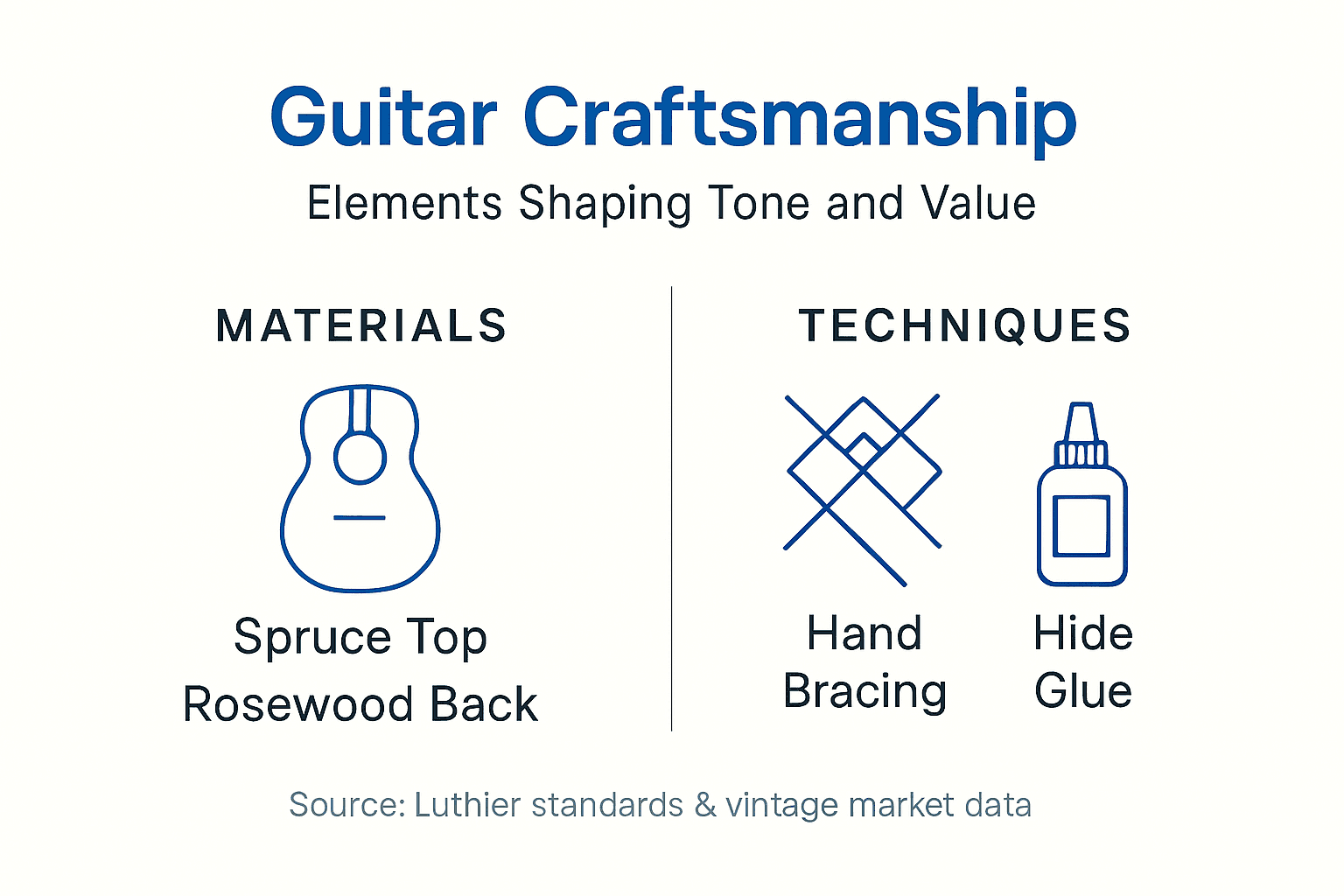
| Tonewood | Density | Tonal Character |
|---|---|---|
| Brazilian Rosewood | High | Deep bass, complex overtones, long sustain |
| European Spruce | Medium | Warm, balanced, articulate |
| Sitka Spruce | Medium-High | Powerful projection, versatile dynamics |
| Maple | High | Bright attack, clear separation, focused tone |
Finish type profoundly affects resonance. Nitrocellulose lacquer, favored by vintage builders, applies in thin layers that allow wood to breathe and vibrate freely. Modern polyurethane finishes create thicker barriers that dampen high frequencies and restrict wood movement. The effects of wood aging on tone become more pronounced with nitro finishes, which crack and wear naturally, exposing wood that continues to mature.
Wood aging decreases density through moisture loss and cellular changes, opening up sound and enhancing responsiveness. A 50-year-old spruce top vibrates more efficiently than new wood, producing fuller harmonics and faster attack. This transformation explains why vintage guitars often surpass modern replicas despite identical construction methods.
Sustainability considerations now influence material selection:
- Reclaimed woods from antique furniture offer aged tonality without harvesting rare species.
- Alternative tonewoods like walnut and cedar provide ethical options with distinct sonic qualities.
- Plantation-grown mahogany and rosewood meet demand while preserving wild forests.
Pro Tip: Tap the soundboard near the bridge while dampening strings. A clear, bell-like ring lasting 3+ seconds indicates quality wood with optimal thickness graduation and aging.
Craftsmanship techniques and acoustic impact
Hand-scalloped bracing separates masterpieces from mediocrity. Luthiers carve braces with chisels and finger planes, removing precise amounts of wood to balance strength against flexibility. This voicing process creates responsive tops that amplify string energy efficiently. Machine-pressed bracing lacks this individualized tuning, resulting in flatter dynamics and compressed tone.
Hand-carved necks provide superior feel and durability. Artisans shape profiles to ergonomic contours that accommodate various hand sizes and playing techniques. They orient grain to resist warping and reinforce stress points through strategic dimensioning. Testing craftsmanship techniques reveals these differences quickly when comparing neck comfort and stability.
Key artisan methods include:
- Hide glue joinery: Traditional animal-based adhesive creates reversible bonds that transfer vibration efficiently while allowing future repairs.
- French polish: Shellac application builds ultra-thin finishes through hundreds of hand-rubbed coats, maximizing resonance.
- Purfling and binding: Decorative inlays protect edges while demonstrating precision craftsmanship through tight miters and flush fitting.
- Fret leveling: Manual dressing creates perfectly level fret planes that eliminate buzzing and optimize intonation.
Glue type critically affects tone. Hide glue’s flexibility allows wood to vibrate as a unified structure, while rigid modern adhesives create dead spots that absorb energy. Joint precision matters equally; gaps compromise structural integrity and dampen sound transfer between components.
Finish application methods modify resonance and aging. Nitro lacquer requires weeks of curing between thin coats, building gradually to preserve wood flexibility. Quick-drying polyester finishes apply thick in days but seal wood permanently, preventing the acoustic evolution that defines vintage tone.
Pro Tip: Examine the neck heel joint under magnification. Handcrafted guitars show continuous grain flow and gaps under 0.05mm, while factory models reveal glue lines and misaligned wood fibers.
Identification of craftsmanship details in vintage guitars
Authentic vintage handmade guitars reveal themselves through microscopic details invisible to casual inspection. Neck joint tolerances under 0.1mm indicate hand-fitting precision impossible with mass production. Use a feeler gauge to measure gaps around the heel; zero clearance confirms artisan assembly.
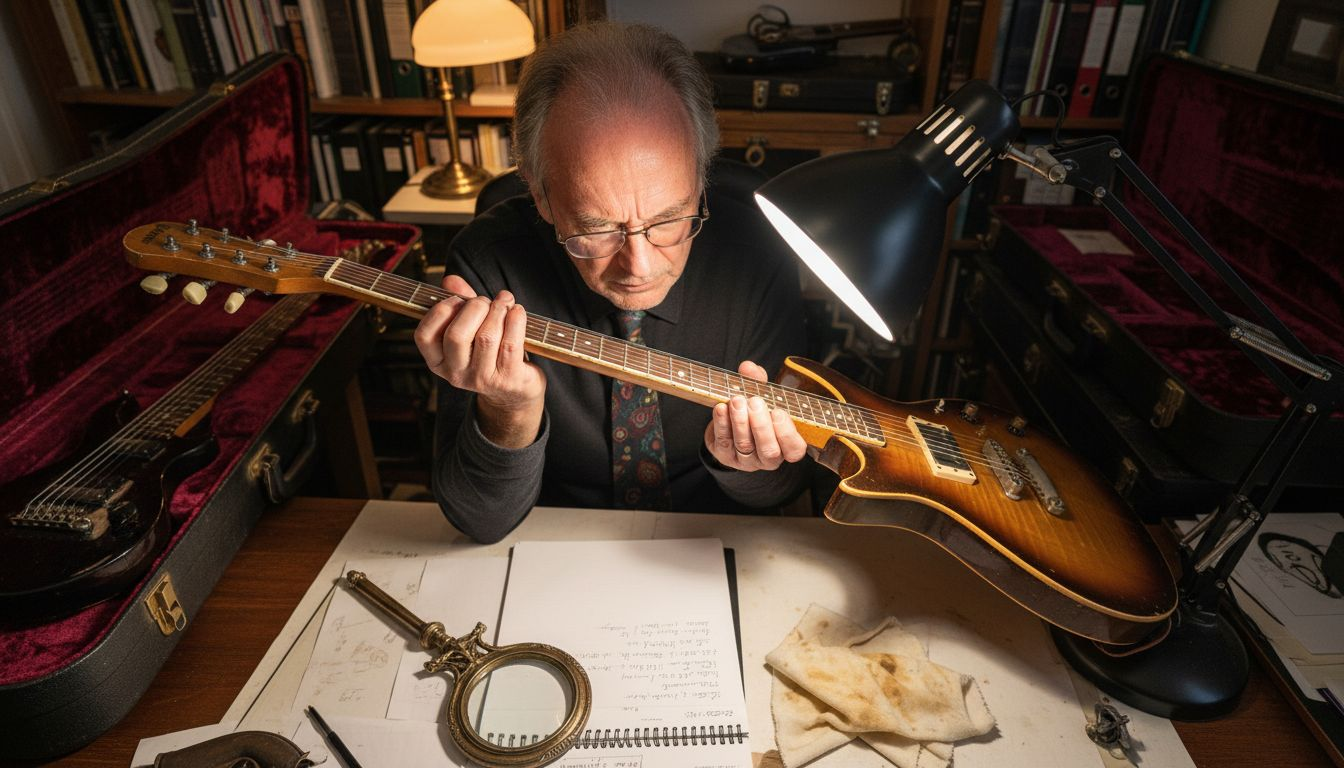
Labor-intensive hand-inlay and binding work demonstrates commitment to quality. Identifying craftsmanship in vintage guitars begins with examining purfling miters at corners. Perfect 45-degree joints without gaps or overlaps require patient hand-cutting and dry-fitting before final gluing.
Finish wear patterns reveal aging authenticity:
- Checking: Fine spiderweb cracks in nitro finishes result from decades of temperature cycling and wood expansion.
- Lacquer loss: High-contact areas on necks and bodies show through to bare wood, exposing grain that darkens naturally.
- Patina depth: Genuine aging penetrates wood fibers, creating color variations impossible to replicate with artificial relic techniques.
Structural cues include wood grain orientation, joint fit quality, and component symmetry. Master builders align grain for maximum strength and visual appeal. They cut dovetail neck joints with tolerances so tight that glue barely penetrates. They shape braces symmetrically, ensuring balanced response across the soundboard.
Visual inspection reveals tool marks, hand-scraping evidence, and individualized shaping. Factory guitars show uniform dimensions and machine-sanding scratches in consistent patterns. Handmade instruments display slight asymmetries and varied surface textures that prove human touch.
Common misconceptions about guitar craftsmanship
Price alone doesn’t guarantee handcrafted quality. Brand prestige, marketing budgets, and dealer margins inflate costs regardless of construction methods. An independent audit found up to 25% of high-priced guitars use significant machine production steps, contradicting assumptions about price and craftsmanship.
Nitro finishes alone don’t ensure superior tone. While thin lacquer helps, wood quality and construction technique matter far more. A poorly braced guitar with nitro finish sounds worse than a well-voiced instrument with modern finish. The finish supports but doesn’t create fundamental acoustic properties.
Common false beliefs include:
- Myth: All vintage guitars improve with age.
Reality: Only well-built instruments with quality wood mature positively. Poor construction and cheap materials degrade over time. - Myth: Famous brand names guarantee artisan quality.
Reality: Many heritage brands now outsource production to factories using automated processes. - Myth: Visible distress indicates valuable aging.
Reality: Artificial relicing mimics wear patterns without providing acoustic benefits of genuine vintage aging. - Myth: Machine precision exceeds hand craftsmanship.
Reality: CNC accuracy serves consistency but lacks the artistic voicing that defines exceptional tone.
Some factory guitars incorporate hand-finishing but lack true artisan precision. Final sanding and setup don’t compensate for machine-cut bracing and automated body assembly. These hybrid approaches create instruments superior to pure factory production yet below handcrafted standards.
“The most expensive guitar I evaluated used CNC-cut bracing with hand-applied finish. It looked perfect but sounded mediocre because no luthier voiced the top. Price reflected marketing, not craftsmanship.” – Master luthier testimonial
Enhanced buyer discernment comes from understanding these distinctions. Question provenance, inspect construction details, and demand documentation proving handmade methods before paying premium prices.
Impact of craftsmanship on guitar value
Expert craftsmanship drives measurable market appreciation. Select handcrafted vintage guitars gain 5.2% annually, outpacing inflation and many investment vehicles. This appreciation stems from rarity, artisan reputation, and superior playability that commands premium pricing among knowledgeable buyers.
Rarity and skill heighten collector willingness to pay. Limited production runs from master builders create scarcity that fuels demand. Guitars bearing signatures of renowned luthiers achieve auction prices exceeding original retail by 400% or more after decades of appreciation.
| Craftsmanship Level | Average Annual Appreciation | Resale Liquidity | Collector Premium |
|---|---|---|---|
| Master Luthier | 5.2% | High | 200-400% |
| Skilled Artisan | 3.1% | Moderate | 75-150% |
| Factory Hand-Finished | 1.8% | Low | 10-25% |
| Mass Production | 0.4% | Very Low | Depreciation |
Master craftsmanship boosts resale liquidity despite niche markets. Serious collectors actively seek documented handmade instruments, creating ready buyers when owners decide to sell. Factory guitars sit unsold for months while exceptional handcrafted examples move within weeks at asking price.
Profiles of collectors and musicians prioritizing craftsmanship impact on guitar value reveal investment thinking beyond mere playability. Professional recording artists pay premiums for tonal superiority that translates to better recordings. Investors view rare instruments as alternative assets with appreciation potential and aesthetic enjoyment.
Market data confirms craftsmanship premiums. Auctions consistently show handmade guitars selling for multiples of comparable factory models. Provenance documentation proving artisan construction adds 30-60% to hammer prices. Certificates of authenticity from recognized experts provide insurance against fraud while validating investment value.
Practical guidance for assessing guitar craftsmanship
Confident evaluation begins with systematic inspection following proven criteria. Assessing craftsmanship quality requires both knowledge and hands-on testing to separate genuine artisan work from convincing imitations.
Follow this assessment sequence:
-
Examine tonewood type and quality first: Identify species through grain pattern and color. Check for consistent grain orientation indicating careful selection. Look for quartersawn tops showing tight, straight lines that maximize strength and stability.
-
Inspect internal bracing through the soundhole: Use a flashlight and inspection mirror to evaluate scalloping, symmetry, and glue cleanliness. Hand-scalloped braces show chisel marks and individualized shaping. Machine braces appear uniform with sanding-machine scratches.
-
Evaluate neck joint precision and finish type: Measure gaps with feeler gauges. Test finish thickness by tapping; thin nitro produces brighter, shorter resonance than thick poly. Check finish cracks for aging authenticity versus artificial distressing.
-
Study artisan details like hand-inlay and fit: Examine purfling miters under magnification. Assess binding flush-fitting without gaps or proud edges. Inspect rosette patterns for hand-cutting precision versus stamped uniformity.
-
Test playability including neck shape and tuning stability: Play scales across the fretboard noting comfort and intonation accuracy. Check action height and evenness. Tune and retune multiple times, confirming machines hold pitch reliably.
-
Rely on trusted certifications and expert appraisals when possible: Request documentation from recognized luthiers or authentication services. Verify provenance through builder records or original sales receipts.
-
Use craftsmanship knowledge to negotiate fair prices: Compare asking prices against recent auction results for similar instruments. Factor construction quality into valuation, adjusting for genuine handmade premiums versus inflated brand pricing.
Pro Tip: Record tap tones by gently tapping the top near the bridge while recording on your phone. Compare recordings across multiple guitars. Superior instruments produce longer sustain with more complex overtones audible in playback.
Explore expert vintage guitars at Vintage Guitar World
Applying this craftsmanship knowledge becomes effortless when you explore curated selections at Vintage Guitar World. Every instrument undergoes rigorous evaluation by experts who verify artisan construction, tonewood quality, and playability standards that professional musicians and collectors demand.
Our 7-point checklist for buying vintage guitars guides your assessment process with detailed criteria matching this article’s principles. Access this proven framework alongside detailed instrument documentation that reveals construction methods, builder history, and acoustic characteristics.

Discover authenticated handmade instruments through our vintage guitar shop, where each listing includes professional photographs highlighting craftsmanship details discussed in this guide. Our expert buying guide for collectors provides additional strategies for evaluating quality and negotiating purchases confidently. Whether you seek classical, flamenco, or steel-string acoustics, our curated inventory connects you with instruments demonstrating genuine artisan excellence.
Frequently asked questions about guitar craftsmanship
What indicators reveal a guitar’s handcrafted authenticity?
Inspect neck joint tolerances under 0.1mm, hand-scalloped bracing visible through the soundhole, and purfling miters meeting perfectly at 45-degree angles without gaps. Examine finish for natural checking patterns and wear consistent with decades of aging rather than artificial distressing. These microscopic details collectively prove artisan construction impossible to replicate with automated production.
How can I differentiate nitrocellulose finishes from modern ones?
Nitro finishes feel thinner, show natural checking cracks, and produce brighter tap tones with shorter decay when you gently knock the guitar body. Modern polyurethane finishes appear thicker with plastic-like gloss, resist cracking, and create duller tap tones. The solvent test (acetone on a hidden area) dissolves nitro but leaves poly unaffected, though this risks damaging finish.
Does craftsmanship always affect resale value positively?
Documented handcrafted guitars from recognized builders appreciate reliably, gaining 5.2% annually on average. However, unknown luthiers or poorly executed handmade instruments may not command premiums despite manual construction. Provenance, builder reputation, and playability quality combine with craftsmanship to determine market value. Certification and expert appraisal documentation maximize resale returns.
Can factory guitars match handcrafted tonal quality?
High-end factory guitars with hand-finishing approach but rarely equal fully handcrafted instruments. Automated bracing lacks individualized voicing that optimizes each top’s unique acoustic properties. CNC precision serves consistency but cannot replicate the artistic adjustments master luthiers make based on wood feedback during construction. The best factory guitars offer excellent value but distinct sonic signatures compared to artisan masterpieces.
What craftsmanship features matter most for professional musicians?
Playability and tonal responsiveness top professional priorities. Hand-carved neck profiles, perfectly leveled frets, and voiced bracing create instruments that respond dynamically to technique variations. Recording artists particularly value complex overtone generation from hand-scalloped tops, which translates to richer recorded sound. Tuning stability from precision nut and saddle work ensures reliable performance during sessions and concerts.
How does wood aging interact with original craftsmanship quality?
Quality craftsmanship amplifies aging benefits while poor construction accelerates deterioration. Well-braced tops with optimal thickness graduation open up over decades, producing fuller tone as wood density decreases. Poorly designed structures develop dead spots or structural failures as aging progresses. Original artisan skill determines whether a guitar improves or degrades across 50+ years, making initial craftsmanship assessment critical for long-term satisfaction.