












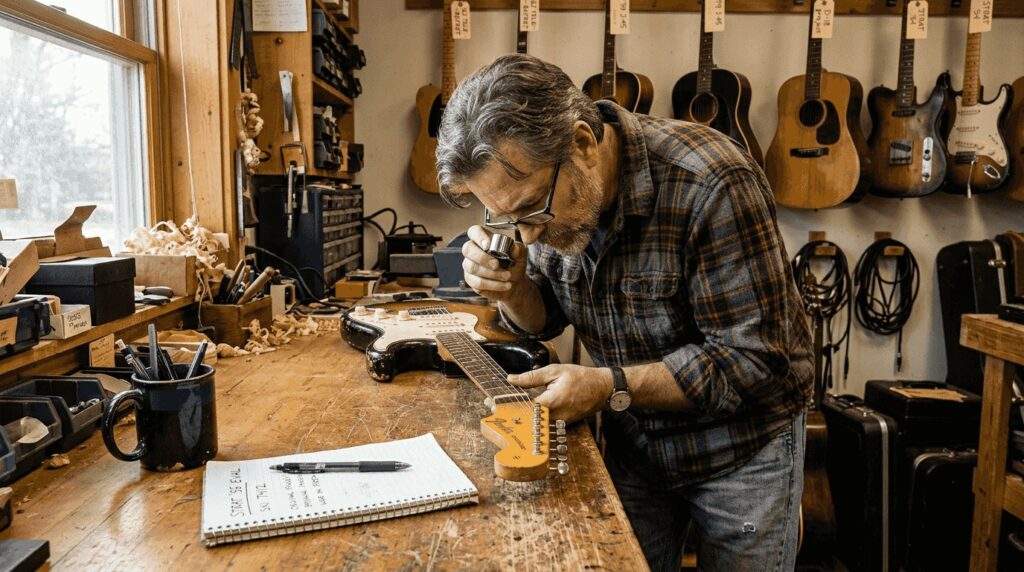

Many collectors assume a vintage guitar’s brand and model determine its value, but a 1956 Fender Stratocaster in pristine condition can command $40,000 to $50,000 while a refinished example of the same guitar drops to $20,000 or $35,000. Originality and condition often matter more than the name on the headstock. Understanding the appraisal process helps you avoid costly mistakes when buying or selling vintage instruments. This guide breaks down the essential factors appraisers examine, the challenges they face, and how you can apply this knowledge to make confident collecting decisions that protect your investment.
Table of Contents
- Understanding Vintage Guitar Appraisal Fundamentals
- Key Factors That Influence Guitar Appraisal Value
- Nuances And Challenges In Vintage Guitar Appraisal
- Applying Guitar Appraisal Knowledge In Your Collecting Decisions
- Explore Expert Vintage Guitars And Appraisal Resources
- Frequently Asked Questions
Key takeaways
| Point | Details |
|---|---|
| Originality drives value | Factory original parts and finish command premium prices over modified or refinished guitars. |
| Condition matters most | Physical wear, structural integrity, and preservation directly impact appraisal outcomes. |
| Authentication is critical | Expert verification combats counterfeits and ensures accurate valuation. |
| Market trends fluctuate | Demand shifts affect pricing, but physical attributes remain the foundation. |
| Documentation adds credibility | Provenance records and maintenance history strengthen appraisal confidence. |
Understanding vintage guitar appraisal fundamentals
Vintage guitar appraisal is the systematic evaluation of an instrument’s authenticity, condition, rarity, and market value. Appraisers examine physical characteristics, historical context, and current demand to determine what a guitar is worth. This process matters whether you’re buying, selling, insuring, or simply understanding your collection’s value. Without accurate appraisal, you risk overpaying for a refinished instrument or undervaluing a rare original piece.
Many collectors fall into the trap of assuming brand recognition equals high value. A Gibson or Fender logo doesn’t guarantee a premium price if the guitar has been heavily modified or poorly maintained. Appraisers prioritize originality and condition because these factors directly reflect how well the instrument has been preserved. A lesser known brand in excellent original condition often outperforms a famous name that’s been refinished or fitted with replacement parts.
Authentication has become increasingly important as specialist services now focus solely on authenticating music memorabilia, reflecting how widespread counterfeit and refinish issues have become. Appraisers verify factory specifications, examine date codes on components, and compare details against documented production records. This detective work separates genuine vintage instruments from clever reproductions or heavily altered guitars misrepresented as original.
Market demand influences pricing, but physical attributes form the foundation. A guitar might be trending among collectors, but if it lacks original parts or shows significant wear, the appraisal will reflect those limitations. Understanding vintage guitar trends 2026 helps contextualize demand, yet the guitar’s actual condition remains the primary value driver. Appraisers balance market enthusiasm with objective assessment of what’s physically present.
Pro Tip: Request detailed documentation from sellers before purchasing. Photos of serial numbers, pot codes, and finish details help you conduct preliminary research and spot red flags before investing in a full appraisal.
Key factors that influence guitar appraisal value
Condition grading forms the backbone of appraisal. Appraisers assess finish originality, checking for factory lacquer versus refinishing work that diminishes value. They examine structural integrity, looking for neck resets, crack repairs, or body damage that affects playability and worth. Even minor finish checking or honest play wear is preferable to a refinish, because originality preservation matters more than cosmetic perfection. Collectors pay premiums for guitars that show their age gracefully without major alterations.
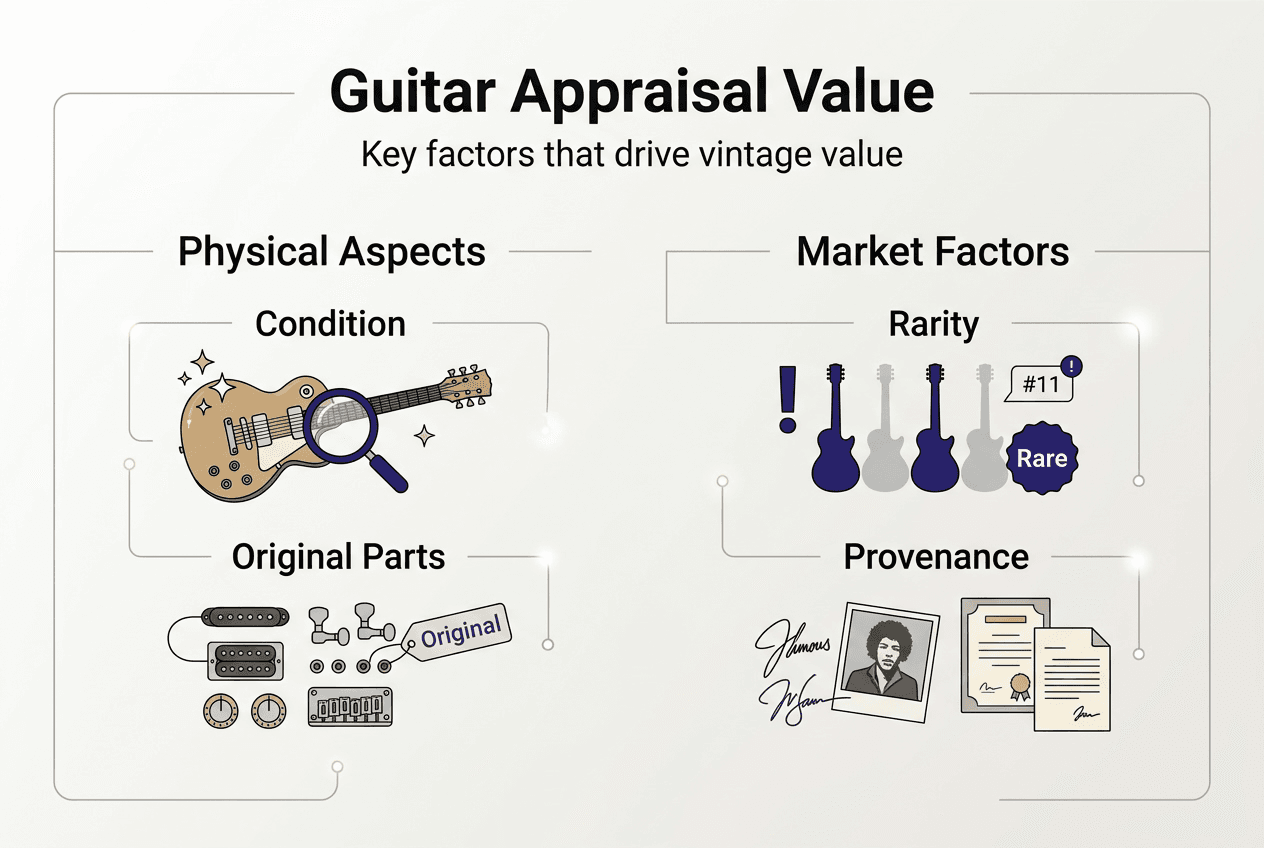
Original parts verification requires deep knowledge of factory specifications. Appraisers inspect pickups, potentiometers, switches, and hardware to confirm they match production period standards. For example, Stackpole potentiometers with specific date codes help verify authenticity of vintage guitars, as these components were used during particular manufacturing periods. Replacement parts, even high quality ones, reduce value because they compromise the guitar’s originality. A 1950s Stratocaster with period correct pots commands significantly more than one with modern replacements.
Neck profiles and specifications serve as authenticity markers. The 1956 Stratocaster featured a distinctive V shaped neck profile that differs from earlier rounded profiles or later C shapes. Appraisers measure neck dimensions, fret wire size, and fingerboard radius to confirm factory specs. These details are harder to fake than cosmetic features, making them reliable authentication tools. Subtle variations between production years help pinpoint exact dating and catch misrepresented guitars.

Finish types dramatically affect valuation. Factory original nitrocellulose lacquer with natural aging patterns is highly desirable. Refinished guitars lose substantial value even if the work is expertly done, because collectors prioritize originality. The difference is stark: pristine examples fetch $40,000 to $50,000 versus refinished ones at $20,000 to $35,000 for the same 1956 Stratocaster model. Understanding how to value collectible guitars market pricing helps you grasp why finish originality commands such premiums.
Rarity factors multiply value when combined with excellent condition. Limited production runs, unique features like rare color finishes, or documented ownership by notable players elevate appraisal outcomes. A standard production guitar in great shape has value, but a rare variant or one with celebrity provenance can command multiples of typical market prices. Appraisers research production numbers and historical records to verify rarity claims and ensure they’re not inflated.
Provenance and documentation strengthen appraisals significantly. Original case candy, sales receipts, repair records, and photographs tracing the guitar’s history add credibility. When evaluating used vintage guitars, documented provenance helps confirm authenticity and ownership chain. Guitars with strong documentation face less skepticism and achieve higher prices because buyers gain confidence in their legitimacy.
| Condition Factor | High Value Example | Discounted Example |
|---|---|---|
| Finish | Original nitro with age checking | Factory refinish or amateur work |
| Components | All original Stackpole pots, pickups | Replaced pickups or modern pots |
| Structural | No repairs, original neck | Neck reset or body crack repairs |
| Market Impact | $40,000 to $50,000 | $20,000 to $35,000 |
Pro Tip: Examine pot codes and pickup markings yourself before hiring an appraiser. Learning to read date codes gives you immediate insight into originality and helps you avoid wasting time on guitars with obvious replacement parts.
Nuances and challenges in vintage guitar appraisal
Identifying factory original versus replaced or refinished parts requires expertise that takes years to develop. Some replacement parts are period correct, meaning they’re from the right era but weren’t originally installed in that specific guitar. Appraisers must distinguish between factory work, period correct replacements, and modern parts. This complexity means two experts might disagree on whether a component is original, especially when documentation is sparse. Subtle differences in solder joints, wire types, and installation methods provide clues, but interpretation involves some subjectivity.
Expert opinion variability affects appraisal outcomes. Condition ratings like excellent, very good, or good aren’t standardized across the industry. One appraiser’s very good might be another’s excellent, creating price discrepancies. This subjectivity is why getting multiple opinions on high value guitars makes sense. Reputable appraisers explain their reasoning and provide detailed condition reports rather than just assigning a grade. Understanding these nuances helps you interpret appraisal results critically rather than accepting them as absolute truth.
Market volatility complicates valuation. General economic trends affect collectible markets, but guitar specific demand can shift independently. A model might surge in popularity due to a famous player using it, then cool off when trends change. Appraisers must balance current market enthusiasm with long term value fundamentals. Testing vintage guitar quality reveals physical attributes that endure regardless of market swings, helping separate temporary hype from lasting value.
Proper documentation becomes crucial when authenticity questions arise. Guitars lacking provenance face more scrutiny and skepticism, even if they appear original. Appraisers may recommend additional testing or expert consultation for undocumented instruments. The burden of proof falls on sellers to demonstrate authenticity, and buyers should be cautious when documentation is missing. Investing in thorough authentication protects both parties and ensures fair pricing based on accurate information.
“Specialist services now focus solely on authenticating music memorabilia, reflecting how widespread the problem has become.”
This quote from The Realest Music Memorabilia Guide underscores the authentication challenge facing collectors. Counterfeit guitars and misrepresented refinished instruments flood the market, making expert appraisal essential. The rise of specialized authentication services demonstrates that casual buyers can’t reliably spot fakes or alterations. Professional appraisers use scientific methods, historical research, and comparative analysis to verify authenticity, providing peace of mind that justifies their fees.
Guitar valuation explained resources help collectors understand these complexities, but nothing replaces hands on experience and expert guidance. Appraisal challenges aren’t obstacles to avoid but realities to navigate with patience and thoroughness. Recognizing that even experts face difficult calls helps you approach appraisals with realistic expectations and healthy skepticism toward suspiciously simple answers.
Applying guitar appraisal knowledge in your collecting decisions
Verifying originality and condition before purchase protects you from costly mistakes. Start by examining serial numbers and comparing them against factory records to confirm production year and model. Inspect pot codes, pickup markings, and hardware stamps to check for period correct components. Look for finish irregularities that might indicate refinishing work, such as overspray in cavities or unnatural color uniformity. These preliminary checks help you decide whether a guitar warrants further investment in professional appraisal.
Commissioning an expert appraisal involves selecting a qualified specialist and providing access to the instrument. Expect the appraiser to disassemble components for internal inspection, photograph details, and research comparable sales. A thorough appraisal takes time and costs several hundred dollars, but this investment prevents overpaying by thousands. The appraiser should deliver a written report documenting findings, condition assessment, and estimated market value range. This report becomes valuable documentation for insurance and future sales.
Using appraisal results to negotiate price requires confidence and market knowledge. If an appraisal reveals refinishing or replacement parts the seller didn’t disclose, you have leverage to request a lower price or walk away. Conversely, an appraisal confirming exceptional originality justifies paying premium prices. Understanding 7 point vintage guitar buying checklist principles helps you interpret appraisal findings and make informed offers based on objective data rather than emotion.
Keeping provenance and maintenance records preserves value for future sales. Document every repair, setup, and modification with receipts and photographs. Store the guitar in stable humidity and temperature conditions to prevent finish checking or structural damage. Original case candy, hang tags, and paperwork should be preserved carefully. When you eventually sell, this documentation strengthens buyer confidence and supports higher asking prices. Future appraisers will appreciate the clear history you’ve maintained.
Building a trustworthy network of appraisers and dealers takes time but pays dividends. Attend vintage guitar shows, join collector forums, and seek recommendations from experienced collectors. Develop relationships with reputable dealers who stand behind their sales and provide honest assessments. These connections give you access to expert opinions and early notification of quality instruments coming to market. The expert guide to buying vintage guitars emphasizes that trusted relationships prevent many common collecting pitfalls.
- Research the guitar’s model and production history before viewing it.
- Conduct preliminary inspection of serial numbers and component markings.
- Request seller documentation including purchase history and repair records.
- Commission professional appraisal if preliminary checks look promising.
- Review appraisal report carefully and ask questions about any concerns.
- Negotiate price based on appraisal findings and comparable market sales.
- Document the purchase and store all paperwork for future reference.
Pro Tip: Be skeptical of unusually low prices on desirable models. If a deal seems too good to be true, it probably involves undisclosed issues like refinishing, major repairs, or counterfeit parts. Patient collectors who insist on proper appraisal avoid these traps.
Explore expert vintage guitars and appraisal resources
Understanding appraisal principles is just the beginning of building a meaningful vintage guitar collection. At Vintage Guitar World, we share your passion for authentic, well preserved instruments and provide the resources you need to collect confidently. Our team evaluates every guitar we offer using the same rigorous standards professional appraisers apply, ensuring you receive accurate information about condition, originality, and value. Discover why we love vintage guitars and how our commitment to quality helps collectors make informed decisions.

Explore our expert guide to buying vintage guitars for detailed advice on evaluating instruments and avoiding common pitfalls. Browse our vintage guitar shop to see curated selections of authenticated instruments with transparent condition descriptions. We’re here to support your collecting journey with honest expertise and genuine enthusiasm for these remarkable instruments.
Frequently asked questions
How do appraisers verify a guitar’s originality?
Appraisers check original components like pickups, potentiometers, switches, and neck specifications against factory records. They examine Stackpole potentiometer date codes and other markings to confirm parts match the production period. Serial numbers, wood grain patterns, and finish characteristics provide additional authentication evidence.
Why is condition more important than brand for vintage guitar value?
Original finish and structural integrity preserve value more than brand recognition alone. Pristine 1956 Stratocasters command nearly double the price of refinished examples because collectors pay premiums for well preserved, all original instruments. Brand matters, but condition determines whether a guitar achieves top market value.
How can I find a trusted vintage guitar appraiser?
Seek recommendations from vintage guitar communities, dealers, and collector forums. Verify credentials and look for specialists focusing exclusively on vintage instruments rather than general musical equipment. Specialist authentication services have emerged due to counterfeit prevalence, so choose appraisers with documented expertise and industry recognition.
What documentation should I request when buying a vintage guitar?
Request original purchase receipts, repair records, previous appraisal reports, and photographs showing the guitar’s condition over time. Case candy like hang tags, warranty cards, and original cases add provenance value. Any documentation tracing ownership history strengthens authenticity claims and supports accurate valuation.
How much does a professional guitar appraisal cost?
Professional appraisals typically cost between $200 and $500 depending on the instrument’s complexity and the appraiser’s expertise. High value guitars or those requiring extensive research may cost more. This investment protects you from overpaying by thousands and provides documentation for insurance purposes, making it worthwhile for significant purchases.