













TL;DR:
- The shape of an acoustic guitar greatly influences its tone, volume, and comfort during play. The Dreadnought, Grand Auditorium, and Jumbo are the most popular for strong projection and versatility, while smaller shapes suit fingerstyle and comfort needs. Choosing the right shape depends on your technique, body size, and tonal preferences, with comfort being a key factor for long-term enjoyment.
Acoustic guitar body styles are the single biggest factor shaping an instrument’s tone, volume, and physical comfort. Before you consider tonewoods or bracing, the body shape determines whether a guitar projects like a cannon or whispers like a parlor instrument. Dreadnoughts and Grand Auditoriums dominate sales and appeal across genres as of 2026. Whether you play fingerstyle folk, strum country chords, or collect vintage pieces, understanding acoustic guitar shape varieties is the foundation of every smart buying decision.
1. Dreadnought: the workhorse of acoustic guitar shape varieties
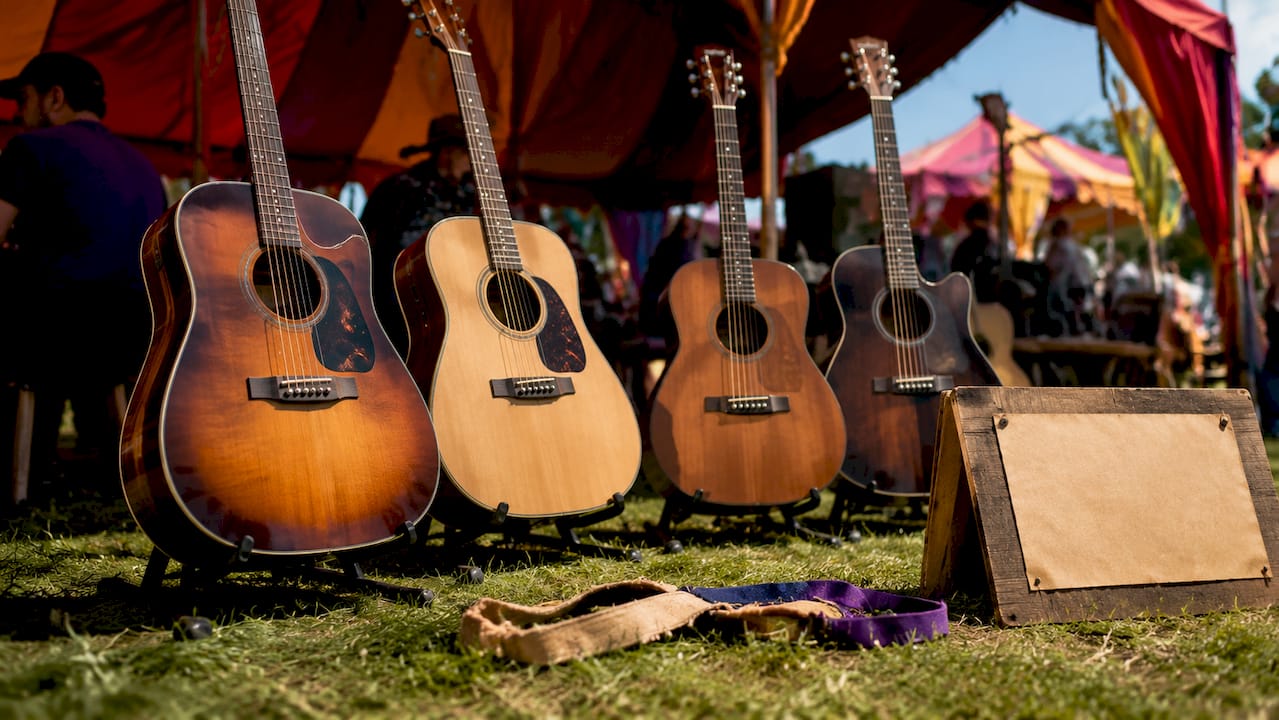
The Dreadnought is the most recognized guitar body style in the world. Martin Guitar Company introduced it in 1931, and it has defined the sound of bluegrass, country, and folk ever since. Its square shoulders and large lower bout produce powerful bass response and high volume projection.
The Dreadnought suits strummers and flatpickers who need to cut through a band mix without amplification. Martin D-28 and Gibson J-45 are two of the most studied examples of this shape. One important nuance: square vs. slope shoulders affect tone far less than bracing patterns and tonewoods do. Do not let shoulder shape drive your buying decision.
2. Grand Auditorium: the versatile studio shape
The Grand Auditorium is a refined evolution of the Dreadnought, designed to reduce the boomy low end while keeping strong volume. Its controlled bass response makes it a favorite in studio settings. Taylor Guitars popularized this shape with its 800 Series, and it now rivals the Dreadnought in overall sales.
The Grand Auditorium handles fingerpicking, strumming, and hybrid picking with equal confidence. Its tighter waist also makes it more comfortable for seated playing. Players who want one guitar that does everything should start here.
3. Jumbo: maximum volume and stage presence
The Jumbo is the largest standard acoustic guitar body shape. Gibson introduced the J-200 in 1937, and it remains the benchmark for this style. The wide lower bout delivers loud, bright highs and a full, resonant midrange that carries well on stage.
Country and bluegrass players favor the Jumbo when they need raw volume without a pickup. The trade-off is physical size. Smaller players often find the Jumbo awkward to hold for long sessions, so comfort testing before purchase is non-negotiable.
4. Parlor: small body, clear articulation
The Parlor guitar is one of the oldest acoustic body styles, popular in the 19th century and now experiencing a strong revival among fingerstyle and blues players. Its compact body produces a focused, articulate tone with clear note separation. Smaller bodies like the Parlor deliver the clarity that fingerstyle, folk, and blues techniques demand.
The Parlor sits comfortably on the knee and travels easily. It lacks the bass depth of a Dreadnought, but that is a feature, not a flaw, for players who prioritize note definition over raw power. Martin’s 0-series and several boutique luthiers keep this shape alive and well.
5. Concert and Grand Concert: balanced comfort for smaller players
The Concert (size 0) and Grand Concert (size 00) sit between the Parlor and the Orchestra Model in size. Both offer a balanced tone with moderate volume and a comfortable fit for players with smaller frames. Matching guitar shape to body frame prevents fatigue and improves long-term playing enjoyment.
These shapes work well for singer-songwriters who want clarity without the bulk of a Dreadnought. The Grand Concert in particular has gained traction among players who record at home, where controlled volume and balanced frequency response matter more than stage projection.
6. Orchestra Model (OM and 000): articulate and mid-sized
The Orchestra Model, also called the OM or 000, is one of the most ergonomically sound guitar shapes available. Its pronounced waist reduces arm and shoulder fatigue during long playing sessions. Shapes with tight waists like the OM and Grand Auditorium are consistently better for seated playing comfort.
The OM delivers a balanced tone across bass, mids, and treble with strong articulation. Eric Clapton’s use of Martin 000 models brought this shape to wider attention in the 1990s. For fingerstyle players who also strum, the OM is one of the most complete guitar body shapes available.
Pro Tip: If you play seated for more than 30 minutes at a time, prioritize shapes with a defined waist. The OM and Grand Auditorium both reduce the arm strain that flat-waisted bodies create.
7. Classical guitar: nylon strings and a wider neck
The Classical guitar is a distinct category within acoustic guitar body styles. Classical guitars use nylon or fluorocarbon strings, producing a softer feel and mellower tone favored in classical and flamenco music. The neck joins the body at the 12th fret, the neck is wider, and the scale length is shorter than most steel-string acoustics.
These construction differences create a playing feel that is entirely its own. Classical and Spanish guitar distinctions matter to collectors and players alike, since flamenco guitars share the classical shape but use different tonewoods and construction techniques for a brighter, percussive sound. Luthiers like Antonio de Torres and Hermann Hauser defined the classical guitar shape that builders still follow today.
8. Slope-shoulder vs. square-shoulder dreadnoughts
This distinction trips up many buyers. The slope-shoulder Dreadnought, associated with Gibson’s J-45 and J-50, has a softer, rounder upper bout. The square-shoulder Dreadnought, associated with Martin’s D-series, has a more angular upper bout. Both are Dreadnoughts in size and volume output.
Luthiers confirm that shoulder shape affects tone far less than bracing patterns, tonewoods, and build quality. The visual difference is real. The tonal difference is minor. Choose based on comfort and aesthetics, not on the belief that one shoulder shape is sonically superior.
9. Travel and mini guitars: portability with reasonable tone
Travel and mini guitars sacrifice some volume and bass depth in exchange for portability. Travel-sized guitars offer reasonable tone for players who need a compact instrument without losing too much sound quality. Taylor’s GS Mini and Martin’s LX series are the most recognized examples of this category.
These guitars are not just for beginners or children. Professional touring musicians use them for practice on the road, and some players find the shorter scale length easier on their hands. The tone is thinner than a full-size body, but the playability and convenience are genuine advantages.
10. Archtop and resonator: specialty acoustic shapes
Archtop acoustics feature a carved or pressed arched top, semi-hollow body construction, and a tonal character built for jazz. Gibson’s L-5 and the work of luthier John D’Angelico defined the archtop tradition. The arched top projects sound differently than a flat-top acoustic, producing a warm, focused midrange that cuts through jazz ensemble settings.
Resonator guitars use a metal cone inside the body instead of a traditional spruce top to amplify sound. National and Dobro are the most recognized resonator brands. The result is a loud, bright, metallic tone that became central to Delta blues and slide guitar playing. Both shapes are collector favorites at Vintage-guitar-world for their historical significance and distinctive sound.
Comparing acoustic guitar body styles: size, tone, and comfort
The table below gives you a direct comparison of the most common guitar body shape variations. Use it as a quick reference when evaluating instruments.
| Shape | Body size | Volume | Tonal character | Best for |
|---|---|---|---|---|
| Dreadnought | Large | High | Strong bass, full mids | Strumming, bluegrass, country |
| Grand Auditorium | Medium-large | Medium-high | Balanced, controlled bass | Versatile, studio, live |
| Jumbo | Extra large | Very high | Bright highs, full resonance | Stage, country, folk |
| Parlor | Small | Low-medium | Clear, articulate, focused | Fingerstyle, blues, folk |
| Concert / Grand Concert | Small-medium | Medium | Balanced, comfortable | Singer-songwriters, home recording |
| Orchestra Model (OM/000) | Medium | Medium | Articulate, balanced | Fingerstyle, mixed technique |
| Classical | Medium | Medium | Warm, mellow, soft | Classical, flamenco |
| Travel / Mini | Compact | Low | Thin but usable | Portability, practice |
Pro Tip: Play the guitar standing and seated before you buy. A shape that feels comfortable in a store chair may feel awkward on a stage strap. Both positions matter.
How to choose the right guitar shape for your style and build
Choosing among different acoustic guitar shapes comes down to three factors: your playing technique, your physical frame, and your tonal goals. Work through them in that order.
- Identify your primary technique. Fingerstyle players benefit from smaller bodies like the Parlor, Concert, or OM. Strummers and flatpickers get more from a Dreadnought or Jumbo.
- Match the shape to your frame. Smaller players find Concert and Auditorium shapes more comfortable for long sessions. Larger players can handle a Jumbo without fatigue.
- Define your tonal goal. If you want deep bass and volume, choose a Dreadnought or Jumbo. If you want clarity and balance, choose an OM or Grand Auditorium.
- Test in person. No amount of reading replaces 20 minutes with the guitar in your hands. Use the expert testing guide from Vintage-guitar-world to structure your evaluation.
- Ignore the “best shape” myth. No single best shape exists. The right shape is the one that fits your body, your music, and your hands.
Beginners often choose guitars based on looks rather than fit. That is a common and costly mistake. Comfort tailored to your frame is the most important factor for long-term playing enjoyment.
Key Takeaways
The best acoustic guitar shape is the one that matches your playing technique, physical frame, and tonal goals. No single shape works for every player.
| Point | Details |
|---|---|
| Dreadnought dominates sales | Its powerful bass and high volume suit strumming, bluegrass, and country best. |
| Grand Auditorium offers the most versatility | Balanced tone and a tight waist make it ideal for studio and live use. |
| Smaller shapes favor fingerstyle | Parlor, Concert, and OM bodies deliver the clarity that fingerstyle and blues demand. |
| Shoulder shape matters less than you think | Bracing, tonewoods, and build quality define tone far more than square vs. slope shoulders. |
| Physical comfort drives long-term satisfaction | Match body shape to your frame to avoid fatigue and improve playing endurance. |
What I’ve learned from years of handling these shapes
No single shape is the best acoustic guitar shape. That answer frustrates buyers who want a shortcut, but it is the honest truth. What I have seen consistently at Vintage-guitar-world is that players who choose on looks alone often return to trade up within two years. Players who choose on fit and technique rarely do.
The Grand Auditorium’s rise is real and deserved. It genuinely solves the Dreadnought’s main weakness, which is a low end that overwhelms smaller rooms and recording environments. But the Dreadnought is not going anywhere. Its dominance in bluegrass and country is structural, not nostalgic.
The shape I see most undervalued by collectors is the OM. Its ergonomics are exceptional, its tonal balance is hard to beat, and vintage OM-style instruments from the 1930s represent some of the most playable guitars ever made. If you are building a collection, do not overlook it.
My strongest advice: visit a shop, play at least five different body shapes back to back, and pay attention to how your shoulder feels after 15 minutes. That physical signal tells you more than any spec sheet. The role of body shape in flamenco guitars is a great example of how even small shape differences produce dramatically different results in specialized playing contexts.
— Vintage
Find your perfect shape at Vintage-guitar-world
Vintage-guitar-world carries a curated selection of vintage and handcrafted acoustic guitars across every major body style, from rare parlor guitars to collector-grade Dreadnoughts and classical instruments with documented provenance.

Every instrument is evaluated by experts and comes with detailed tonal and historical context. If you are serious about finding a guitar that matches your playing style and holds its value, explore the vintage guitar types guide to understand what separates a collector-grade instrument from a standard production model. Handcrafted guitars in particular offer tonal qualities that craftsmanship directly shapes in ways factory production cannot replicate. The right shape, built by the right hands, is an instrument you keep for life.
FAQ
What are the most popular acoustic guitar shapes?
The Dreadnought and Grand Auditorium are the best-selling and most versatile acoustic guitar shapes as of 2026. Both suit a wide range of playing styles and genres.
Which guitar shape is best for fingerstyle playing?
Smaller bodies like the Parlor, Concert, and Orchestra Model (OM) are best for fingerstyle. They deliver the note clarity and articulation that fingerpicking technique requires.
Does guitar body shape affect tone significantly?
Yes. Body shape directly influences bass response, volume, and tonal balance. Larger bodies like the Jumbo produce more bass and volume; smaller bodies like the Parlor produce more clarity and definition.
What guitar shape suits smaller players?
Concert, Grand Concert, and Auditorium shapes suit smaller players best. Their reduced body size and defined waist reduce arm and shoulder fatigue during long playing sessions.
How is a classical guitar different from other acoustic shapes?
Classical guitars use nylon strings, have a wider neck, and join the body at the 12th fret. These features produce a softer, warmer tone distinct from steel-string acoustic guitars.