














Every experienced guitarist recognizes that the unique sound of a classical guitar comes from more than just strings or shape. Understanding what truly defines a classical guitar means appreciating its rich heritage, refined craftsmanship, and the subtle choices behind its materials and construction. This exploration reveals why material properties and engineering matter as much as historical lineage, helping collectors and players distinguish remarkable instruments from the ordinary.
Table of Contents
- What Defines A Classical Guitar Today
- Major Types And Their Distinct Differences
- Materials, Craftsmanship, And Tonal Impact
- Historical Evolution And Influential Luthiers
- Common Collectors’ Mistakes And Buying Tips
Key Takeaways
| Point | Details |
|---|---|
| Classical Guitar Characteristics | Classical guitars feature nylon strings, a wider neck, and a focus on fingerpicking, emphasizing warm acoustic tones. |
| Types of Classical Guitars | Common types include Standard, Flamenco, Cutaway, and Electro-Classical, each designed for specific musical styles and techniques. |
| Material and Craftsmanship | Quality materials and expert craftsmanship are crucial for tonal complexity, influencing the guitar’s sound and resonance. |
| Collecting and Buying Tips | Prioritize structural integrity and professional evaluations over aesthetics when collecting vintage classical guitars. |
What Defines a Classical Guitar Today
The classical guitar represents a nuanced musical instrument with deep historical roots and specific design characteristics that distinguish it from other guitar varieties. Classical guitar traditions trace back thousands of years, evolving from ancient plucked string instruments into the refined six-string instrument we recognize today.
Modern classical guitars share several defining features that set them apart from acoustic or electric counterparts:
- Six nylon strings instead of steel strings
- Wider neck design allowing intricate finger placement
- Emphasis on fingerpicking technique
- Wooden construction using premium tonewoods
- Focused on producing warm, resonant acoustic tones
The instrument’s construction requires exceptional craftsmanship, with luthiers carefully selecting materials and employing precise techniques to create instruments capable of producing complex musical expressions. Wood selection plays a critical role, with spruce, cedar, rosewood, and mahogany being preferred for their acoustic properties.
Sound Production remains the most distinguishing characteristic. Unlike other guitar styles, classical guitars produce sound through delicate finger and nail plucking, enabling polyphonic playing and nuanced tonal control. This technique allows musicians to create intricate musical textures that range from soft, intimate passages to powerful melodic statements.
Pro tip: When selecting a classical guitar, prioritize the instrument’s tonal quality and playability over aesthetic features.
Major Types and Their Distinct Differences
Classical guitars represent a diverse family of instruments with unique characteristics tailored to specific musical styles and performance requirements. Different classical guitar types offer musicians specialized options for expressing their artistic vision.
The primary classical guitar types include:
- Standard Classical Guitar: Traditional design with wide neck and nylon strings
- Flamenco Guitar: Lighter construction with cypress wood for percussive playing
- Cutaway Classical Guitar: Enhanced upper fretboard access for advanced techniques
- Electro-Classical Guitar: Integrated electronics for amplification
Each guitar type serves a distinct musical purpose. Standard classical guitars feature broader necks designed for intricate fingerstyle techniques, providing musicians maximum tonal complexity and precise note articulation. Flamenco guitars, by contrast, prioritize rhythmic playing with lower action and lighter construction that enables rapid, percussive strumming patterns.
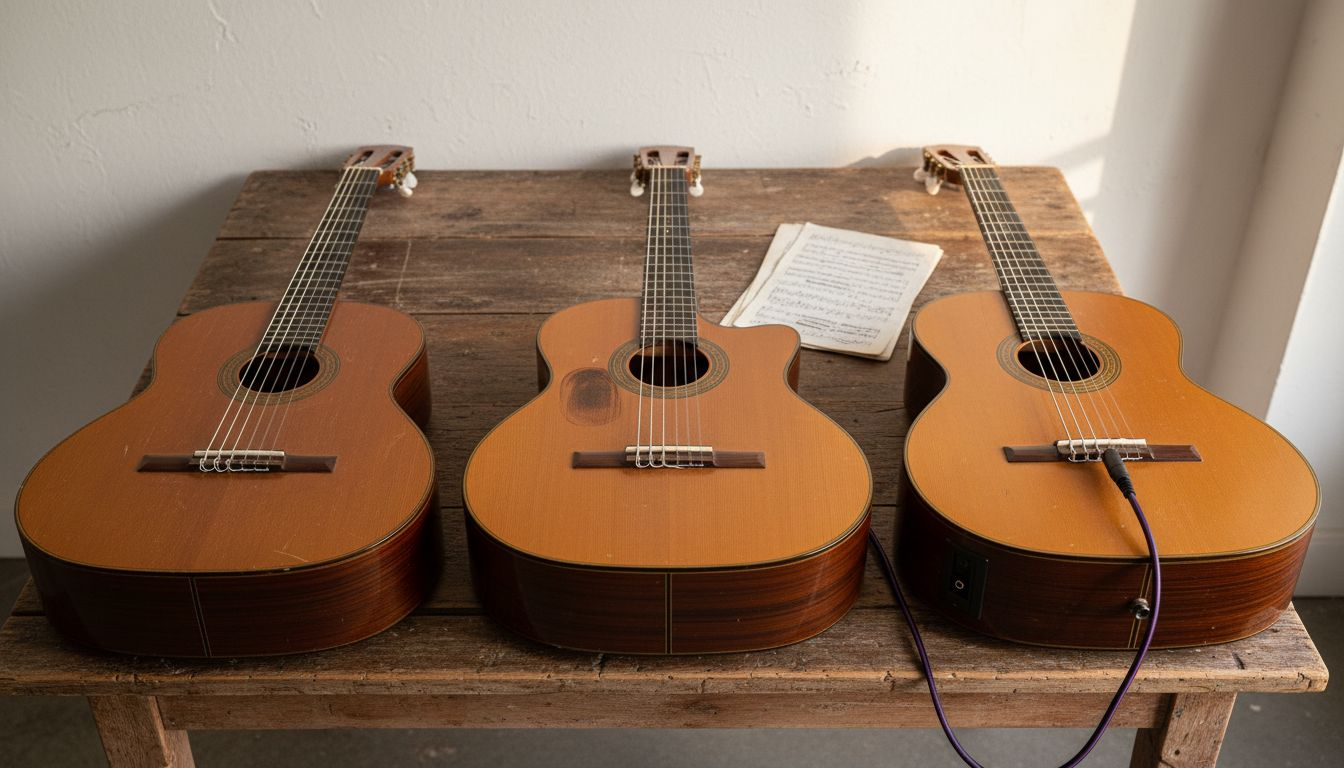
Cutaway models represent a modern innovation, allowing guitarists easier access to higher fretboard regions. These instruments incorporate a sculptured body edge that removes material around the neck joint, enabling performers to reach traditionally challenging upper register notes with greater ease and comfort.
Electro-classical guitars bridge acoustic tradition with contemporary performance needs by integrating sophisticated pickup systems. These instruments maintain classic tonal characteristics while providing musicians flexibility for live performances and studio recordings.
Here’s a concise comparison of the main classical guitar types and their primary musical applications:
| Guitar Type | Best For | Unique Feature |
|---|---|---|
| Standard Classical | Solo and ensemble playing | Wide neck, tonal depth |
| Flamenco | Rhythmic genres | Lightweight, fast response |
| Cutaway Classical | Advanced techniques | Easy upper fret access |
| Electro-Classical | Live performance | Built-in amplification |
Pro tip: Select a classical guitar type that matches your primary musical genre and performance requirements.
Materials, Craftsmanship, and Tonal Impact
The creation of a classical guitar represents a delicate fusion of art and science, where acoustic engineering principles transform raw materials into musical instruments of extraordinary complexity. Each component contributes critically to the guitar’s ultimate sonic performance.
Key materials that define a classical guitar’s quality include:
- Soundboard Woods: Spruce and cedar
- Back and Sides: Rosewood, mahogany, or maple
- Neck: Cedar or mahogany
- Fretboard: Ebony or rosewood
- Strings: Nylon composite materials
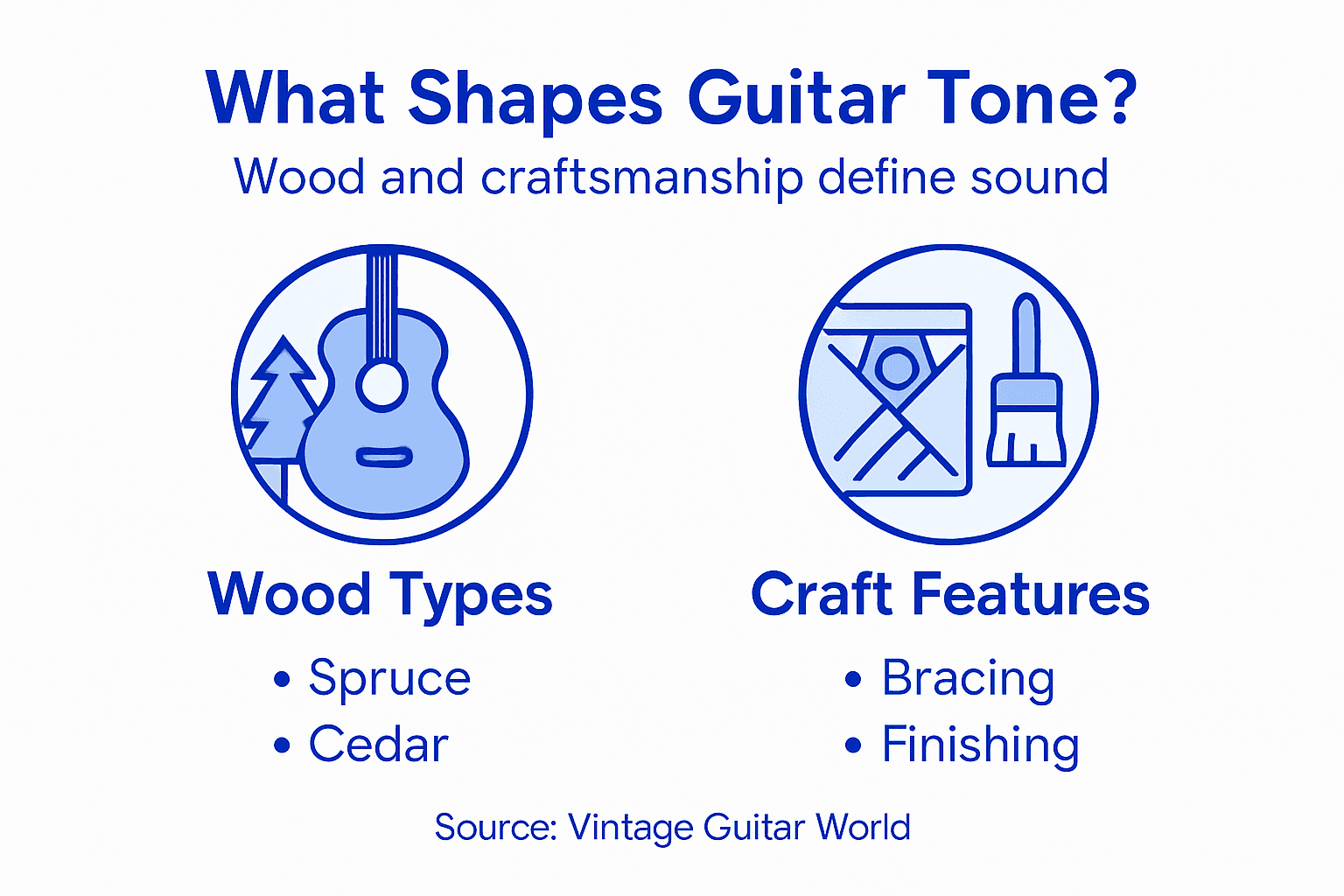
The soundboard, typically crafted from spruce or cedar, serves as the guitar’s acoustic engine. These woods are selected for their unique vibrational characteristics, with each material offering distinct tonal properties. Spruce tends to provide brighter, more articulate sound, while cedar produces warmer, more rounded tones.
Craftsmanship plays an equally crucial role in transforming these materials into exceptional instruments. Expert luthiers carefully consider wood grain, thickness, and bracing patterns to optimize vibrational response. The internal bracing structure, though invisible, dramatically influences the guitar’s ability to project sound and sustain notes. Precise joint construction, careful wood selection, and meticulous finishing techniques transform raw materials into instruments capable of extraordinary musical expression.
Tonal Complexity emerges from the intricate interaction between material properties and structural design. Wood density, stiffness, and internal damping characteristics determine how efficiently vibrations transfer across the instrument, ultimately shaping the guitar’s unique voice.
Pro tip: Invest time in understanding how different wood combinations influence an instrument’s sonic characteristics.
The following table summarizes how different tonewoods impact classical guitar sound:
| Wood Type | Typical Use | Sonic Impact |
|---|---|---|
| Spruce | Soundboard | Bright, clear articulation |
| Cedar | Soundboard | Warm, rounded sustain |
| Rosewood | Back and sides | Deep resonance, rich bass |
| Mahogany | Neck, back/sides | Balanced tone, crisp mids |
| Maple | Back and sides | Focused projection, clarity |
| Ebony | Fretboard | Smooth feel, strong attack |
Historical Evolution and Influential Luthiers
The classical guitar’s journey represents a remarkable narrative of musical innovation, shaped by generations of master craftsmen who transformed a simple stringed instrument into a sophisticated musical voice. Brief history of the guitar reveals a complex lineage spanning multiple centuries and cultural traditions.
Key milestones in the classical guitar’s development include:
- Ancient plucked string instruments in Mesopotamia
- Arabic and Persian ūd influences
- Spanish vihuela developments
- Antonio Torres’ revolutionary design in 19th century
- Modern nylon string standardization
Antonio Torres emerged as a pivotal figure in the 19th century, fundamentally reimagining guitar construction. His innovations established the modern classical guitar’s basic architectural principles, including a wider soundboard, refined bracing techniques, and improved structural integrity that dramatically enhanced sound projection and tonal complexity.
Subsequent influential luthiers built upon Torres’ foundational work. Makers like Ignacio Fleta in Spain continued pushing design boundaries, experimenting with wood selections, bracing patterns, and construction techniques that incrementally improved the instrument’s sonic capabilities. Each generation of luthiers contributed nuanced refinements, transforming the classical guitar from a folk instrument to a sophisticated concert instrument.
The 20th century witnessed global expansion of classical guitar craftsmanship, with luthiers in Spain, Germany, and the United States developing unique regional approaches to instrument construction. These diverse traditions preserved the core principles established by early masters while introducing innovative materials and manufacturing techniques.
Pro tip: Study the work of historical luthiers to appreciate the incremental innovations that shaped modern classical guitar design.
Common Collectors’ Mistakes and Buying Tips
Classical guitar collecting represents a sophisticated pursuit that demands careful consideration and expert knowledge. Vintage guitar authentication requires more than superficial appreciation, demanding nuanced understanding of historical significance and craftsmanship.
Common mistakes collectors frequently make include:
- Prioritizing aesthetic appearance over structural integrity
- Neglecting professional instrument evaluation
- Overlooking potential restoration requirements
- Failing to verify historical provenance
- Misunderstanding market value fluctuations
Authentic classical guitars require comprehensive assessment beyond visual appeal. Serious collectors must develop keen diagnostic skills, examining critical elements like wood condition, bracing integrity, neck alignment, and potential structural modifications. Each instrument represents a unique historical artifact, with value determined by multiple complex factors including maker reputation, construction period, and maintenance history.
Financial investment in classical guitars demands strategic approach. Experienced collectors recommend focusing on instruments with documented historical significance, preferably from renowned luthiers with established reputations. Comprehensive documentation, original condition, and minimal structural alterations dramatically impact an instrument’s collectible value and potential appreciation.
Modern collectors must navigate a complex marketplace that combines historical appreciation with investment potential. Understanding subtle differences between regional crafting traditions, recognizing master luthier signatures, and developing relationships with reputable vintage instrument specialists become critical skills for building a meaningful collection.
Pro tip: Always request professional authentication and detailed condition report before making significant vintage guitar investments.
Discover Your Perfect Classical Guitar with Vintage Guitar World
Navigating the rich world of classical guitars means understanding subtle differences in craftsmanship, tonewoods, and legacy that shape each instrument’s unique voice. This article highlights challenges such as identifying authentic vintage pieces, appreciating tonal impacts of various woods, and selecting a guitar that matches your musical style. At Vintage Guitar World, we specialize in providing expertly evaluated, rare classical guitars crafted by renowned luthiers, making it easier to invest in instruments with lasting value and historic significance.

Elevate your playing experience by exploring our curated collection where quality meets heritage. Whether you seek a standard classical for fingerstyle mastery or a flamenco guitar with fast response, trust our team to guide you through every step. Visit Vintage Guitar World now to access detailed product descriptions, professional certification services, and personalized advice designed to help you select the perfect guitar today.
Frequently Asked Questions
What are the main differences between classical and acoustic guitars?
Classical guitars use nylon strings, have a wider neck for intricate finger placement, and are built for fingerpicking technique, while acoustic guitars generally use steel strings and are suited for strumming.
What types of wood are commonly used in classical guitar construction, and how do they impact tone?
Common woods include spruce and cedar for the soundboard, rosewood and mahogany for the back and sides. Spruce provides a bright tone, while cedar offers a warmer sound, affecting the guitar’s overall tonal quality.
What role does craftsmanship play in the overall sound quality of a classical guitar?
Expert craftsmanship ensures optimal wood selection, precise bracing patterns, and structural integrity, all of which significantly influence the guitar’s vibrational response, projection, and tonal complexity.
What are the different types of classical guitars, and what musical styles are they best suited for?
Types include Standard Classical (solo and ensemble playing), Flamenco (rhythmic genres), Cutaway Classical (advanced techniques), and Electro-Classical (live performance), each designed for specific musical applications.