












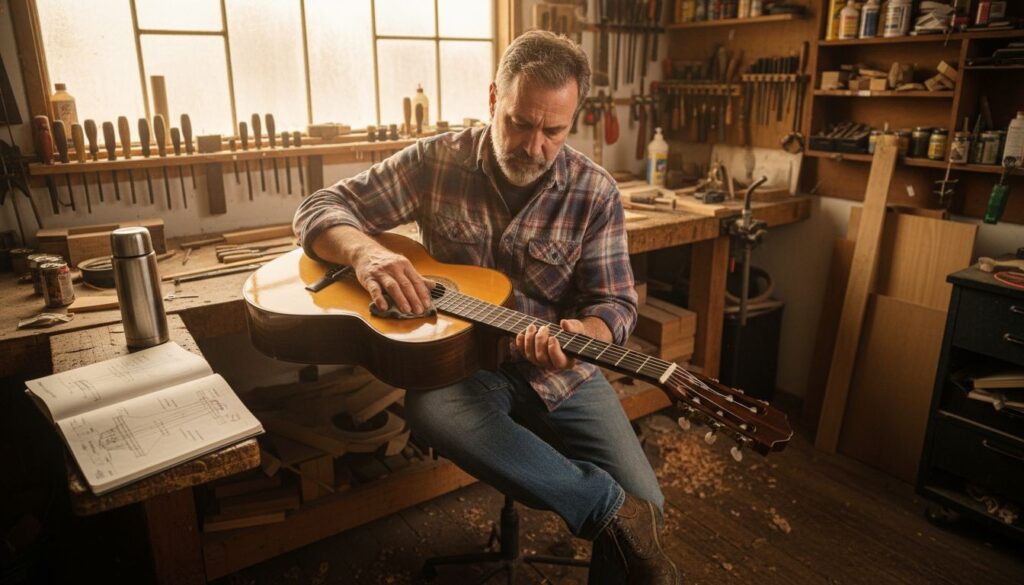
Collectors know the right instrument is more than wood and strings. For those who value craftsmanship and historical context, the story of the classical guitar matters as much as its sound. From Renaissance Spain and Italy to the celebrated six-string models of the 19th century, each era shaped the look, feel, and voice of today’s instruments. Understanding these origins helps you make informed choices and appreciate why certain vintage guitars become treasured additions to any collection.
Table of Contents
- Defining The Classical Guitar And Its Origins
- Distinguishing Construction And Sound Qualities
- Major Classical Guitar Types And Variations
- Role Of Classical Guitars In Performance And Recording
- Collecting, Valuation, And Common Mistakes
Key Takeaways
| Point | Details |
|---|---|
| Understanding Construction | The quality of materials and design choices directly affect the sound and playability of a classical guitar. Factors such as wood type and bracing patterns are crucial to tonal characteristics. |
| Recognizing Guitar Types | Distinct variations of classical guitars exist, reflecting regional traditions and player preferences, from concert guitars to smaller fractional sizes. Understanding these differences aids in selecting the right instrument. |
| Importance of Performance Context | The role of the classical guitar in performance varies, necessitating different instruments for solo, ensemble, or recording settings. Players should choose guitars based on specific performance needs. |
| Collecting Tips | Knowledge of a guitar’s history, condition, and maker is essential for smart collecting. Potential buyers should prioritize professional appraisals and be cautious of common pitfalls like neglecting structural integrity. |
Defining the Classical Guitar and Its Origins
A classical guitar is a stringed instrument built with nylon strings, a wooden body, and a flat top that produces sound through vibration and resonance. Unlike its electric or acoustic counterparts, the classical guitar relies entirely on its construction and materials to project sound. The instrument features six strings tuned to standard pitch, though historically the guitar took centuries to reach this configuration. What distinguishes the classical guitar from other acoustic guitars is its playing technique: performers pluck the strings with fingernails or fingertips rather than using a pick, allowing for greater control, nuance, and the ability to play multiple melodic lines simultaneously.
The journey from the guitar’s earliest precursors to the modern classical instrument spans several centuries. The classical guitar’s ancestors include the vihuela, popular in Renaissance Spain, and the gittern, which existed across medieval Europe. The instrument gradually evolved through the addition of strings—progressing from four-course guitars to five-course designs before finally settling on the six-string configuration we recognize today. This transformation didn’t happen overnight. Builders in Spain and Italy drove major innovations in structure and sound production, creating instruments that could handle the demands of increasingly complex compositions. The evolution of the guitar from Renaissance through Classical eras shows how regional preferences and musical needs shaped the instrument’s design.
By the 19th century, the classical guitar had reached its modern form, featuring the six-string setup, wooden construction with a spruce top and mahogany back and sides, and the technical capabilities to perform sophisticated repertoire. The transition from gut strings to nylon marked a significant development, improving durability and consistency while maintaining the warm, mellow tone that classical guitar music demands. This evolution wasn’t driven by a single inventor or moment—rather, it emerged from generations of craftspeople refining their work based on what musicians needed. Today’s classical guitars directly descend from those Spanish and Italian instruments, carrying forward centuries of accumulated knowledge about acoustics, construction, and playability.
Understanding where the classical guitar came from helps explain why these instruments matter so much to collectors and musicians. The instrument’s design represents the accumulated wisdom of countless builders who experimented with wood types, body shapes, string tension, and internal bracing. When you hold a classical guitar—particularly a vintage or handcrafted instrument—you’re experiencing the result of that long evolutionary process. The specifications that seem simple today (the body dimensions, string spacing, the angle of the neck) were developed through trial and error over centuries.
Pro tip: When examining a classical guitar’s origins and construction details, research the builder’s regional tradition and era, as Spanish and Italian makers used distinctly different approaches to body construction and bracing patterns that directly affected the instrument’s tonal characteristics.
Distinguishing Construction and Sound Qualities
What makes a classical guitar sound the way it does comes down to how it’s built. Every component, from the wood selection to the internal bracing pattern, directly affects the tone you hear when you pluck a string. The soundboard (the top of the guitar) is the primary sound producer. When a string vibrates, it transfers energy to the soundboard, which then resonates and amplifies that vibration into the sound you experience. The thickness, grain pattern, and type of wood used for the soundboard determine how freely it can vibrate and what frequencies it emphasizes. Spruce is the traditional choice for classical guitar soundboards because it offers an ideal balance between strength and responsiveness.
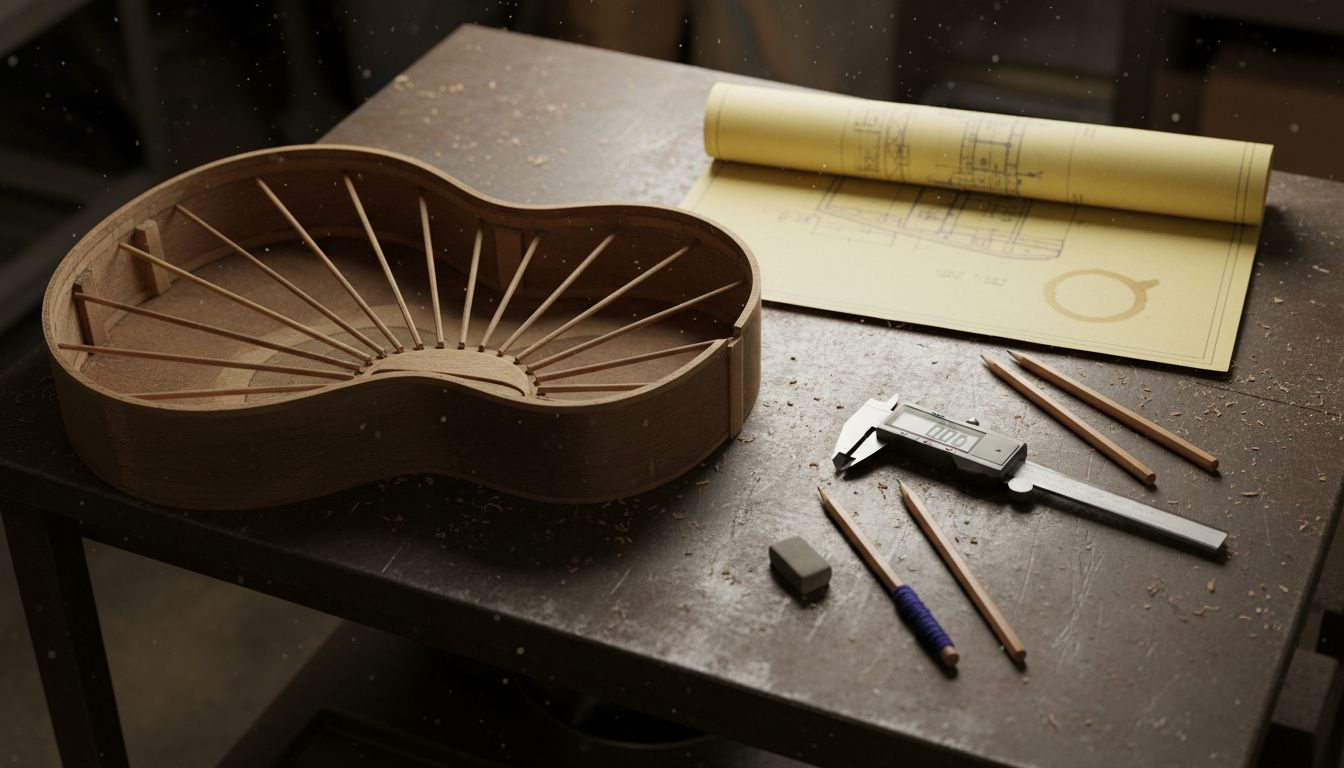
The internal bracing system is where classical guitar construction truly separates itself from other acoustic instruments. Bracing consists of wooden struts glued to the inside of the soundboard in specific patterns that reinforce the structure while allowing controlled vibration. Different bracing patterns produce distinctly different tonal characteristics. The back and sides of the instrument, traditionally made from mahogany or rosewood, contribute to the overall resonance and sustain of the notes. These materials are chosen for their density and acoustic properties. Understanding how soundboards and bracing influence guitar acoustics reveals why two guitars that look similar can sound completely different. The body shape and size also play critical roles. A larger body generally produces louder, fuller tones, while a smaller body typically yields tighter, more articulate sound. The arch of the back contributes to how the instrument projects sound into the room.
Nylon strings themselves are engineered for their role in classical guitar performance. The three plain nylon strings produce high frequencies with clarity, while the three wound strings combine a nylon core with metal wrapping to produce deeper tones with warmth and sustain. The gauge and tension of the strings interact with the soundboard and bracing to create the overall tonal balance. A heavier gauge produces more volume and sustain but requires more finger strength to play. This is why the transition from gut strings to nylon was so significant for classical guitar development.
When evaluating classical guitars, experienced collectors and players listen for several qualities. Sustain refers to how long a note rings out after plucking. Clarity means each note is distinct and defined without muddiness. Projection describes how effectively the instrument carries sound across a room. Tonal balance ensures that high notes don’t overpower low notes and vice versa. A well constructed classical guitar achieves all these qualities simultaneously. The wood must be properly aged and seasoned, the joinery must be precise, and the bracing must be expertly executed. This is why vintage and handcrafted instruments command respect among serious musicians and collectors—they represent the culmination of builder expertise and years of refinement.
The table below summarizes key construction decisions and their average impact on sound and playability:
| Construction Element | Primary Impact on Tone | Influence on Playability |
|---|---|---|
| Soundboard wood type | Brightness, warmth, volume | Responsiveness to touch |
| Bracing pattern | Sustain, clarity, projection | String separation, attack speed |
| String gauge & tension | Volume, sustain, depth | Finger effort required |
| Body size/shape | Loudness, resonance | Comfort for various player sizes |
Pro tip: Play several classical guitars from different makers and eras to develop your ear for how construction choices affect tone; pay particular attention to how sustain, clarity, and projection differ between instruments with varying brace patterns and body wood combinations.
Major Classical Guitar Types and Variations
Classical guitars exist in several distinct variations, each with characteristics suited to different musical styles, player preferences, and playing contexts. While all classical guitars share fundamental design principles, the differences between types reveal how builders adapted the instrument across regions and musical traditions. The most common distinction separates the concert classical guitar from student or practice models. Concert guitars represent the pinnacle of craftsmanship, built with premium tonewoods, precise joinery, and sophisticated bracing patterns designed to maximize tonal complexity and projection. Student guitars prioritize affordability and durability, using more modest materials while maintaining the core structural design that defines a classical instrument.

Geographical traditions created lasting variations in classical guitar design. Spanish, Italian, Portuguese, and German guitar makers developed distinct approaches to construction that reflected local materials, musical preferences, and technical innovations. Spanish guitars, particularly those from makers in Granada and Madrid, became the standard that most concert classical guitars follow today. These instruments feature deeper bodies with specific bracing patterns that produce warm, round tones with excellent sustain. Italian guitars often emphasize brightness and clarity through different soundboard designs and bracing arrangements. Portuguese and German traditions contributed their own refinements, with some builders favoring tighter constructions that prioritize articulation over volume. Understanding these regional traditions matters to collectors because the origin and maker tradition of an instrument directly influences its tonal signature.
Size variations also distinguish different classical guitar types. Full size guitars measure approximately 4 feet in length and represent the standard for adult performers. Three quarter size and half size models serve younger players or those with smaller frames, maintaining proper proportions while reducing scale length and body dimensions. Despite their smaller physical dimensions, quality fractional size guitars maintain acoustic integrity and tonal quality. The flamenco guitar deserves special mention as a distinct variation, though sometimes confused with classical guitars. While flamenco and classical guitars share similar dimensions and six string configurations, flamenco guitars differ significantly in construction and sound characteristics. Flamenco instruments feature lighter construction with different bracing patterns, thinner soundboards, and specialized designs that produce the bright, percussive tones essential to flamenco music.
Historical periods also created identifiable guitar types that collectors recognize. Baroque guitars from the 17th and early 18th centuries featured four or five courses of strings with ornate decoration reflecting the aesthetic of their era. Classical and Romantic period guitars from the 19th century represent the transition toward modern design, with the characteristic six string configuration becoming standardized. Modern classical guitars from the 20th century onward reflect contemporary building techniques and materials, though the fundamental design principles established in Spain remained largely unchanged. When evaluating vintage instruments, understanding which period and tradition an instrument represents provides context for its construction choices and expected sonic characteristics.
Here is a comparison of guitar types by era, illustrating their main features and collector interest:
| Guitar Era | Typical Features | Materials Used | Collector Appeal |
|---|---|---|---|
| Baroque (17th c.) | 4-5 courses, ornate design | Gut strings, decorative woods | High for rarity and history |
| Classical/Romantic | 6 single strings, evolving body size | Spruce top, gut or early nylon | Moderate to high for experts |
| Modern (20th c.-) | Standardized size, nylon strings | Spruce, rosewood, mahogany | Widely collected, easier to source |
| Flamenco | Lighter, percussive focus | Cypress, spruce, thinner top | Specialized, sought by performers |
Pro tip: When examining different classical guitar types and makers, listen carefully to how regional traditions affect tonal character, then seek out instruments from the tradition that resonates most with your musical preferences and playing style.
Role of Classical Guitars in Performance and Recording
The classical guitar occupies a unique position in music performance, functioning as both a solo instrument and an essential voice in chamber ensembles. Unlike electric guitars that depend on amplification or acoustic guitars designed primarily for rhythm, the classical guitar produces its sound entirely through its construction and the player’s technique. This acoustic purity makes it ideal for intimate venues where every nuance of the performer’s interpretation becomes audible. Concert halls, recital rooms, and recording studios all benefit from the classical guitar’s ability to express complex musical ideas through fingerstyle technique. The instrument’s capacity to play multiple melodic lines simultaneously allows a single performer to create the harmonic richness traditionally associated with ensemble music. This quality transformed the classical guitar from a folk instrument into a concert instrument capable of performing sophisticated solo repertoire.
Recording classical guitar presents distinct technical and artistic challenges that have shaped how we hear the instrument today. Recording technology and performance practices fundamentally influenced classical guitar’s recorded sound throughout the twentieth century. Early recordings captured the bright, percussive qualities of gut strings, while later nylon string recordings emphasized warmth and sustain. Microphone placement, room acoustics, and engineering choices directly affect how a guitar’s tonal characteristics translate to listeners. A guitar that sounds exceptional in a concert hall may require careful microphone positioning to capture its nuances on a recording. Professional recording engineers who specialize in classical guitar understand how to preserve the instrument’s natural dynamics and tonal complexity without artificial enhancement. The recording medium itself became an artistic consideration, as performers and producers made deliberate choices about which instruments to use and how to present them sonically.
The repertoire available to classical guitar performers expanded dramatically as the instrument gained legitimacy in concert settings. Solo works by composers ranging from Renaissance lutenists to contemporary classical composers provide endless performance opportunities. Chamber music incorporating classical guitar allows it to interact with strings, woodwinds, and other instruments. The guitar’s role in performance extends beyond purely classical contexts into flamenco influenced pieces, contemporary music, and fusion genres that respect the instrument’s traditional techniques. Different performance contexts demand different instruments. A solo recitalist performing Bach might choose a concert guitar with powerful projection, while someone recording chamber music in a studio might prioritize clarity and articulation over volume. Vintage instruments often occupy special roles in performance and recording because their aged wood and historical construction produce sonic qualities that modern guitars sometimes cannot replicate.
For collectors and musicians, understanding the classical guitar’s performance role connects directly to instrument selection. An instrument might be tonally perfect for solo recitals but less suitable for chamber ensemble work. Recording sessions prioritize different qualities than concert performances. A guitarist who performs in multiple contexts benefits from owning instruments suited to each role. This is why serious musicians and collectors frequently maintain several guitars, choosing the instrument that best serves the specific performance or recording situation. The classical guitar’s versatility as a concert instrument, combined with its technical demands on the performer, ensures that only quality instruments can fully realize the repertoire’s artistic potential.
Pro tip: If you play classical guitar in multiple contexts, listen to professional recordings of your intended repertoire and note which instruments the featured guitarists use, then prioritize acquiring instruments with similar tonal characteristics and construction traditions.
Collecting, Valuation, and Common Mistakes
Collecting classical guitars requires knowledge that extends far beyond simply choosing an instrument that sounds good. Valuation depends on multiple interconnected factors that distinguish a worthwhile investment from an overpriced purchase. The maker’s reputation, construction quality, age, condition, and historical significance all contribute to an instrument’s value. A handcrafted guitar by a respected Spanish luthier from the mid-20th century will command significantly higher prices than a factory made instrument from the same era. Rarity matters considerably. Guitars built during specific periods by particular makers, or instruments with unique wood combinations or construction variations, become more valuable as their scarcity becomes recognized. Documentation proves crucial for valuation. Original cases, maker labels, certificates of authenticity, and provenance records substantially increase an instrument’s worth. A vintage guitar with complete documentation and clear history will appraise higher than an identical instrument with questionable origins.
Common collecting mistakes often stem from insufficient due diligence before purchase. One significant oversight involves neglecting structural integrity assessment. Cracks in the soundboard, loose bracing, warped necks, or separated seams might be invisible to casual inspection but become costly repairs. Humidity exposure damages classical guitars extensively. Wood moves with moisture fluctuations, causing frets to lift, bracing to fail, and tops to crack. Collectors must understand how an instrument was stored and maintained throughout its history. Another frequent error involves underestimating restoration costs. What appears as a minor cosmetic issue might hide structural problems requiring expensive professional intervention. Neglecting proper maintenance and attention to physical condition creates situations where restoration expenses exceed the instrument’s actual value. Buyers sometimes purchase based purely on price without considering why an instrument is undervalued. Suspiciously low prices warrant investigation. The reason behind the discount might indicate hidden damage, questionable authenticity, or an instrument simply less desirable than comparable alternatives.
Authentication presents particular challenges for collectors investing in vintage instruments. Forged maker labels exist. Guitars have been refinished to appear newer or older than they actually are. Serial numbers have been altered. Without proper expertise or professional evaluation, distinguishing genuine instruments from sophisticated reproductions becomes difficult. Reputable dealers provide detailed condition reports, photographs from multiple angles, and transparent pricing explanations. They welcome expert examination and provide documentation supporting their claims. Overestimating tonal potential represents another collecting pitfall. A guitar that sounds mediocre will not dramatically improve with age or different strings. Some instruments simply possess inferior acoustic design regardless of materials or construction quality. Playing multiple examples before purchasing helps develop your ear for quality differences.
Valuation requires comparing recent sale prices of similar instruments rather than relying on asking prices or outdated appraisals. Market conditions fluctuate. Guitars by certain makers experience increased collector interest while others decline. Geographic location affects value. A highly regarded Spanish guitar might command higher prices in Europe than in Asia. Working with knowledgeable dealers who maintain detailed sales records and market awareness provides more accurate valuations than independent estimates. When considering a significant purchase, obtaining professional appraisals from qualified luthiers or guitar specialists validates your assessment before committing funds. The collector who does their homework, examines instruments carefully, researches maker history, and understands the market makes informed purchases that appreciate rather than depreciate.
Pro tip: Before making any classical guitar purchase above a certain budget, have a qualified luthier or guitar appraiser inspect the instrument in person, focusing on structural integrity and authenticity verification rather than relying solely on seller descriptions or photographs.
Discover the Timeless Craftsmanship of Classical Guitars with Vintage Guitar World
Understanding the origins, construction, and unique sound qualities of classical guitars reveals the immense value these instruments hold for musicians and collectors alike. Whether you are seeking a concert guitar that delivers exquisite tonal balance and sustain or a vintage piece steeped in history, finding the right instrument can be overwhelming without expert guidance. You want to avoid common pitfalls like hidden structural issues or uncertain authenticity, and instead acquire a guitar that truly resonates with your musical passion and playing style.

Explore our curated selection at Vintage Guitar World where every classical guitar undergoes thorough evaluation to ensure structural integrity and genuine craftsmanship. Benefit from our detailed product descriptions that highlight maker heritage, construction details, and tonal characteristics to guide your decision. Dive deeper into the rich history and performance roles of these instruments with our expert resources, ensuring you make an informed and confident purchase. Act now to find a vintage or handcrafted classical guitar that matches your artistic vision and elevates your music to new heights. Start your journey by browsing our exclusive collection at Vintage Guitar World Shop and connect with specialists who truly understand the legacy behind every guitar.
Frequently Asked Questions
What is a classical guitar?
A classical guitar is a stringed instrument with nylon strings, a wooden body, and a flat top, which produces sound through vibration and resonance without amplification. It is distinguished by its playing technique, where performers pluck the strings using their fingertips or fingernails.
How does the construction of a classical guitar affect its sound?
The construction elements, including the soundboard wood type, internal bracing patterns, and body size, significantly influence a classical guitar’s tone. For instance, a spruce soundboard offers brightness and volume, while different bracing patterns alter the sustain and projection of the instrument.
What are the main types of classical guitars?
The main types of classical guitars include concert classical guitars, which are crafted with premium materials for performance, and student models, which prioritize affordability. Additionally, flamenco guitars are a distinct variation featuring lighter construction for brightness and percussive tones.
Why is it important to know the origins and construction of classical guitars?
Understanding the origins and construction of classical guitars is crucial for collectors and musicians as it explains the tonal characteristics and craftsmanship associated with different makers and regions, which can impact the value and performance of the instrument.