














TL;DR:
- Collector-grade instruments are defined by original factory condition, provenance, and documented rarity, placing them above ordinary guitars in value and significance. Authenticity, condition, era, and brand recognition determine their status, with modifications and repairs typically disqualifying them unless fully reversible and documented. Provenance and careful evaluation of originality are essential for collectors aiming for investment-grade status in vintage guitars.
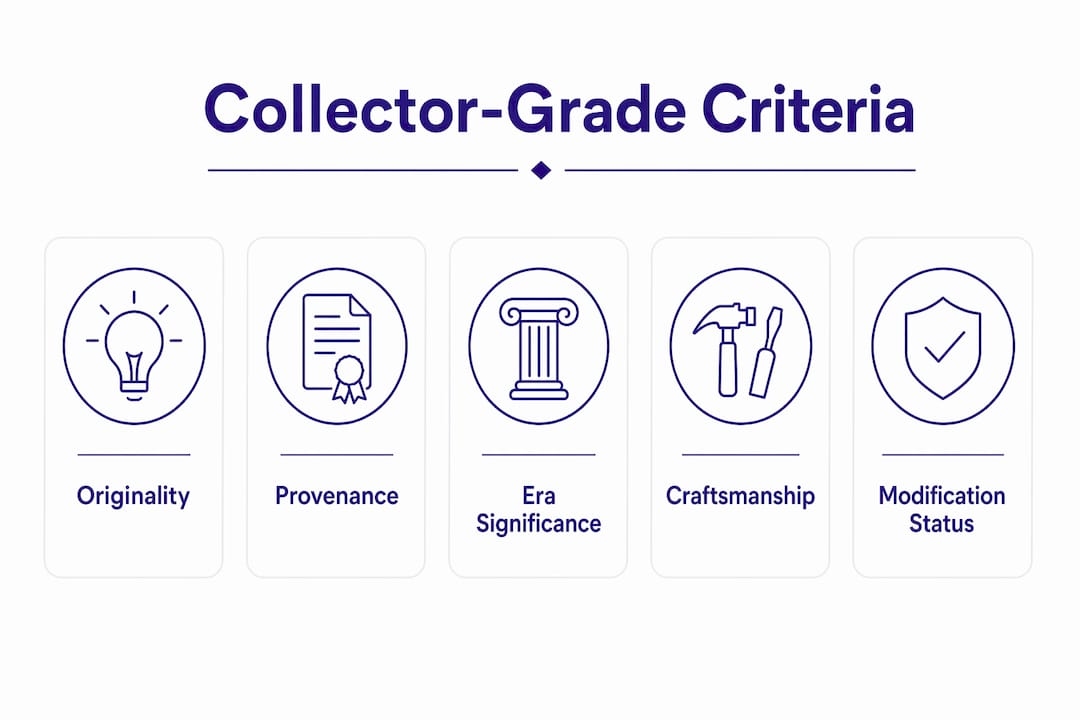
Collector-grade instruments are defined by original factory condition, verified provenance, and documented rarity that places them above ordinary playable guitars in both historical significance and market value. The term “collector-grade” is the widely used market designation, though auction houses like Sotheby’s and Christie’s often use the phrase “specimen guitar” to describe the same standard. Understanding what defines collector-grade instruments separates serious collectors from casual buyers and protects you from overpaying for a player-grade guitar dressed up with a premium price tag. The core criteria are condition, originality, provenance, era, and brand recognition. Each factor carries weight independently, but together they determine whether a guitar belongs in a collection or on a stage.
What specific features define collector-grade instruments?
Collector-grade status begins with originality. A guitar qualifies when every component, from tuning machines to nut to pickguard, remains as it left the factory. The moment a pickup gets swapped or a headstock repair gets filled and refinished, the instrument crosses into a different category regardless of how well the work was done. Collectability combines rarity, craftsmanship, sound quality, and provenance rather than age or cosmetic appearance alone.
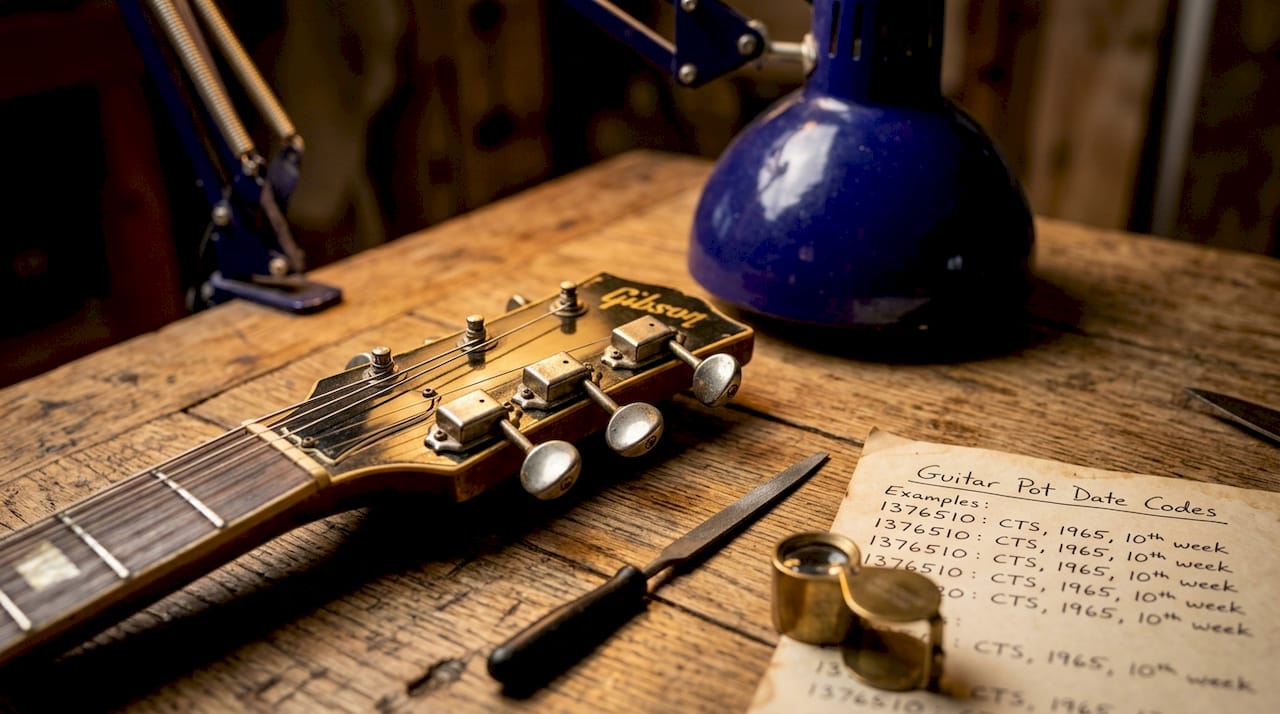
Condition is the second pillar. Guitars graded mint or near-mint command the highest prices because they represent the closest surviving example of what left the factory decades ago. A 1959 Gibson Les Paul Standard with original finish checking, original frets, and original case hardware tells a complete story. One with a refret and a replaced bridge tells an incomplete one.
The key features that define collector-grade instrument criteria include:
- All-original parts: No replaced tuners, pickups, bridges, nuts, or electronics
- Original finish: Factory lacquer or nitrocellulose finish intact, with natural aging rather than touch-ups or refinishing
- Correct hardware: Period-correct screws, knobs, and pickguards matching production specifications
- Intact serial number: Clearly stamped or inked, matching factory records for the production year
- Original case: Period-correct case or original shipping materials significantly add to the complete package
Craftsmanship quality and era significance also factor into the evaluation. Guitars built during peak production periods used tonewoods, construction methods, and quality control standards that later decades did not replicate. The market checks originality through clean solder joints, correct component codes, and authentic finish characteristics. Gibson’s Certified Vintage program formalizes this process with expert appraisal and certificates of authenticity, setting a benchmark for what the collector market considers verifiable.
Pro Tip: Before purchasing any guitar marketed as collector-grade, request a UV light inspection of the finish. Refinished areas fluoresce differently under ultraviolet light, revealing touch-ups invisible to the naked eye.
How does provenance affect the value of collector-grade guitars?
Provenance is the documented chain of evidence connecting a guitar to its factory origin, original owner, and subsequent history. Sotheby’s identifies shipping ledgers, serial number databases, original receipts, tags, case candy, and lifetime photographs as the evidentiary items that matter most. This is not a formality. Provenance is the difference between a guitar valued at market rate and one valued at a significant premium.
The practical items that constitute strong provenance include:
- Original receipt or invoice from the selling dealer
- Case candy: hangtags, warranty cards, polish cloths, and instruction manuals still in the case
- Photographs of the original owner playing the instrument
- Shipping ledger entries matching the serial number to a specific production date
- Previous auction or appraisal records documenting the guitar’s history through multiple owners
Complete provenance dossiers combining all paperwork and lifetime visuals represent the insider method for elevating a guitar to investment-grade status. A 1963 Fender Stratocaster with its original hang tag, case, and a photograph of the original purchaser at the point of sale is worth materially more than an identical example with no documentation.
The market relies on verifiable provenance because authentication fraud is a real risk. Counterfeit vintage guitars and parts-bin builds assembled from period-correct components exist at every price level. Provenance serves as crucial evidence for valuation and investment-grade classification, not merely as a nice addition to the package.
“Assembling a complete dossier with all paperwork and photographs before valuing a guitar is the standard professional approach at auction. Without it, even a genuine instrument faces skepticism.” — Sotheby’s collecting guide
One provenance pitfall collectors encounter is fabricated documentation. Photocopied receipts and printed hang tags are easy to produce. Cross-reference serial numbers against factory records and consult the guitar provenance guide published by Vintage-guitar-world for a detailed breakdown of how documentation affects value at every price tier.
What role do era and brand play in collector desirability?
Era and brand are the two variables that most directly predict whether a guitar will attract serious collector interest. Golden era timeframes are well established: early 1930s through early 1940s for acoustic guitars, and mid-1950s through late 1960s for electric guitars. These windows represent the convergence of premium materials, skilled labor, and design innovation that has not been consistently replicated since.
| Era | Instrument type | Key brands | Collector significance |
|---|---|---|---|
| Early 1930s to early 1940s | Acoustic | Martin, Gibson | Pre-war construction, Adirondack spruce tops, hide glue joints |
| Mid-1950s to late 1960s | Electric | Fender, Gibson | Original PAF humbuckers, slab-board necks, nitro finishes |
| Late 1960s to mid-1970s | Acoustic/Electric | Martin, Gibson | Transitional period, niche collector interest |
| Post-1980s boutique | Electric/Acoustic | Various luthiers | Artist association and limited production drive value |
Fender, Gibson, and Martin dominate collector markets because of their cross-genre utility and historical impact. A pre-war Martin D-45 or a 1959 Gibson Les Paul Standard represents the apex of collectible guitar value because both era and brand align at their most desirable intersection. Christie’s notes that auction houses treat instruments as collectible objects within a market context where expert mediation defines collector-grade status, meaning brand reputation carries institutional weight.
Boutique and artist-associated guitars represent a growing exception to the brand dominance rule. A guitar built by a recognized luthier for a specific recording artist, with documented use on a major album, can achieve collector-grade status regardless of the maker’s name. The significance of collector-grade status in these cases rests entirely on provenance and cultural documentation rather than brand heritage.
Pro Tip: When evaluating guitars from the transitional 1970s period, check for the specific production year rather than the decade. A 1970 Gibson Les Paul Deluxe differs significantly in collector value from a 1975 example due to construction changes made mid-decade.
How do modifications separate collector-grade from player-grade guitars?
Player-grade guitars retain full playability but carry modifications, repairs, or replaced parts that remove them from collector-grade consideration. The distinction matters because player-grade instruments often sell at a fraction of collector-grade prices while appearing superficially similar. Knowing the difference protects your investment.
The practical steps for evaluating whether modifications affect collector-grade status are:
- Inspect the solder joints. Factory solder on vintage guitars has a specific appearance. Fresh solder on original pots or switches indicates electronics work has been done.
- Check the tuner screw holes. Replaced tuning machines often leave enlarged or filled screw holes that reveal the swap under close inspection.
- Examine the finish under the pickguard. Original finish under a pickguard matches the exposed areas in color and aging. A color mismatch indicates refinishing.
- Verify fret wear against claimed originality. A guitar described as all-original with perfectly level, unworn frets has almost certainly been refretted.
- Confirm nut material and fit. Factory nuts on vintage Fenders and Gibsons have specific dimensions and materials. A bone nut on a guitar that originally shipped with plastic is a modification.
Reversibility of modifications and documentation of any replaced parts can preserve or partially maintain collector-grade status when original components are retained. A 1965 Fender Telecaster with its original pickups removed but stored in the case occupies a gray zone. The guitar is modified, but the modification is reversible and documented. That distinction matters at auction and in private sales. The impact of original parts on a guitar’s collector status is covered in depth by Vintage-guitar-world’s guide to vintage value.
Mint condition versus playable wear also creates meaningful price differences. Mint-condition guitars from golden eras, including 1960s Stratocasters, sell for significantly more than examples showing heavy play wear. This does not mean played guitars have no collector value. It means condition is priced into every transaction, and buyers who understand the grading scale negotiate from a position of knowledge.
Key takeaways
Collector-grade instruments require the simultaneous presence of originality, documented provenance, era significance, and recognized brand or cultural context to achieve and hold their status.
| Point | Details |
|---|---|
| Originality is non-negotiable | All-original parts, finish, and hardware define collector-grade status above all other factors. |
| Provenance multiplies value | Complete documentation including receipts, case candy, and photographs elevates a guitar to investment-grade. |
| Era and brand set the ceiling | Golden era instruments from Fender, Gibson, and Martin command the highest collector premiums. |
| Modifications create player-grade | Any unoriginal component, even a refret, shifts a guitar from collector-grade to player-grade classification. |
| Reversible changes preserve options | Retaining original parts alongside a modified guitar partially protects its collector-grade potential. |
What I’ve learned about collector-grade guitars after years in this market
The most common mistake I see collectors make is prioritizing cosmetic appearance over documented originality. A guitar can look stunning and still be a player-grade instrument with a professional refinish and replaced electronics. Conversely, a guitar with honest checking, light buckle rash, and original solder joints is worth far more to the serious collector even though it looks less impressive in photographs.
The market has shifted noticeably toward provenance in recent years. Buyers who once accepted a guitar’s originality on visual inspection alone now expect documentation. Serial number cross-referencing against factory records, pot date codes, and original case hardware have moved from specialist knowledge to baseline expectations. If you are building a collection with investment potential, treat every provenance document as part of the instrument itself.
I also think the definition of collector-grade is more elastic than most guides acknowledge. A 1972 Martin D-28 sits outside the pre-war golden era, but one with its original owner’s name on the headstock label, original receipt, and a recording history with a recognized artist achieves collector-grade status through cultural significance rather than era alone. The criteria are a framework, not a rigid checklist. Understanding the framework deeply is what lets you recognize exceptions when they appear.
The 2026 vintage guitar market trends show continued demand for documented, all-original examples at every price level. That trend rewards collectors who invest time in understanding what they are buying before they buy it.
— Vintage
Explore collector-grade vintage guitars at Vintage-guitar-world

Vintage-guitar-world offers a curated selection of rare, restored, and authenticated guitars spanning classical, flamenco, acoustic, and electric categories. Every instrument listed includes detailed provenance notes, historical context, and condition assessments prepared by specialists who apply the same criteria covered in this guide. Whether you are evaluating your first serious acquisition or expanding an established collection, the types of vintage guitars resource covers features, history, and investment potential across the full spectrum of collectible instruments. For personalized guidance on a specific guitar’s value, Vintage-guitar-world also offers expert appraisal services with certification options for collectors who need documented valuations.
FAQ
What is the definition of a collector-grade instrument?
A collector-grade instrument retains its original factory parts, finish, and hardware, supported by verifiable provenance and recognized rarity. Sotheby’s defines these as “specimen guitars” and treats documentation as essential to the classification.
How do I identify collector-grade instruments before buying?
Check for all-original components using pot date codes, solder joint appearance, and finish consistency under the pickguard. Cross-reference the serial number against factory records and request all available provenance documentation before committing to a purchase.
Does a refret disqualify a guitar from collector-grade status?
A refret moves a guitar from collector-grade to player-grade in most market contexts. If the original frets are retained and the work is documented, the impact on value is reduced but not eliminated.
Which brands produce the most collector-grade guitars?
Fender, Gibson, and Martin dominate collector markets due to their historical significance and cross-genre utility. Guitars from these brands built during golden era production windows carry the strongest collector premiums.
Can a modified guitar regain collector-grade status?
A guitar with reversible modifications can partially recover collector-grade status if original components are sourced and reinstalled with documentation. Full restoration to all-original specification with verified period-correct parts is the only path back to top-tier collector classification.