












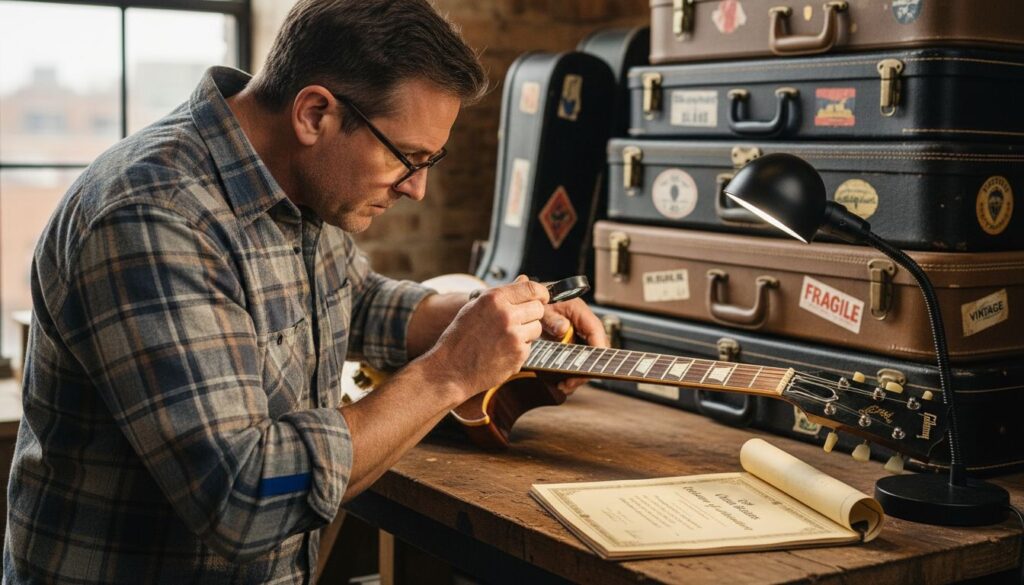

Collectors lose thousands every year buying altered or counterfeit vintage guitars. The vintage guitar market is filled with instruments whose serial numbers, finishes, or hardware have been modified to inflate value. Yet certification reduces counterfeit risk by over 60%, giving collectors a proven path to confident purchases. This guide provides expert tips on selecting, authenticating, valuing, and preserving vintage guitars so you can avoid common pitfalls and build a valuable collection.
Table of Contents
- Key Criteria For Selecting Vintage Guitars
- Authentication Techniques And Provenance Verification
- Valuation Factors In Vintage Guitar Collecting
- Preservation And Maintenance Best Practices
- Comparing Top Collectible Guitar Models And Brands
- Finding Trusted Sellers And Using Certification
- Situational Recommendations For Collectors
- Explore Expert Vintage Guitar Buying Guides And Resources
Key Takeaways
| Point | Details |
|---|---|
| Authenticity drives value | Certification and provenance verification protect against costly counterfeits and altered instruments. |
| Original parts add premium pricing | Guitars with unmodified components command 25 to 30% higher prices than restored versions. |
| Condition grading impacts returns | Mint condition instruments fetch 30 to 50% more than similar models with minor wear. |
| Humidity control preserves investment | Maintaining 40 to 50% relative humidity prevents cracking, warping, and finish damage. |
| Iconic models appreciate fastest | Gibson 1959 Les Paul Standards and Fender 1960s Stratocasters lead collector demand and price growth. |
Key Criteria for Selecting Vintage Guitars
Authenticity verification forms the foundation of successful vintage guitar collecting. Before you spend serious money, confirm the instrument matches its claimed age, brand, and specifications. Counterfeits and modified guitars flood the market, and even experienced players can be fooled by expert forgeries.
Condition grading directly affects resale value. Guitars in mint condition can fetch up to 50% more than instruments with minor wear or repairs. Evaluate the body for cracks, refinishing, or non-original paint. Check the neck for warping or incorrect heel stamps. Inspect hardware for replacement screws, tuners, or bridge components.
Provenance and documentation establish trust. Original sales receipts, warranty cards, and previous ownership records prove an instrument’s history. Guitars with documented celebrity ownership or studio use command premium prices at auction. Always request provenance documents before purchasing high-value instruments.
Original parts retention significantly impacts pricing. Vintage guitars with original parts command 25 to 30% higher prices than those with replaced components. Even minor substitutions like aftermarket tuners or pickguards reduce collector appeal. You want every screw, knob, and pickup to match factory specifications for the production year.
Brand and model rarity drive long-term appreciation. Gibson, Fender, and Martin dominate collector interest, but specific models within these brands vary wildly in value. A 1959 Gibson Les Paul Standard appreciates faster than a 1980s Les Paul Custom. Research production numbers and market demand before committing to a purchase.
Pro Tip: Create a detailed photo checklist when checking vintage guitar authenticity. Document serial numbers, fretboard inlays, headstock logos, control cavity wiring, and case candy. Compare your photos against verified examples from the same production year.
Authentication Techniques and Provenance Verification
Physical inspection reveals telltale signs of authenticity or fraud. Start with the serial number location and format. Gibson stamped numbers on the back of the headstock from 1977 onward, but used paper labels inside the body before that date. Fender’s numbering systems changed multiple times between the 1950s and 1970s. Cross-reference serial numbers with manufacturer databases to confirm production dates.
Examine the finish for signs of refinishing. Original nitrocellulose lacquer develops checking patterns and aged patina that modern polyurethane cannot replicate. Use a blacklight to detect overspray or touch-up work invisible under normal lighting. Inspect the neck pocket and control cavities for original date stamps and routing marks.
Provenance documentation adds credibility and value. Request original bills of sale, warranty cards, repair receipts, and photographs showing the instrument’s history. Guitars owned by famous musicians need third-party authentication from recognized experts. Even non-celebrity provenance increases buyer confidence and resale potential.
Expert appraisals and certification reduce counterfeit risk by over 60%. Professional authenticators examine construction methods, wood grain patterns, hardware specifications, and aging characteristics. They provide written certificates detailing their findings, which protect you during resale and insurance claims.
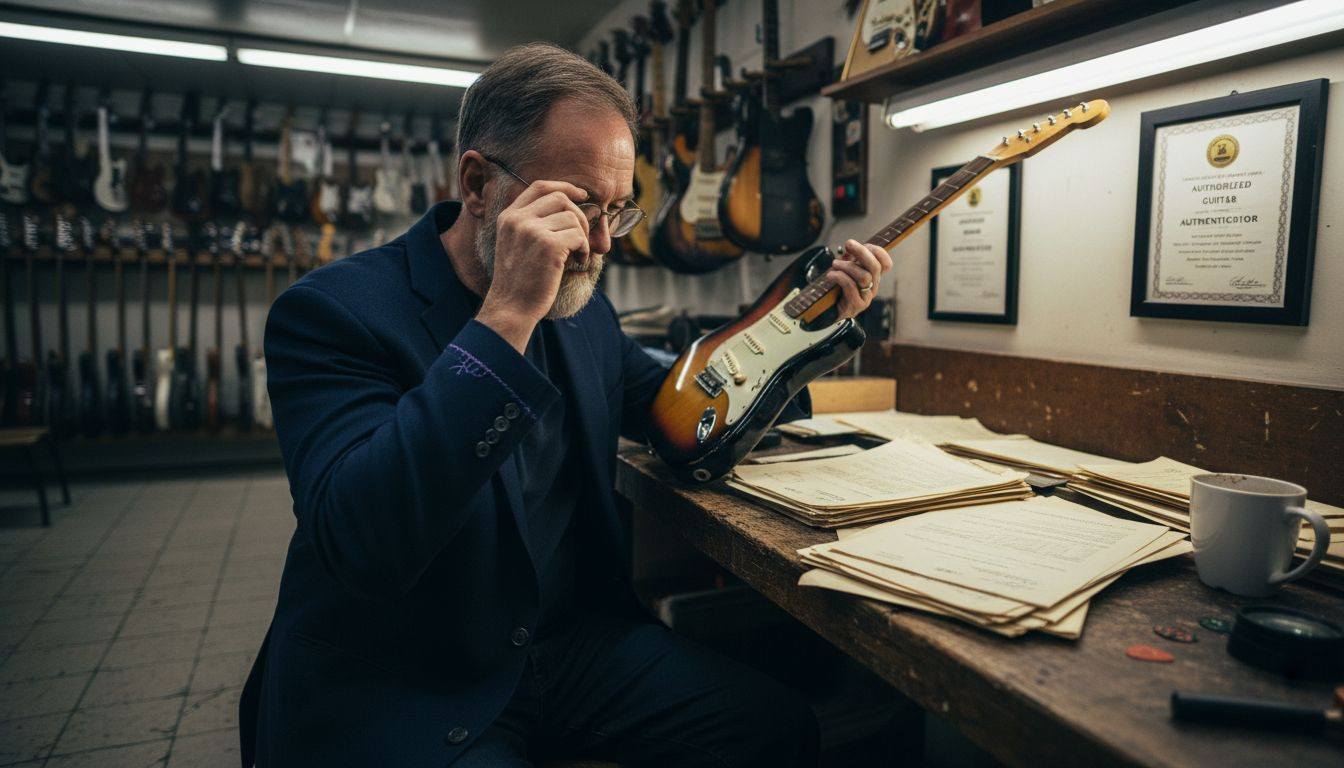
Counterfeit and altered instruments represent serious risks. Forgers install aged parts on new bodies, swap necks between guitars, or artificially distress finishes to mimic decades of wear. Some sellers deliberately misrepresent manufacturing dates or model specifications. Others unknowingly pass along guitars that previous owners modified.
Pro Tip: Schedule authentication of vintage guitars before finalizing high-value purchases. Invest $200 to $500 in professional verification rather than risk losing thousands on a counterfeit or heavily modified instrument.
Valuation Factors in Vintage Guitar Collecting
Condition grading follows standardized scales that quantify wear and originality. Mint condition means no play wear, factory-original components, and pristine cosmetics. Excellent condition shows minor play wear but retains all original parts. Very good condition includes light scratches, modest fret wear, or small dings. Mint-condition guitars fetch 30 to 50% higher prices than similar models with minor wear.
Provenance adds measurable premiums to base values. Guitars with documented celebrity ownership or recording session use command 2x to 5x typical market prices. Even non-famous original owner documentation increases values by 10% to 15% compared to guitars with unknown histories.
Market pricing fluctuates based on collector demand and economic conditions. Gibson 1959 Les Paul Standards fetch $350,000 to $500,000 in mint condition, while Fender 1960s Stratocasters sell for $150,000 to $250,000. These flagship models lead market trends, but mid-tier collectibles offer better risk-adjusted returns for most collectors.
| Model | Mint Condition Price | Excellent Condition Price | Key Value Drivers |
|---|---|---|---|
| Gibson 1959 Les Paul Standard | $350,000 to $500,000 | $200,000 to $300,000 | Extreme rarity, iconic tone, celebrity associations |
| Fender 1960s Stratocaster | $150,000 to $250,000 | $80,000 to $120,000 | Playability, versatile sound, rock history |
| Martin D-28 Pre-War | $80,000 to $150,000 | $40,000 to $70,000 | Craftsmanship, acoustic tone, limited production |
| Gibson Les Paul 1950s Goldtop | $40,000 to $80,000 | $20,000 to $40,000 | P-90 pickups, player preference, moderate rarity |
Expert valuation services cost $150 to $500 but provide insurance-grade documentation. Professional appraisers research recent auction results, examine condition details, and issue formal valuation certificates. This investment protects you during insurance claims and proves market value during estate planning.
Follow vintage guitar market trends 2026 to identify emerging opportunities. Track auction results, dealer asking prices, and private sales to understand which models appreciate fastest. Learn how to value collectible guitars using comparable sales data and condition-adjusted pricing models.
Preservation and Maintenance Best Practices
Humidity control prevents costly damage to vintage instruments. Optimal humidity range to prevent wood damage is 40 to 50% relative humidity year-round. Lower humidity causes top cracks, fretboard shrinkage, and loose braces. Higher humidity swells wood, raises action, and promotes mold growth. Install hygrometers in storage areas and use humidifiers or dehumidifiers to maintain stable conditions.
Regular professional setups maintain playability and prevent wear. Schedule annual inspections to check neck relief, fret condition, and hardware function. Technicians adjust truss rods, clean fretboards, and lubricate moving parts without compromising originality. They catch small problems before they become expensive repairs.
Gentle cleaning protects original finishes. Use microfiber cloths dampened with distilled water for routine dusting. Avoid commercial guitar polishes containing silicone or harsh solvents that damage nitrocellulose lacquer. Clean metal hardware with appropriate products designed for vintage instruments. Never use abrasive materials or aggressive rubbing on aged finishes.
Climate-related damage ruins otherwise valuable guitars. Sudden temperature changes crack tops and backs. Dry winter air shrinks necks and causes sharp fret ends. Summer humidity swells bodies and warps necks. Store instruments in climate-controlled spaces away from heating vents, air conditioners, and exterior walls.
Long-term maintenance preserves condition and value. Keep guitars in their original cases with proper support. Loosen strings slightly for extended storage to reduce neck tension. Document all professional work with dated receipts and photographs. Follow vintage guitar preservation tips to protect your investment for decades.
- Store guitars in climate-controlled environments maintaining 40 to 50% relative humidity
- Schedule annual professional setups to maintain playability without compromising originality
- Use only gentle, vintage-appropriate cleaning products on aged finishes and hardware
- Document all maintenance and repairs with dated receipts for future provenance records
Comparing Top Collectible Guitar Models and Brands
Gibson 1959 Les Paul Standards represent the pinnacle of vintage guitar collecting. Gibson 1959 Les Paul appreciates 400% over 20 years, with prices $350k to $500k mint condition. Only 643 sunburst models left the factory in 1959, creating extreme scarcity. Celebrity ownership by players like Jimmy Page, Eric Clapton, and Joe Perry drives collector competition and astronomical pricing.
Fender 1960s Stratocasters balance collectibility with playability. These instruments appear on countless classic recordings and remain highly functional for modern players. Prices range from $150,000 to $250,000 for mint examples, but excellent-condition models sell for $80,000 to $120,000. The larger production numbers compared to 1959 Les Pauls make them more accessible to serious collectors.
Martin D-28 pre-war acoustics attract collectors seeking craftsmanship and tone. Built before 1946, these guitars feature scalloped bracing, Brazilian rosewood, and hand-fitted construction. Mint examples sell for $80,000 to $150,000, while excellent-condition instruments trade for $40,000 to $70,000. They offer strong appreciation potential with less competition than electric guitars.
| Feature | Gibson 1959 Les Paul | Fender 1960s Strat | Martin Pre-War D-28 |
|---|---|---|---|
| Typical Price Range | $350k to $500k mint | $150k to $250k mint | $80k to $150k mint |
| Production Numbers | 643 sunburst models | Thousands produced | Limited hand-built |
| Best For | Serious investors | Player-collectors | Acoustic enthusiasts |
| Market Liquidity | Very high demand | High demand | Moderate demand |
| Appreciation Rate | 400% over 20 years | 250% over 20 years | 200% over 20 years |
Condition and provenance affect each model differently. Les Pauls command huge premiums for celebrity ownership or recording history. Stratocasters retain value best when fully original with matching serial numbers. Martin acoustics need documented pre-war construction dates and original case candy.
Explore vintage guitar model comparisons to understand which instruments fit your collecting goals and budget. Flagship models like 1959 Les Pauls suit investors seeking maximum appreciation. Mid-tier collectibles offer better entry points for new collectors building expertise.
Finding Trusted Sellers and Using Certification
Reputable dealers specialize in authenticated vintage instruments. Established shops like Gruhn Guitars, Carter Vintage, and Rumble Seat Music maintain decades-long reputations. They provide detailed condition reports, professional photographs, and return policies protecting buyers. Online platforms including Reverb’s Vintage section and Christie’s auctions connect collectors with verified sellers worldwide.
Certification benefits extend beyond counterfeit protection. Certification reduces counterfeit risk by over 60% by providing expert authentication and documentation. Certified sellers offer access to rare listings before public sale. Many provide warranty coverage for authenticity claims and condition representations.
Verify seller reputation through multiple channels. Check Better Business Bureau ratings, read customer reviews, and research how long they’ve operated. Ask for references from previous buyers of similar instruments. Legitimate dealers willingly provide detailed provenance information and allow independent inspections before purchase.
Buyer protections vary by seller and platform. Established dealers offer return periods allowing authentication by your chosen expert. Auction houses provide condition reports but typically sell items as-is. Private sellers may lack formal protections, requiring extra due diligence on your part. Always use secure payment methods that offer fraud protection.
- Prioritize dealers with decades of experience and verifiable track records
- Request third-party authentication certificates for purchases exceeding $10,000
- Verify return policies and buyer protections before committing to purchases
- Use escrow services for high-value private party transactions
Learn techniques for trusted vintage guitar sellers and certification benefits. Invest time researching seller reputations as carefully as you research the instruments themselves. Your due diligence pays dividends through reduced fraud risk and access to better inventory.
Situational Recommendations for Collectors
Investors seeking maximum appreciation should target Gibson 1959 Les Paul Standards. These instruments lead the market in price growth and liquidity. Buy only mint or excellent-condition examples with documented provenance. Budget $350,000 to $500,000 for entry, knowing these guitars historically appreciate 15% to 20% annually during strong markets.
Player-collectors want instruments that sound great and hold value. Fender 1960s Stratocasters deliver iconic tone while maintaining strong collector interest. Look for all-original examples with typical play wear priced at $80,000 to $150,000. These guitars let you enjoy playing vintage instruments while building equity.
Budget-conscious collectors should explore vintage Martin acoustics. Pre-war D-28 models in very good condition start around $40,000, offering solid appreciation potential with lower entry costs. Post-war Martins from the 1950s and 1960s provide even more affordable options while still delivering quality craftsmanship and respectable returns.
Climate considerations affect preservation strategies. Collectors in humid regions need robust dehumidification systems and vigilant monitoring. Dry climate collectors must invest in quality humidifiers and maintain consistent moisture levels. Factor these ongoing costs into your collecting budget, typically $500 to $2,000 annually for proper climate control equipment and monitoring.
- Define your collecting goals as investor, player-collector, or budget enthusiast
- Allocate budget including purchase price plus 10% for authentication, setup, and climate control
- Research production numbers and recent sales data for target models
- Establish relationships with trusted dealers specializing in your chosen category
- Use the vintage guitar buying checklist for systematic evaluation
- Schedule professional authentication before finalizing purchases exceeding $10,000
- Implement proper storage with climate control immediately upon taking possession
Explore Expert Vintage Guitar Buying Guides and Resources

You now understand the key factors separating valuable vintage guitars from costly mistakes. Ready to put this knowledge into action? Our expert vintage guitar buying guide walks through detailed authentication techniques, valuation methods, and preservation strategies used by professional collectors.
Use our 7-point checklist for buying vintage guitars to systematically evaluate every potential purchase. This professional framework ensures you examine authenticity, condition, provenance, and value before committing your money. Browse our curated selection of authenticated instruments in the vintage guitar shop and resources section, where every listing includes detailed condition reports and provenance documentation.
Frequently Asked Questions
What are the best signs to authenticate a vintage guitar?
Check serial number format and location against manufacturer records for the claimed production year. Examine wood grain patterns, routing marks, and construction methods visible in control cavities and neck pockets. Original nitrocellulose finishes show distinctive aging patterns including checking and ambering that modern polyurethane cannot replicate. Hardware wear patterns should match the instrument’s age and playing history.
How do I prevent humidity damage to my vintage guitar collection?
Maintain 40 to 50% relative humidity year-round using quality humidifiers or dehumidifiers. Install digital hygrometers in storage areas and check readings weekly. Store guitars in their cases when not displayed to create stable microclimates. Avoid placing instruments near heating vents, air conditioners, or exterior walls where temperature fluctuations occur.
How can I avoid buying counterfeit vintage guitars?
Purchase only from established dealers with decades of experience and verifiable reputations. Request third-party authentication certificates from recognized experts for any purchase exceeding $10,000. Schedule independent inspections allowing your chosen expert to examine instruments before finalizing transactions. Use certification services that reduce counterfeit risk by over 60% through systematic authentication protocols.
What factors determine vintage guitar values most significantly?
Condition grading impacts pricing more than any other single factor, with mint examples fetching 30 to 50% premiums over instruments showing wear. Originality of parts adds 25 to 30% to market prices compared to guitars with replaced components. Provenance documentation provides 10 to 15% premiums for instruments with known histories. Brand, model, and production year rarity drive baseline demand and long-term appreciation rates.