














TL;DR:
- Rarity is based on verified production numbers, original specs, provenance, and limited models.
- Condition, especially originality and minimal modifications, determines a guitar’s market value more than rarity alone.
- Authentic evaluation involves serial number checks, UV testing, hardware inspection, provenance, and avoiding unverified claims.
A 1939 Martin D-45 is one of the rarest acoustic guitars ever built, with fewer than 100 made before World War II. Yet a restored example recently sold at auction for around $187,000, while pristine, all-original counterparts command closer to $500,000. Same model, same year, radically different prices. That gap tells you everything you need to know about the rarity-versus-condition debate. For collectors and serious musicians, understanding why that gap exists is not just interesting trivia. It is the foundation of every smart buying and selling decision you will ever make in the vintage guitar market.
Table of Contents
- Understanding rarity: What makes a guitar truly rare?
- The impact of condition: Originality versus modifications
- How rarity and condition interact: Real-world valuation examples
- Best practices: Appraising vintage guitars for buyers and collectors
- Editorial perspective: The hidden truths most buyers overlook
- Find, evaluate, and invest in unique vintage guitars
- Frequently asked questions
Key Takeaways
| Point | Details |
|---|---|
| Rarity attracts, condition sells | Truly rare guitars only retain top value if condition and originality are intact. |
| Collector vs player grades | Collectors prioritize all-original condition, while musicians may value playability over modifications. |
| Appraisal demands both factors | Smart buying means balancing scarcity and state, not assuming rarity alone guarantees high value. |
| Restoration reduces value | Even highly rare instruments lose considerable market value after refinishing or heavy restoration. |
| Verify with expert standards | Guidebooks and documented authenticity are critical for credible rarity and condition claims. |
Understanding rarity: What makes a guitar truly rare?
Rarity in vintage guitars is not simply about age or a compelling story. True rarity is measurable, documented, and verifiable. The factors that actually drive it are more specific than most buyers realize.
The clearest indicator is production volume. When a manufacturer built fewer than a few hundred units of a specific model in a given year, that limited output creates genuine scarcity. Gibson’s 1959 Les Paul Standard is a textbook example: approximately 643 were made that year, and the combination of low production and exceptional tone has made them legendary. Custom shop runs, limited regional releases, and factory experimental models fall into the same category.
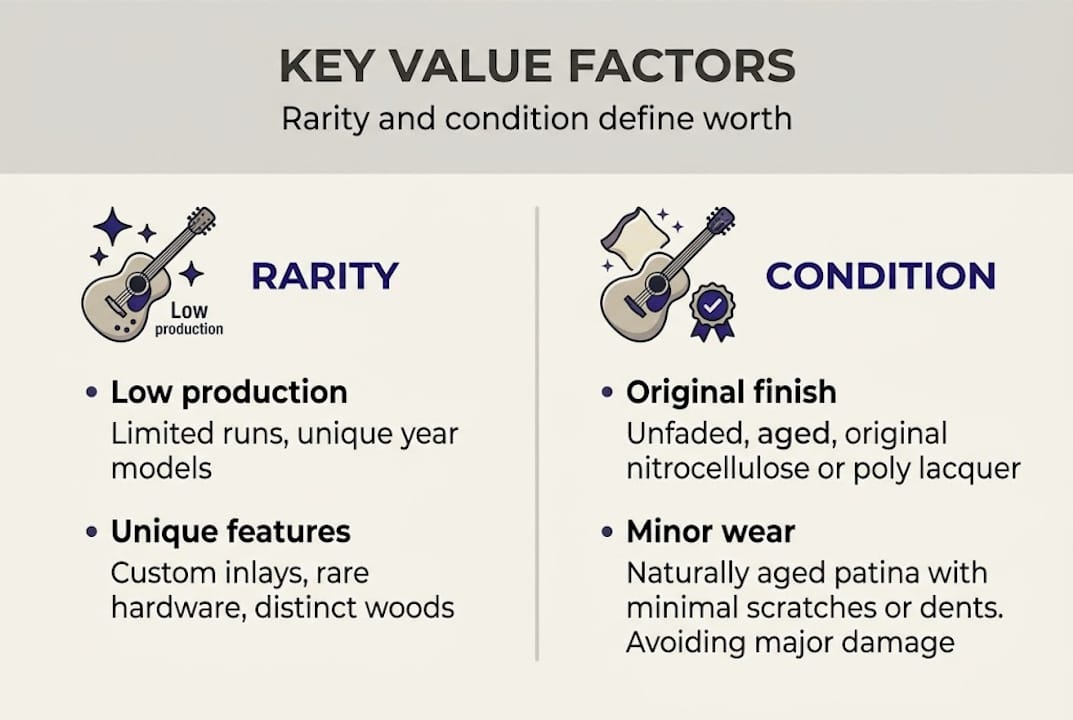
Original features and provenance amplify rarity further. A guitar built with a specific tonewoods combination, a unique binding pattern, or a transitional spec that only appeared for a few months in production carries more collector weight than a standard run instrument. Provenance, meaning documented ownership history, adds another layer. An instrument owned by a known recording artist or used on a historic session carries a story that can be verified, and that verification matters.
What does not create genuine rarity is undocumented folklore. Sellers sometimes claim a guitar was “one of only a handful” or “a factory prototype” without serial number evidence or factory records to back it up. Savvy collectors know to cross-reference claims against published standards. Gruhn’s Guide to Vintage Guitars remains the industry benchmark for verifying specs and authenticity, and it is the first tool any serious buyer should reach for when evaluating a potential acquisition.
Understanding what defines rarity also means recognizing the difference between market perception and documented fact. Here is a quick breakdown of what separates a genuinely rare instrument from one that only appears rare:
Factors that create genuine rarity:
- Verified low production numbers with serial records
- Factory-original unusual specs (wood, hardware, finish)
- Documented celebrity or studio provenance
- Transitional models with short production windows
- Custom or regional-only builds
Factors that falsely inflate perceived rarity:
- Unverified ownership stories
- Age alone without limited production evidence
- Seller claims without documentation
- Cosmetic uniqueness caused by damage or modification
| Factor | Player-grade rarity | Collector-grade rarity |
|---|---|---|
| Production numbers | Moderate, 500 to 2,000 units | Low, under 500 units |
| Original specs | Partial, some replaced parts | Full factory original |
| Provenance | Unknown or undocumented | Verified with paperwork |
| Finish | Refinished or touched up | Original, unaltered |
| Market demand | Playability focused | Investment and preservation focused |
For a deeper look at understanding guitar rarity, production records and factory documentation are your strongest allies.
The impact of condition: Originality versus modifications
If rarity sets the stage, condition often determines the drama. A guitar can be extraordinarily rare and still lose half its value the moment someone decides to refinish the body or swap out the original tuners.
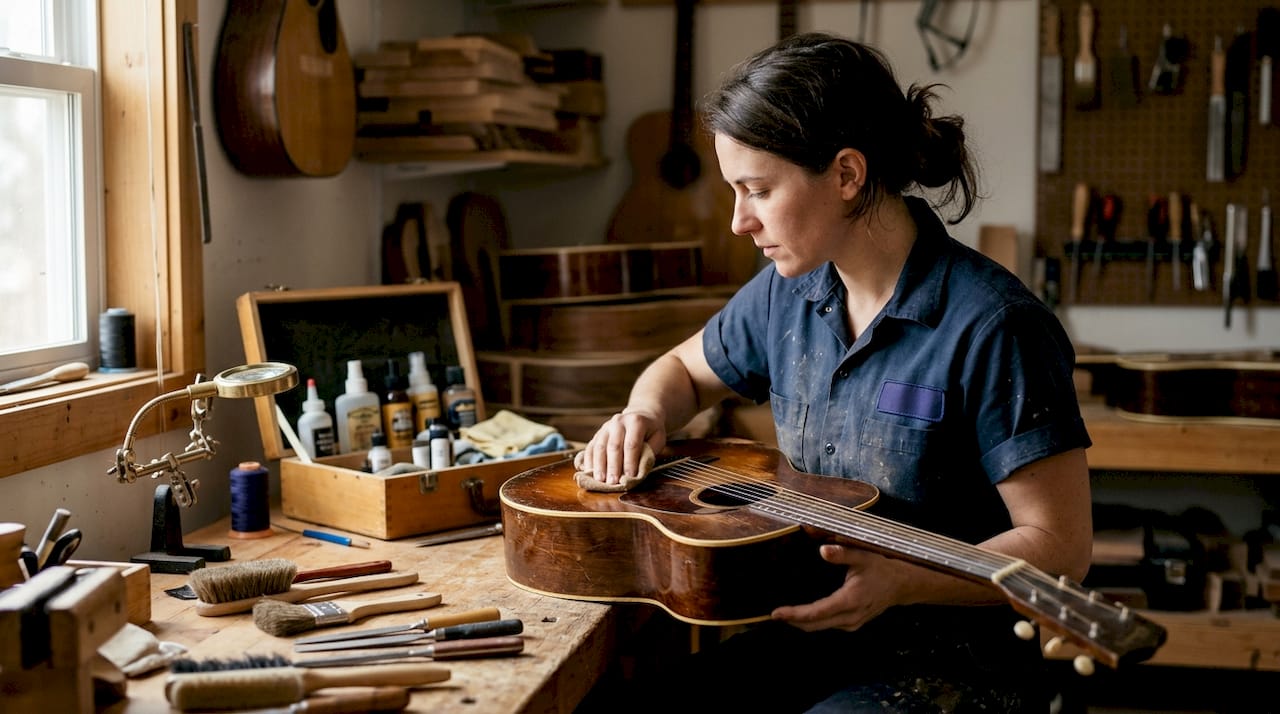
Originality in collector terms means the guitar retains its factory specifications: the original finish with no overspray, the original hardware, the original nut, and ideally the original case. Any deviation from that baseline is a modification, and modifications cost money at resale. The value of condition is not just about aesthetics. It is about the integrity of the instrument as a historical object.
Here is how common modifications affect value in practice:
- Refinishing is the single most damaging modification for collector value. A professional refin on a rare guitar can reduce its auction price by 40 to 60 percent compared to an all-original example.
- Headstock breaks and repairs, even when done cleanly, are disclosed and factored into appraisals. Invisible repairs are still repairs, and experienced buyers will find them.
- Neck resets on acoustic guitars are considered acceptable maintenance if done correctly, but a poorly executed reset or one that altered the neck angle significantly will raise flags.
- Replaced hardware including tuning machines, bridges, or pickguards reduces originality even when the replacements are period-correct. Collectors want the actual original parts.
The comparison below shows how condition shifts auction outcomes for the same rare model:
| Condition | Model | Finish status | Estimated value |
|---|---|---|---|
| Collector-grade | 1959 Gibson Les Paul | All original, checked | $350,000 to $500,000+ |
| Player-grade | 1959 Gibson Les Paul | Refin, replaced tuners | $80,000 to $150,000 |
As the Collector’s Guide to Vintage Guitars explains, player-grade instruments prioritize playability while collector-grade instruments prioritize originality. Both have a market, but they are not the same market.
Pro Tip: Natural playwear, meaning genuine fret wear, body checking from temperature changes, and honest buckle rash, is not only acceptable but often desirable. It proves the guitar lived its life without being tampered with. What kills value is cosmetic intervention: overspray, filled cracks, or refinishing intended to make an instrument look better than it is.
How rarity and condition interact: Real-world valuation examples
Having examined each factor alone, let’s explore how they combine in actual collector outcomes.
The Martin D-45 case is the clearest illustration available. The model is genuinely rare: Martin produced fewer than 100 D-45s before halting production in 1942 due to wartime material restrictions. That scarcity alone generates enormous collector interest. But when a restored D-45 sold for $187,000, the price reflected the condition penalty, not just the rarity premium. A pristine, all-original example of the same model is valued by experts at roughly $500,000. The restoration work cost the owner over $300,000 in potential value.
“Rarity gets attention, but condition wins the auction. We have seen buyers walk away from genuinely rare instruments because the finish was wrong, the tuners were replaced, or the headstock repair was not disclosed upfront. Collectors do not forgive surprises.”
This pattern repeats across the market. Consider these examples where high rarity could not overcome serious condition issues:
- A 1958 Gibson Flying V with a replaced pickguard and refin sold for under $100,000 when comparable all-original examples fetch $300,000 or more
- Pre-war Martins with non-original bridges consistently sell at 30 to 50 percent below all-original equivalents
- Early Fender Telecasters with replaced necks lose significant collector value even when the body and electronics are original
- Signed or celebrity-owned instruments with heavy modifications often sell below unsigned, pristine examples of the same model
The pattern is consistent: rarity creates the ceiling, but condition determines where you land within that range. A guitar with a 10-out-of-10 rarity score and a 4-out-of-10 condition score will not outperform a guitar with a 7-out-of-10 rarity score and a 9-out-of-10 condition score. For guidance on evaluating these factors together, our authenticity guide walks through the inspection process step by step.
Best practices: Appraising vintage guitars for buyers and collectors
With the pitfalls and evidence in mind, here is how you can smartly appraise rarity and condition for your next vintage acquisition.
The appraisal process should follow a structured sequence. Skipping steps or relying on a seller’s word is how buyers end up paying collector prices for player-grade instruments.
- Verify the serial number against published production records. For Gibson, Fender, Martin, and other major makers, serial number databases and factory records are widely available and cross-referenced in resources like Gruhn’s Guide.
- Inspect the finish under UV light. Refinishes and overspray glow differently under ultraviolet light than original nitrocellulose lacquer. This is a non-negotiable step for any serious purchase.
- Check all hardware for originality. Compare tuner buttons, bridge saddles, nut material, and pickup covers against factory spec photos from the production year.
- Examine the neck joint and headstock. Look for signs of breaks, fills, or resets. Even well-done repairs leave traces under magnification.
- Request provenance documentation. Original receipts, case candy (meaning original case materials like hangtags and polish cloths), and photographs of prior ownership all add verifiable history.
- Get a second opinion. No single guide or appraiser is infallible. Cross-reference findings with an in-person expert before committing to a significant purchase.
For a full framework on evaluating vintage quality, physical inspection must come before any price negotiation. When authenticating vintage guitars, documentation and physical evidence together build the complete picture.
Red flags to watch for:
- Finish that looks too clean or too uniform on a supposedly old instrument
- Hardware that does not match the production year
- Seller reluctance to allow UV inspection or independent appraisal
- Provenance claims without any supporting documentation
- Prices that seem too low for the stated rarity
Pro Tip: When you are unsure, always buy the best condition you can afford rather than chasing the rarest model at a lower price point. A slightly less rare guitar in exceptional original condition will outperform a legendary model with condition issues in both long-term value and resale liquidity.
Editorial perspective: The hidden truths most buyers overlook
Here is something the data does not always make obvious: most buyers know these rules intellectually but ignore them emotionally at the point of purchase.
We have seen it repeatedly. A collector falls in love with a model they have wanted for years, convinces themselves that the refin is “light” or the replaced tuners are “period-correct,” and pays near collector-grade prices for a player-grade instrument. Then, five years later, they try to sell and discover the market does not share their optimism.
The uncomfortable truth is that condition impacts value in ways that compound over time. A modification that costs you 30 percent at purchase will still cost you 30 percent at resale, but on a higher base price. The penalty does not shrink.
Collector-grade originality also holds value through market cycles in ways that player-grade instruments do not. When demand softens for a particular model, original examples retain a floor that modified versions lose quickly. Rarity attracts buyers to the category, but originality is what keeps the price stable when the market shifts. Buy the condition, not just the story.
Find, evaluate, and invest in unique vintage guitars
Applying what you have learned starts with having access to instruments that are honestly represented and expertly evaluated. That is harder to find than it should be in this market.

At Vintage Guitar World, every instrument in our curated shop is assessed for originality, condition, and documented provenance before listing. Whether you are a seasoned collector or making your first serious acquisition, you will find detailed specs, historical context, and honest condition notes on every guitar we carry. Explore our guides on vintage guitar types and what makes guitars collectible to sharpen your eye before you buy.
Frequently asked questions
Does rarity or condition matter more for vintage guitar value?
Both factors matter significantly, but condition typically outweighs rarity in most transactions. Even a rare D-45 with restoration sold for less than half the price of an all-original equivalent.
What is considered collector-grade versus player-grade?
Collector-grade guitars are all-original and unmodified, retaining factory specs throughout. Player-grade instruments have modifications, repairs, or replaced parts but remain fully playable and functional.
How do refinishing and repairs affect vintage guitar value?
Refinishing and major repairs consistently lower value, sometimes by 40 to 60 percent on rare models. Buyers across the collector market strongly prefer original, unaltered condition.
Is honest playwear acceptable in valuable vintage guitars?
Yes. Natural playwear like fret wear, body checking, and finish crazing is acceptable and often confirms authenticity. According to collector standards, heavy restoration or overspray is what genuinely damages value.
How can I verify the rarity and authenticity of a vintage guitar?
Cross-reference serial numbers and specs against documented production records and published standards. Gruhn’s Guide is the industry standard for this verification process.