













Building a truly standout guitar collection means chasing more than just old wood and vintage hardware. Rare guitar collecting thrives on the passion for instruments that combine history, artistry, and musical legacy. Every acquisition becomes a quest for craftsmanship and significance, pulling collectors toward guitars held, played, and cherished through pivotal moments in music. If you seek to deepen your understanding of what makes an instrument truly rare and valuable, this guide unpacks the key concepts, historical appeal, and practical tips that can shape your premium collection.
Table of Contents
- Defining Rare Guitar Collecting And Its Appeal
- Major Types Of Rare Guitars Explained
- Authenticity, Provenance, And Value Factors
- Key Costs, Risks, And Preservation Challenges
- Avoiding Common Pitfalls For Collectors
Key Takeaways
| Point | Details |
|---|---|
| Rare guitar collecting is about heritage and connection. | Collectors focus on assembling historically significant instruments that connect them to music history and emotional narratives. |
| Authenticity and provenance are crucial. | Establishing a guitar’s authenticity through documented ownership history ensures its value and protects against counterfeits. |
| Preservation involves ongoing investment. | Beyond the purchase price, maintaining environmental conditions and appropriate storage for rare guitars incurs ongoing costs and requires careful management. |
| Avoid emotional decision-making. | Conduct thorough research and consult experts before purchases to prevent regrets and ensure your collection aligns with your focused collecting strategy. |
Defining Rare Guitar Collecting and Its Appeal
Rare guitar collecting is far more than simply buying old instruments. It represents a deliberate pursuit of assembling historically and culturally significant guitars, often tied to famous musicians or distinctive periods in music history. At its core, this practice combines preserving musical heritage with personal satisfaction derived from owning unique, vintage instruments noted for their craftsmanship and historical value. For collectors, these guitars function as time capsules, physical connections to moments when music was shaped by the instruments themselves.
What drives someone to collect rare guitars goes beyond mere possession. The appeal lies in a deeper engagement where collectors demonstrate a combination of possessiveness, creativity, play, and aesthetic appreciation, often motivated by unique emotional and intellectual connections to their acquisitions. A 1959 Gibson Les Paul isn’t just a guitar to a collector, it’s a piece of rock music history. A pre-war Martin represents decades of tonal development and the craftsmanship of luthiers who refined their craft before modern manufacturing techniques existed. Collectors understand that each instrument carries stories from recording sessions, concert stages, and the hands that played it. This emotional resonance transforms collecting from a financial transaction into a meaningful practice of preservation and appreciation.
The appeal also stems from the tangible nature of what you’re acquiring. Unlike collecting stocks or digital assets, rare guitar collecting gives you something you can hold, feel, and play. You can examine the wear patterns on a neck that shows exactly how a guitarist held their instrument. You can listen to the tonal characteristics that made a particular vintage guitar desirable. You can research the provenance and discover which recording sessions featured your guitar or which musicians owned it before you. This combination of historical significance, physical presence, and musical authenticity creates a collecting experience that resonates deeply with serious enthusiasts who appreciate both the material and cultural importance of vintage instruments.
Pro tip: Start your collecting journey by focusing on a specific era, maker, or guitar type rather than trying to acquire everything, which helps you develop deeper expertise and makes your collection more cohesive and valuable over time.
Major Types of Rare Guitars Explained
Rare guitar collecting encompasses several distinct categories, each with its own appeal and collecting considerations. The most sought-after guitars typically fall into three main groups: vintage acoustic guitars, electric guitars, and signature artist models. Within these categories, collectors distinguish between instruments based on their era, manufacturer, construction methods, and historical significance. Understanding these types helps you identify which guitars align with your collecting goals and budget constraints.
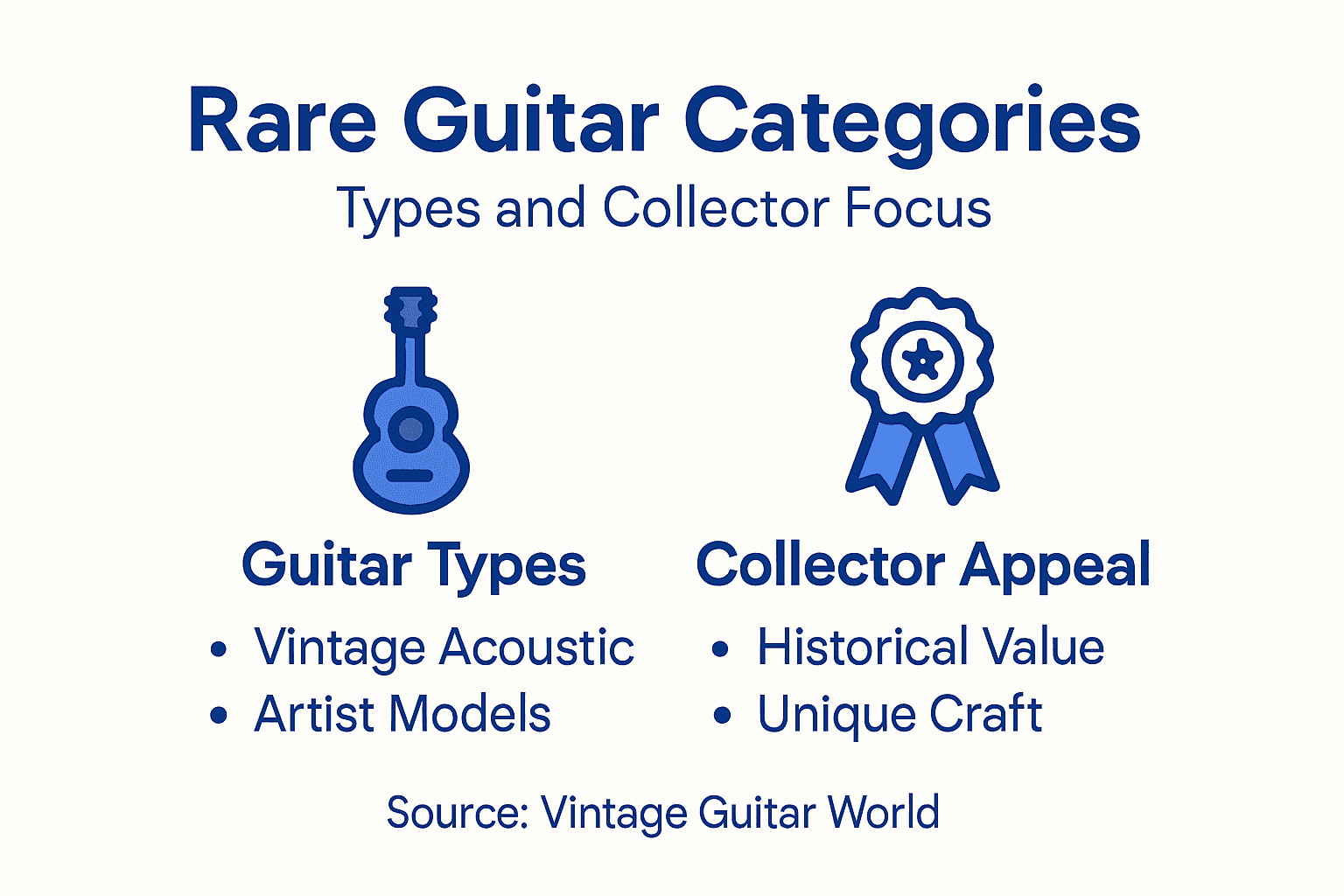
Vintage acoustic guitars represent one of the most prized collecting categories. Pre-World War II instruments from makers like Martin and Gibson command extraordinary prices due to their tonal character and craftsmanship. A pre-war Martin D-45 can fetch tens of thousands of dollars, not just because of its age but because of the specific wood quality and construction techniques used before modern manufacturing standards existed. Steel-string acoustics and classical guitars from this era remain highly desirable. Post-war vintage electrics tell a different story. Fender Telecasters and Stratocasters from the 1950s, along with Gibson Les Pauls and ES-335 models, defined rock and roll itself. These instruments carry the weight of recording history and the hands that shaped popular music. Limited production runs, variations in materials, and subtle differences in construction methods create desirable variations that collectors actively pursue. Solid-body electrics generally attract players seeking authentic vintage tone, while hollow-body and semi-hollow designs appeal to collectors interested in jazz and blues heritage.
Signature models and artist-associated guitars represent another collecting tier. When a legendary guitarist endorses or uses a specific instrument, that guitar gains both cultural and financial value. A guitar played by a famous musician on a historic recording becomes more than a tool; it becomes a tangible connection to a pivotal moment in music history. Beyond these three main categories exist specialty instruments like steel guitars, semi-hollow body electrics with unique designs, and rare handcrafted guitars from boutique luthiers. Each type offers collectors different appeals based on playability, historical context, and investment potential. The diversity within rare guitar collecting means collectors can specialize deeply in their area of passion while building meaningful, cohesive collections that reflect their musical interests.
Here’s a summary showing how the main types of rare guitars differ:
| Guitar Type | Key Characteristics | Typical Collectors | Historical Appeal |
|---|---|---|---|
| Vintage Acoustic | Pre-WWII build, premium woods | Purists, folk/blues fans | Early American sound heritage |
| Vintage Electric | 1950s-60s models, iconic designs | Rock, blues enthusiasts | Key role in rock evolution |
| Signature/Artist Models | Linked to specific musicians | Celebrity memorabilia seekers | Connection to music legends |
| Boutique/Specialty | Handcrafted, unique features | Custom build collectors | Artisanal craftsmanship focus |
Pro tip: Research production numbers and variations within your target guitar type before buying, since understanding which versions are rarest and most desirable within a specific model can dramatically increase your collection’s long-term value.
Authenticity, Provenance, and Value Factors
When you’re serious about rare guitar collecting, authenticity and provenance become non-negotiable. A guitar’s value hinges on whether it is genuinely what it claims to be and whether you can prove it. Documented ownership history is essential for establishing authenticity and legal status, helping you avoid acquiring stolen or counterfeit instruments while protecting your investment. Without solid provenance, even the most beautiful 1959 Gibson becomes a question mark. You might own something that looks identical to a vintage treasure, but if you cannot trace its history through reliable documentation, its value plummets dramatically. This is why serious collectors spend as much time investigating a guitar’s past as they do evaluating its physical condition.
Authenticity requires multiple layers of verification. Expert examination of materials, construction techniques, and wear patterns tells part of the story. A genuine vintage guitar shows specific aging characteristics that counterfeiters struggle to replicate convincingly. The patina on frets, the color shift in aged wood, the way hardware tarnishes over decades, the sound that only comes from properly aged tonewoods, these details matter. But physical inspection alone isn’t enough. Provenance research involves tracing an item’s history through documentation, expert examination, and historical inquiry to determine authenticity and legal acquisition. You need documentation. Original receipts, concert photographs showing the guitar being played, recording session notes, ownership transfer records, restoration documentation, these pieces of evidence build confidence in what you own. When you can connect a guitar to a specific musician or recording session, you’ve transformed a valuable instrument into something historically significant.
Value factors extend beyond authenticity alone. Rarity matters enormously. A 1954 Fender Stratocaster in sunburst finish with a specific serial number range commands prices that guitars from other years simply don’t match. Condition plays a crucial role too. A pristine vintage guitar worth preserving as-is carries different value than one that’s been heavily restored or modified. Original finish, unaltered hardware, and unmolested electronics all increase desirability. Market demand fluctuates as well. Certain brands, models, and eras experience collector enthusiasm cycles. A guitar that seemed overlooked five years ago might suddenly become highly sought after as musical tastes and collecting trends shift. Understanding these value factors requires continuous learning and connection to the collector community.
Review these essential factors affecting rare guitar value:
| Factor | Description | Collector Impact |
|---|---|---|
| Authenticity | Verified original and parts | Increases confidence and value |
| Provenance | Traceable ownership history | Boosts investment and resale |
| Condition | State of finish, components | Drives price and desirability |
| Rarity | Production numbers and variants | Rarer guitars are more sought-after |
| Market Demand | Current collector interest | Influences short-term value |
Pro tip: Request comprehensive documentation and provenance details before any purchase, including service records, ownership history, and any available photographs showing the guitar in use, which significantly strengthens both your legal position and resale value.
Key Costs, Risks, and Preservation Challenges
Owning rare guitars comes with substantial financial and practical responsibilities that extend far beyond the initial purchase price. Preserving rare guitars involves significant costs including maintaining appropriate environmental conditions, protecting against physical damage, and preventing material degradation. A collector with a valuable vintage guitar collection faces ongoing expenses that many buyers underestimate. You’ll need climate controlled storage space, specialized insurance coverage, potential restoration work by expert luthiers, and regular maintenance to keep instruments in playable condition. These costs add up quickly and continue for as long as you own the guitars. A $50,000 vintage guitar isn’t just a one-time purchase; it’s a commitment to preserving an irreplaceable piece of musical history.
The risks surrounding rare guitar ownership are real and multifaceted. Theft represents a genuine concern, particularly for highly valuable instruments. Environmental damage poses another serious threat. Fluctuating humidity levels can cause wood to crack or warp irreversibly. Temperature swings damage finishes and loosen glued joints. Excessive light exposure fades colors and weakens materials. Improper handling during display, playing, or transport can result in costly damage. Market fluctuations add financial uncertainty, as collector preferences shift and economic conditions change. A guitar that seemed like a solid investment five years ago might lose significant value if market demand cools. Insurance protects your financial investment but doesn’t replace the guitar itself if it’s damaged or stolen. You also face the challenge of finding qualified experts for restoration work. Not every guitar technician understands the nuances of vintage instrument preservation, and poor restoration work can permanently damage both the guitar and its value.
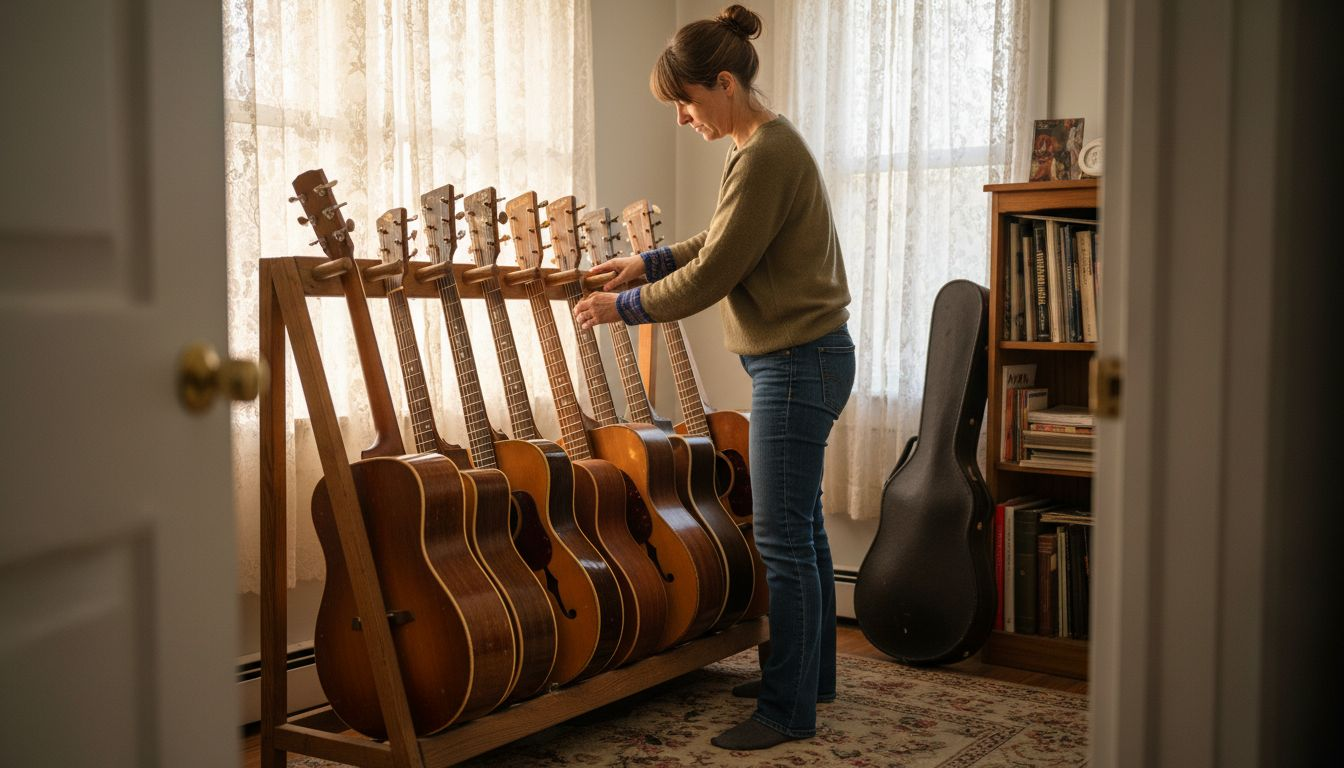
Proper care and storage demand applying conservation techniques that control temperature, humidity, and light exposure to maintain historical and aesthetic value. This means investing in humidifiers, dehumidifiers, and climate monitoring equipment. You need proper display cases that protect guitars while allowing you to enjoy them visually. Handling requires knowledge about appropriate materials and techniques. Cleaning demands careful attention because wrong products or methods can damage finishes. Many collectors struggle with balancing preservation against the desire to actually play their instruments. A guitar that never gets played remains in perfect condition but feels more like a museum piece than a musical instrument. Finding that balance requires ongoing learning and connection with experienced collectors who understand these challenges.
Pro tip: Invest in a quality humidity and temperature monitoring system for your storage area, checking readings regularly and adjusting conditions to maintain 45-55% relative humidity and consistent temperatures around 70 degrees Fahrenheit to prevent costly environmental damage.
Avoiding Common Pitfalls for Collectors
The most costly mistakes in rare guitar collecting often stem from preventable errors rooted in insufficient research and emotional decision-making. Collectors can avoid common pitfalls by educating themselves on the market, verifying provenance and authenticity, and purchasing from reputable dealers. Many new collectors fall into the trap of making impulsive purchases based on excitement rather than careful analysis. You see a guitar that looks beautiful, the price seems reasonable compared to others you’ve researched, and you buy it without fully investigating its history or condition. Six months later you discover the guitar has been heavily restored, the serial number doesn’t match documented records, or the original owner was questionable. By then you’ve already invested significant money and emotion into an acquisition that doesn’t meet your collecting standards. Taking time to verify every detail before committing funds separates experienced collectors from those who accumulate regrets along with instruments.
Another critical pitfall involves neglecting the importance of proper documentation and record keeping. Common collecting pitfalls include lack of due diligence, inadequate knowledge of valuation and authenticity, and emotional decision-making that leads to costly errors. You need to maintain detailed records of every guitar you own. Document the purchase date, sale price, seller information, condition assessment, any restoration work performed, and ongoing maintenance. Keep receipts, certificates of authenticity, appraisals, and photographs showing the instrument from multiple angles. This documentation protects you legally, supports insurance claims if something happens, and significantly enhances resale value when you eventually decide to part with a guitar. Collectors who fail to maintain proper records often find themselves unable to prove ownership history or justify valuations when they need to sell.
Many collectors also struggle with distinguishing between emotional attachment and sound collecting strategy. You might acquire guitars that don’t fit your collection’s focus simply because you love how they sound or look. While enjoying your guitars matters, allowing emotion to override strategy leads to scattered, less valuable collections. Develop a clear vision for your collection. Decide whether you’re focusing on a specific era, manufacturer, musical genre, or collecting style. This focus allows you to develop genuine expertise and build a cohesive collection that appeals to future buyers. Engage with experienced collectors through clubs, forums, and local musician communities. Their knowledge helps you avoid mistakes and make informed decisions. Understanding the historical context of your guitars and maintaining awareness of ethical collecting practices supports sustainable collection development and protects your investment long-term.
Pro tip: Before making any significant purchase, consult with at least two independent experts who can verify authenticity and condition, providing you written assessments that give you confidence and documentation to protect your investment.
Elevate Your Collection with Expertly Curated Rare Guitars
Navigating the world of rare guitar collecting can be complex when it comes to authenticity, provenance, and preservation. If you are seeking to build a focused, historically significant collection without the risks of costly mistakes or uncertain origins, Vintage Guitar World offers a trusted solution. Our expertly evaluated vintage and handcrafted guitars come with detailed histories and professional certification to help you confidently expand your collection with pieces that truly matter.

Explore our curated selection of rare instruments today at Vintage Guitar World Shop and discover guitars with proven authenticity and exceptional condition. Whether you focus on vintage acoustics, iconic electric models, or artist signature instruments, our personalized service supports your passion and investment goals. Don’t wait to acquire a meaningful guitar that connects you to music history. Begin your journey with reliable expertise and exclusive options now.
Frequently Asked Questions
What is rare guitar collecting?
Rare guitar collecting involves the pursuit of assembling historically and culturally significant guitars, often linked to famous musicians or specific music eras. It combines preservation of musical heritage with personal satisfaction derived from owning unique, vintage instruments.
Why do people collect rare guitars?
People collect rare guitars due to their emotional and intellectual connections to the instruments, as well as their historical significance. Each guitar often carries stories from musicians and recording sessions, transforming collecting into a meaningful practice of preservation.
What are the main types of rare guitars?
The main types of rare guitars include vintage acoustic guitars, vintage electric guitars, and signature artist models. Each type has unique characteristics and appeals to different types of collectors based on their musical interests and collecting goals.
How does authenticity impact the value of rare guitars?
Authenticity significantly impacts the value of rare guitars. A guitar’s worth depends on whether it is genuinely what it claims to be and whether its ownership history is well-documented. Provenance plays a critical role in establishing both value and legal status, guiding collectors to avoid counterfeit or stolen instruments.
Recommended
- Why we love vintage guitars – Vintage Guitar World
- Used guitar or vintage guitar before a new instrument from a luthier
- Warum wir Vintage Gitarren lieben – Vintage Guitar World
- The history of the electric guitar
- Role of Scarcity in Luxury Marketing: Complete Guide – Corrado Manenti
- 10 designer buys that are worth the investment | B Woman