














Finding a guitar that represents true craftsmanship is harder than it sounds. Mass production has flooded the market with instruments that look the part but fall short on the details that matter most to serious collectors. The difference between a factory-made guitar and a genuine handcrafted masterpiece often hides in places most buyers never think to check: the interior bracing, the glue joints, the way the wood responds when you simply tap the top. This article walks you through the criteria that separate exceptional instruments from ordinary ones, spotlights the most celebrated examples, and gives you a practical framework for making smarter decisions as a collector.
Table of Contents
- How to recognize high-quality guitar craftsmanship
- Pre-war Martin guitars: The pinnacle of traditional craftsmanship
- Signature bracing and wood choices: What sets great instruments apart
- Modern handcrafting masters: Today’s most respected luthiers
- Comparing vintage and modern handcrafted guitars
- A collector’s insight: Why true craftsmanship transcends generations
- Discover and collect fine examples of guitar craftsmanship
- Frequently asked questions
Key Takeaways
| Point | Details |
|---|---|
| Old world materials | Superior vintage guitars use aged woods and hide glue for unique resonance and value. |
| Masterful techniques | Hand-scalloped bracing and precise craftsmanship define collectible guitars. |
| Modern luthiers matter | Boutique builders today often match traditional quality with innovative touches. |
| Smart collecting | Compare vintage and modern handcrafted guitars based on playability, tone, and rarity. |
How to recognize high-quality guitar craftsmanship
Before you can appreciate a great guitar, you need to know what you’re looking at. The attributes that define exceptional craftsmanship are specific, and once you know them, they become impossible to ignore.
The most important markers include:
- Old growth wood: Slow-grown spruce and rosewood have tighter grain lines, which translate directly into better resonance and longer sustain.
- Hand-scalloped bracing: Luthiers shave bracing by hand to reduce weight while preserving structural integrity, a process no CNC machine replicates with the same sensitivity.
- Hide glue joints: Traditional hide glue transmits vibration more efficiently than modern synthetic adhesives, and it’s reversible for future repairs.
- Hand-applied finish: Thin nitrocellulose lacquer or French polish allows the wood to breathe and age naturally, unlike thick polyester finishes that dampen tone.
The contrast between vintage handcrafting and modern factory production is stark. Pre-war Martin guitars demonstrate how old growth woods, hide glue, and hand techniques produce resonance that improves with age, something modern CNC production simply cannot replicate over the same timeline. Understanding why old guitars sound better comes down to exactly these material and process differences.
Fretwork quality is another tell. On a well-made guitar, fret ends are smooth, level, and dressed so your hand glides without catching. On a budget instrument, you’ll feel sharp edges immediately. The guitar bracing effects on tone and volume are measurable, not just subjective.
“The interior of a guitar tells you more about its quality than the exterior ever will. A beautiful finish can hide a multitude of sins.”
Pro Tip: Use a small mirror and a flashlight to inspect the interior bracing, glue joints, and any finishing flaws before committing to a purchase. What you find inside is far more revealing than the surface.
Paying attention to wood types and their sound will also sharpen your eye for quality before you even play a note.
Pre-war Martin guitars: The pinnacle of traditional craftsmanship
If you want a single benchmark for what guitar craftsmanship can achieve, pre-war Martin acoustics (built before 1942) set the standard that every serious collector measures against.
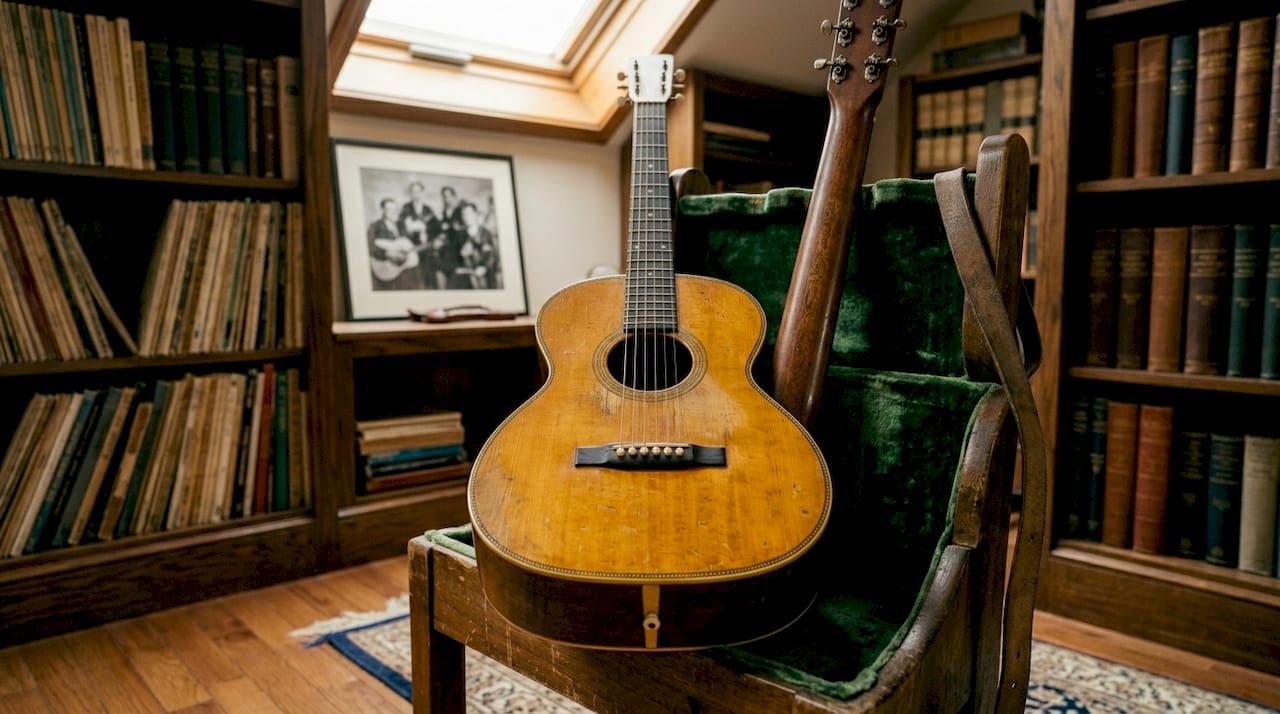
These instruments were built with materials and methods that no longer exist at scale. Pre-war Martin guitars feature old growth Adirondack spruce tops, Brazilian rosewood back and sides, hide glue joints, and hand-scalloped bracing, a combination that produces superior resonance and tone that has only deepened over the decades.
Key construction features include:
- Adirondack spruce tops: Stiffer and lighter than modern Sitka spruce, producing a louder, more complex tone with exceptional headroom.
- Brazilian rosewood back and sides: Dense, oily, and rich in overtones, Brazilian rosewood is now a protected species, making original examples irreplaceable.
- Hand-scalloped X-bracing: Martin introduced X-bracing in the 1840s, and the pre-war scalloped version is widely considered the most responsive ever made.
- Hide glue construction: Every joint transmits vibration rather than absorbing it.
| Feature | Pre-war Martin | Post-war Martin |
|---|---|---|
| Top wood | Adirondack spruce | Sitka spruce |
| Back and sides | Brazilian rosewood | Indian rosewood |
| Bracing | Hand-scalloped X | Standard X |
| Glue type | Hide glue | Synthetic glue |
| Rarity | Extremely high | Moderate |
The rarity factor is significant. Only 30 D-series Martins were made before 1934, making surviving examples extraordinarily scarce. Exploring Martin guitar history reveals how these construction decisions were practical at the time, not deliberate attempts to create collector value, which makes the instruments even more authentic. For a deeper look at what defines this era, the guide on pre-war guitars is essential reading.
Signature bracing and wood choices: What sets great instruments apart
Bracing is the skeleton of a guitar’s tone. Most players never see it, but every note you hear passes through it.
The three main bracing styles each serve a different tonal purpose:
| Bracing type | Best for | Tonal character | Sustain impact |
|---|---|---|---|
| X-bracing (scalloped) | Steel-string acoustic | Balanced, projecting | +15 to 20% vs. standard |
| Standard X-bracing | Steel-string acoustic | Clear, focused | Moderate |
| Fan bracing | Classical/flamenco | Warm, complex | High |
According to research on acoustic bracing patterns, X-bracing enhances sustain by 15 to 20% compared to standard ladder bracing, while scalloped versions add bass richness that collectors prize. Fan bracing, used in classical guitars, produces the warm, nuanced response that makes Spanish instruments so expressive.
Wood selection works in tandem with bracing. Old growth spruce has a higher stiffness-to-weight ratio than younger timber, which means it vibrates more freely and produces more complex overtones. The tonewood impact on sound and value is one of the most important factors in determining both playability and long-term collector worth.
Rosewood and mahogany back and sides each shape the tonal character differently. Rosewood adds sparkle and complexity. Mahogany delivers warmth and midrange focus. Neither is objectively better, but understanding the difference helps you match an instrument to your musical goals.
The aging and resonance relationship is equally important. As wood dries and stiffens over decades, the guitar literally becomes a better instrument, which is why a well-preserved 1930s Martin sounds unlike anything built today.
Pro Tip: When testing a guitar, listen for long sustain and clear separation between individual notes. These are direct signs of quality bracing and well-matched tonewoods working together.
Modern handcrafting masters: Today’s most respected luthiers
Vintage guitars get most of the attention, but some of the most extraordinary craftsmanship being produced right now comes from independent luthiers working in small shops around the world.
Builders like Collings, Bourgeois, and Santa Cruz have built reputations by refusing to cut corners. They hand-select every piece of wood, use hide glue on critical joints, and apply thin nitrocellulose finishes that allow the instrument to age naturally. The result is a guitar that sounds exceptional from day one and improves over decades.
What separates these builders from factory production:
- Personal wood selection: Each top is tap-tested by hand before it’s ever cut to shape.
- Traditional joinery: Hide glue and careful fitting of every component, not just the visible ones.
- Low production volume: A single luthier might complete 20 to 50 guitars per year, allowing genuine attention to each instrument.
- Direct builder relationships: Many collectors work directly with luthiers to specify tonewoods, bracing weight, and finish type.
“The hands that build a guitar leave something in it that no machine can add. You hear it the moment you play the first chord.”
The pre-war Martin approach of prioritizing old growth woods, hide glue, and hand techniques is very much alive in these modern shops. The difference is that today’s luthiers also benefit from decades of acoustic research, allowing them to refine bracing geometry with a precision that even the best pre-war builders couldn’t access.
For collectors, the opportunity is real. Exploring handcrafted guitar craftsmanship today means you can acquire an instrument with genuine heritage techniques and the added advantage of knowing its complete history from the moment it was built.
Comparing vintage and modern handcrafted guitars
Choosing between a vintage instrument and a modern handmade guitar is one of the most common decisions collectors face. Both have genuine strengths, and the right choice depends on what you value most.
| Factor | Vintage guitar | Modern handcrafted |
|---|---|---|
| Tonal maturity | Fully developed | Developing over time |
| Material rarity | Often irreplaceable | High quality, available |
| Playability | May need setup | Ready to play |
| Investment certainty | Established market | Growing recognition |
| Provenance | Historical significance | Fully documented |
As pre-war construction research confirms, vintage instruments benefit from aged wood that has already reached peak resonance, while modern handmade guitars are still on that journey. But modern builders have access to better setup tools, more consistent hardware, and decades of acoustic science.
Here’s a practical guide for making your decision:
- Define your primary goal. Are you buying to play, to collect, or both? Vintage guitars with significant collector value may be too precious for regular gigging.
- Set a realistic budget. Pre-war Martins can reach six figures. Top modern luthiers produce exceptional instruments at a fraction of that cost.
- Assess playability honestly. Many vintage guitars need neck resets and refrets. Factor in setup costs.
- Research provenance carefully. For vintage instruments, documentation matters enormously for value and authenticity.
- Consider the aging trajectory. A modern handcrafted guitar bought today may be a significant collector piece in 30 years.
Understanding guitar aging and its impact on value helps you see both categories as points on the same long arc of craftsmanship.
A collector’s insight: Why true craftsmanship transcends generations
After handling hundreds of guitars across both categories, one thing becomes clear: the instruments that stay with you are never defined by their age alone. They’re defined by the decisions a maker made when no one was watching.
There’s a persistent myth in collecting circles that only old guitars carry real sophistication. That view underestimates what today’s best luthiers are doing. A Collings or Bourgeois built with the same reverence for materials and process as a pre-war Martin is not a lesser instrument. It’s a different chapter of the same tradition.
The uncomfortable truth is that many collectors overpay for age and underpay for skill. A 1938 Martin D-28 commands its price partly because of genuine acoustic superiority, but also because of scarcity and mythology. A modern master-built guitar with equivalent materials and technique may offer comparable tone at a fraction of the price.
What we’ve learned from years in this market is that the qualities that make old guitars sound exceptional are reproducible when a luthier truly understands them. The deepest value lives in guitars where time-honored technique meets genuine mastery, regardless of the decade on the label.
Discover and collect fine examples of guitar craftsmanship
If this article has sharpened your eye for what separates an ordinary guitar from a genuine masterpiece, the next step is finding instruments that meet that standard.

At Vintage Guitar World, we curate a carefully selected inventory of vintage and handcrafted guitars, each evaluated for construction quality, tonal character, and collector value. Whether you’re drawn to pre-war acoustics or modern boutique builds, our guides on vintage guitar types and investment value and handcrafted guitar craftsmanship give you the context to buy with confidence. Browse our current inventory to find instruments that represent the best of what guitar making has ever produced.
Frequently asked questions
What makes pre-war Martin guitars so valuable to collectors?
Pre-war Martins use old growth woods, hand-scalloped bracing, and hide glue, producing exceptional resonance and a level of rarity that makes surviving examples irreplaceable.
How do bracing patterns affect a guitar’s sound and value?
X-bracing boosts sustain and projection while scalloped bracing enriches bass response; both patterns directly influence tone quality and collector desirability.
Are modern handcrafted guitars as valuable as vintage guitars?
Modern hand-built guitars can absolutely rival vintage value when a skilled luthier uses top-grade materials and the same traditional techniques as pre-war builders.
What are key features to check before buying a handcrafted guitar?
Inspect wood grain tightness, bracing style, glue joint quality, fret dressing, and overall resonance. These critical construction attributes separate genuine craftsmanship from factory production.