












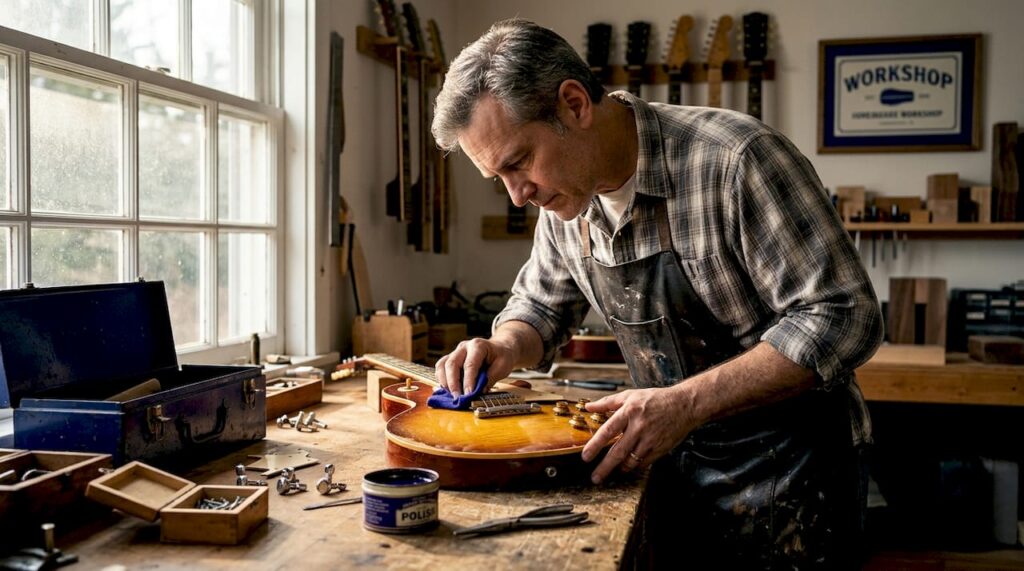

TL;DR:
- Restoration can significantly enhance a vintage guitar’s market value, playability, and historical integrity.
- However, the benefits depend on the instrument’s rarity, pre-restoration condition, and the quality of work.
Every serious collector eventually faces the same crossroads: leave a vintage instrument in its original, worn state or invest in professional restoration to unlock its full potential. It’s a decision that touches on market value, playability, historical integrity, and personal attachment all at once. The right call depends on knowing exactly what restoration can and can’t deliver. This article walks through the real, documented benefits of guitar restoration, from boosted resale prices to revived tone, so you can make that decision with clear eyes and solid information.
Table of Contents
- Why restore your vintage guitar? Key benefits explained
- Boosting collectible value: What the evidence shows
- Improved tone and playability: More than a cosmetic upgrade
- Historical preservation and authenticity: The collector’s balancing act
- Making the restoration decision: Practical advice for collectors
- Our take: What most collectors miss about restoration
- Explore more: Enhance your collection with expert insight
- Frequently asked questions
Key Takeaways
| Point | Details |
|---|---|
| Value can increase | Expert restoration often boosts a guitar’s market worth and collectability. |
| Enhanced playability | Fresh frets and neck repairs can return classic guitars to professional playing quality. |
| Preserve history | Using the right materials and methods helps maintain a guitar’s authenticity and provenance. |
| No universal formula | Restoration outcomes depend on the instrument, restorer skill, and parts used. |
Why restore your vintage guitar? Key benefits explained
Collectors know that deciding to restore isn’t simple, so what are the true advantages? The short answer is that a well-executed restoration touches nearly every dimension of a guitar’s worth. It can make an unplayable relic into a living instrument again, lift its market appeal, and protect its historical story for the next generation of owners.
The core benefits most collectors care about include:
- Enhanced market value: A professionally restored guitar in excellent playing condition typically commands a higher asking price than the same model in rough, unplayed shape.
- Improved playability: Worn frets, warped necks, and dead electronics can make a vintage instrument frustrating to play. Restoration addresses all of that directly.
- Historical preservation: Careful restoration, especially with original or period-correct parts, keeps the guitar’s story alive rather than letting it deteriorate beyond recognition.
- Increased collectability: A restored guitar with solid documentation and provenance sits in a stronger market position than one with unknown repair history.
- Personal connection: For many collectors, playing the instrument matters as much as owning it. Restoration makes that possible.
The results you get depend heavily on two factors: the pre-restoration condition of the instrument and the skill level of the luthier handling the work. A highly skilled restorer working on a guitar in moderate condition will almost always outperform an inexperienced one working on a guitar in excellent condition. Understanding restored guitars and value before you commit helps you set realistic expectations going in.
Pro Tip: Before authorizing any restoration work, consult with at least two independent luthiers who specialize in vintage instruments. Their assessments of condition and recommended scope of work should align closely. A wide gap between their recommendations is a red flag worth investigating.
Boosting collectible value: What the evidence shows
With the benefits outlined, let’s see what restoration truly does for a guitar’s market value. The most instructive case study available to collectors is the documented restoration of a 1962 Gibson Les Paul Custom, a guitar that represents one of the most coveted eras of American electric guitar manufacturing. According to the restoration record, the restored instrument sold for around $40,000, a figure that reflects both the guitar’s rarity and the quality of the restoration itself.
| Restoration factor | Impact on value |
|---|---|
| Original hardware retained | High positive impact |
| Period-correct replacement parts | Moderate positive impact |
| Modern replacement parts used | Neutral to negative impact |
| Professional luthier documentation | High positive impact |
| Unknown repair history | Negative impact |
| Full cosmetic and structural work | Case-specific impact |
That $40,000 sale figure is striking, but it would be misleading to treat it as a universal benchmark. The evidence is clear that value gains are case-specific, driven by the rarity of the model, the quality of materials used in the restoration, and the reputation of the luthier who performed the work. A 1962 Les Paul Custom is not a common guitar. Applying the same restoration logic to a mass-produced instrument from the same era would produce very different financial outcomes.
“Understanding when restoration adds value requires looking at the full picture: the instrument’s rarity, its pre-restoration condition, and whether the work respects the guitar’s original character. Get all three right, and restoration becomes one of the smartest investments in a collector’s career.”
Collectors serious about value preservation should study when restoration adds value carefully before spending on work that may not return what they expect. The authentic preservation guide provides a detailed framework for evaluating these decisions.
Improved tone and playability: More than a cosmetic upgrade
Many collectors wonder: does restoration actually improve the playing experience as much as the resale value? In verified restoration cases, the answer is a strong yes, provided the work is done correctly.
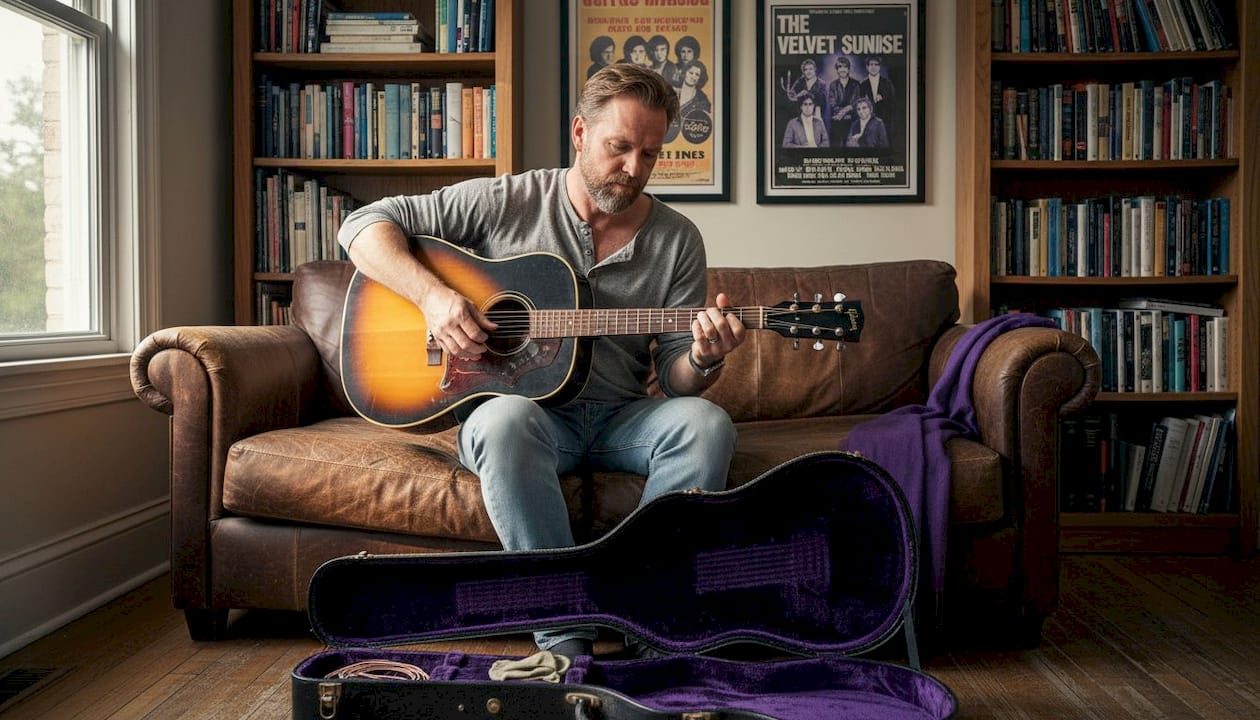
The 1962 Gibson Les Paul Custom case is instructive here too. Documentation confirms that restoration recovered the Les Paul’s warm tone, returning a guitar that had become difficult and unreliable to play into an instrument that felt and sounded the way it was built to. That kind of transformation is not cosmetic. It requires skilled fretwork, structural neck repair, and careful electronics revival.
Here’s a before-and-after comparison of what professional restoration typically delivers:
| Feature | Before restoration | After restoration |
|---|---|---|
| Action | High or uneven, difficult to fret | Low, consistent, comfortable |
| Tone | Muffled, thin, or dead due to worn parts | Full, warm, characteristic of the era |
| Sustain | Reduced due to loose joints or neck issues | Restored through proper structural repair |
| Electronics | Crackling, intermittent, or completely dead | Clean signal, full control response |
| Frets | Worn, flat, or pitted | Dressed or replaced for accurate intonation |
| Reliability | Unpredictable, requires constant adjustment | Stable and consistent during play |
When commissioning restoration work, the scope of what you request matters enormously. A thorough restoration should include:
- Full fret inspection and dressing or replacement, depending on wear level
- Neck reset or adjustment to achieve correct geometry and comfortable action
- Electronics cleaning and repair, including pots, switches, and jack sockets
- Tuner inspection and lubrication or replacement with period-correct equivalents
- Body and finish stabilization to prevent further deterioration without altering original appearance
- Structural joint inspection to catch hidden cracks or loose bracing before they worsen
Guides on restoring tone and playability walk through these steps in detail. For collectors who want to evaluate the results themselves, authentic sound testing methods provide a practical framework for assessing whether a restoration truly delivered.
Pro Tip: Seek out luthiers who specifically reference period-correct techniques in their work descriptions. A luthier who restores vintage instruments using the same construction methods and materials common to the original production era will produce results that stand up to expert scrutiny and hold their value over time.
Historical preservation and authenticity: The collector’s balancing act
As playability climbs, collectors must also consider preserving each guitar’s story and legacy. This is where restoration becomes genuinely complex, because the decisions made during the process can either protect a guitar’s provenance or permanently diminish it.
The key principle is straightforward: original parts are critical for value in any serious restoration. When original hardware, tuners, pickups, or structural components can be salvaged and returned to working condition, that always beats replacement. When replacement is unavoidable, period-correct parts sourced from the same era or made using the same specifications come next. Modern aftermarket replacements, while functional, dilute the historical record and typically reduce collector appeal.
Maintaining provenance during a restoration follows a clear sequence:
- Photograph and document everything before work begins. Record the condition of every component, including damage, wear patterns, and any previous repairs.
- Identify and retain all original parts, even those that need repair. Set aside replaced parts rather than discarding them so they can accompany the guitar as part of its history.
- Research the correct specifications for your specific model and year before sourcing any replacement parts. Incorrect period replacements are nearly as damaging to provenance as modern ones.
- Use a luthier who provides written documentation of every intervention made, including materials used, techniques applied, and parts sourced.
- Obtain certification or expert evaluation after completion, confirming what is original and what has been restored or replaced.
- Store all documentation with the instrument, including pre-restoration photographs, parts receipts, and the luthier’s work record.
“No two guitars are alike; authenticity remains paramount for collectors. A restored guitar with a clear, honest provenance record will always outperform one whose history is murky, regardless of how good the work looks on the surface.”
Guides on preserving vintage value go deep on the practices that keep a guitar’s story intact. For collectors interested in how using original components shapes a guitar’s identity and market position, that resource covers the subject with the detail it deserves.
Making the restoration decision: Practical advice for collectors
With all these factors in mind, how should a collector approach the final decision? The honest answer is that restoration is not always the right choice, and knowing when to hold back is just as valuable as knowing when to proceed.
Restoration outcomes depend entirely on the pre-restoration condition of the instrument and the skill of the luthier performing the work. A guitar in poor structural condition may require so much intervention that the restoration cost exceeds any realistic value gain. A guitar in excellent original condition might actually lose value if restoration work removes original finish, hardware, or patina that collectors prize.
Before committing, ask yourself these questions:
- What is the rarity of this model? Common production guitars rarely return restoration costs in value gains. True rarities almost always do.
- What is my primary goal? Investment return, playability, or historical preservation each call for different decisions and different restoration scopes.
- What is the current structural condition? Cosmetic wear is different from structural compromise. Neck breaks, body cracks, and delaminated tops require serious intervention. Surface wear may not.
- Can I locate a luthier with documented experience on this specific type of instrument? Vintage acoustic, classical, and electric guitars each demand different skill sets.
- What will restoration cost, and does that math work against current market prices? Get written estimates and compare them against recent comparable sales before you proceed.
- Would this guitar be more valuable untouched? Some guitars carry their wear as a badge of authenticity. Original finish and hardware in worn but complete condition sometimes outperforms a restoration on the open market.
Developing a clear framework for authentic restoration decisions saves collectors from expensive mistakes and helps them identify the instruments where restoration truly makes sense.
Our take: What most collectors miss about restoration
All guidance aside, here’s the candid truth that rarely gets discussed in collector circles. Most conversation about restoration focuses on the outcome: the sale price, the improved tone, the beautiful finish. Very little attention goes to the irreversibility of the process.
Once original finish is removed, it’s gone. Once original frets are replaced rather than dressed, that original material is gone. Once original solder joints are reflowed, the factory connection is broken. These aren’t abstract concerns. They are permanent changes that alter the instrument’s historical record in ways that can’t be undone, and they matter to the next buyer even if they don’t matter to you right now.
The collectors who build the strongest long-term collections treat restoration as a last resort for playability, not a first resort for value. They document obsessively, preserve original material wherever possible, and make peace with the idea that a guitar can be both imperfect and authentic at the same time. That combination, imperfect but authentic, often commands more respect among serious buyers than a flawless restoration by an unknown hand.
There’s also a personal dimension that the market discussions rarely capture. A restored guitar you actually play, one that feels good in your hands and sounds the way it was designed to sound, creates a connection that a display-only piece simply can’t. That experience has real value, even when it doesn’t show up in a sale price. Understanding restored guitars perspective from multiple angles helps collectors make choices that serve them well on both fronts.
The most important restoration decision isn’t whether to restore. It’s knowing exactly what you’re changing and why, and being honest about what you’re willing to give up.
Explore more: Enhance your collection with expert insight
If you’re ready to take the next step in your restoration journey, Vintage Guitar World has built a library of resources specifically for collectors who take these decisions seriously. Whether you’re evaluating your first restoration project or refining a decades-long collection strategy, the depth of information available here goes well beyond generic advice.

Explore the full restoration advantages breakdown to understand exactly what professional work delivers at each stage. For those working with acoustic instruments, the acoustic restoration guide provides a step-by-step reference tailored to the specific challenges of acoustic construction. Our team is also available for direct consultation, instrument evaluation, and certification services for collectors who want expert eyes on a specific piece before making any commitment. Reach out through the site to schedule an appointment and bring your most pressing restoration questions.
Frequently asked questions
Does restoration always increase a guitar’s value?
Restoration often increases value, but results vary by condition and quality of the work performed. There is no universal benchmark, and rare models with expert restoration tend to see the strongest returns.
Will restoration change my vintage guitar’s sound?
Yes, skilled restoration can meaningfully improve both playability and tone, as documented in cases where restoration recovered warm tone in vintage instruments. The degree of improvement depends on how much deterioration existed before the work began.
How do I keep my restored guitar authentic for collectors?
Use original or period-correct replacement parts wherever possible, since original parts are critical for value, and document every step of the restoration process in writing with photographs.
Are all vintage guitars worth restoring?
Not always. Restoration results depend on condition and rarity, and some guitars retain greater collector appeal in their original, unrestored state, particularly those with intact original finish and hardware.