













TL;DR:
- Artist-owned guitars have shaped musical genres and industry standards far beyond their auction prices. Provenance, modifications, and condition significantly influence their value as both historical artifacts and investments. Understanding their creative evolution and maintaining detailed documentation deepen both personal and collector appreciation.
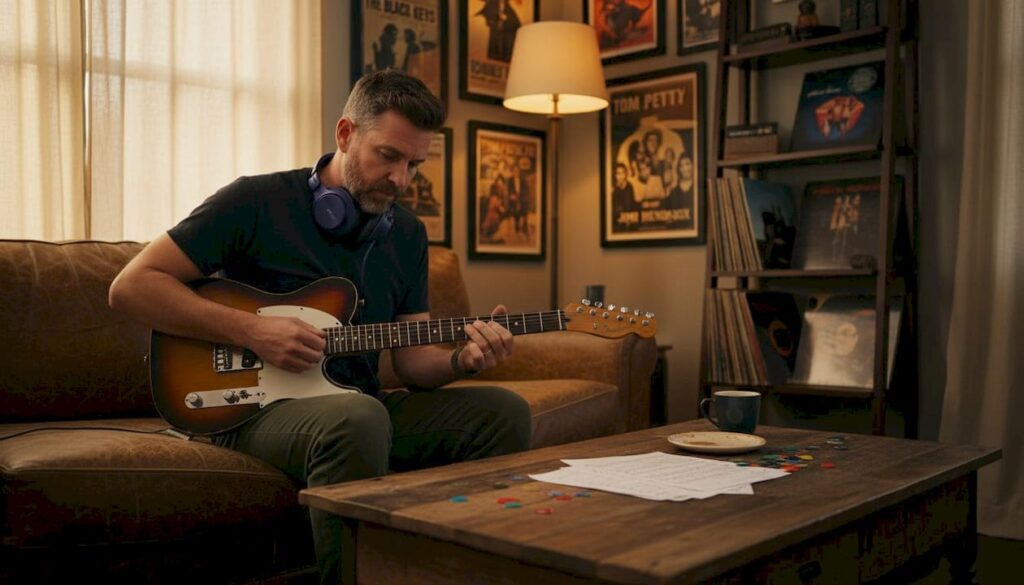
Most people encounter an artist-owned guitar and immediately think “investment” or “museum piece.” That reaction is understandable, but it misses most of the story. The role of artist-owned guitars stretches far beyond auction records and velvet ropes. These instruments shaped the sound of entire genres, drove manufacturers to rethink product lines, and gave collectors a way to hold something genuinely alive with history. Whether you play, collect, or simply love guitars, understanding what these instruments actually do for music culture changes how you see every worn fret and every scuffed body.
Table of Contents
- Key takeaways
- How artist-owned guitars became cultural artifacts
- How artist guitars drive design and innovation
- The dual identity of artist-owned guitars
- What artist guitar ownership means for different people
- Practical guidance for buying and preserving artist guitars
- My perspective on what these guitars actually represent
- Explore vintage and artist-associated guitars with Vintage-guitar-world
- FAQ
Key takeaways
| Point | Details |
|---|---|
| More than memorabilia | Artist-owned guitars actively shaped guitar design, tone preferences, and industry standards. |
| Provenance drives value | Documented ownership history can increase a guitar’s market value by 50 to 300 percent. |
| Modifications tell the story | Customizations and repairs are features, not flaws. They document an artist’s creative process. |
| Dual identity matters | These guitars function as both playable instruments and appreciating assets, depending on how they are handled. |
| Authenticity is non-negotiable | Disputed or incomplete provenance records significantly reduce collector appeal and sale price. |
How artist-owned guitars became cultural artifacts
Guitars started as working tools. A player bought one, gigged with it, and wore it down. Nobody in the early twentieth century anticipated that a battered Fender or Gibson would one day sell for millions. The shift happened gradually, then all at once.
A few pivotal things changed the trajectory:
- Iconic players elevated specific models. When Jimi Hendrix played a Stratocaster upside down and set it on fire at Monterey Pop, that instrument stopped being a Fender product and became mythology.
- Modifications created uniqueness. Artist modifications turned factory guitars into one-of-a-kind objects that could never be exactly replicated. A re-fret here, a custom pickup swap there, a different nut material. Every change told part of the story.
- Auction sales set benchmarks. David Gilmour’s “Black Strat” sold for $14.55 million, cementing the idea that artist provenance commands premiums no factory spec sheet can justify.
- The market recognized them as an asset class. Vintage guitars have averaged 12 to 15% annual returns over two decades, a figure that institutional buyers now take seriously.
The transition from player’s tool to cultural artifact did not erase the guitar’s identity as an instrument. It layered meaning on top of function. That layering is exactly what makes these pieces so compelling to musicians and collectors alike.
Pro Tip: When researching the history of a specific artist-owned instrument, focus first on the modification timeline. The order of changes often reveals which albums or tours the guitar was used on, giving you far more context than a serial number alone.
How artist guitars drive design and innovation
Here is something the collector market sometimes forgets: many of the guitar features you consider standard today started as a specific player’s experiment on a specific instrument.
“Artist-owned guitars are works in progress. They document the creative process in physical form.” This framing, applied to Eddie Van Halen’s custom builds, captures exactly why these guitars influenced design evolution so profoundly.
Van Halen’s “Frankenstrat” was not a guitar Gibson or Fender made. It was a parts guitar he assembled, painted, and rewired to get sounds nobody had produced before. The result? A generation of manufacturers began offering locking tremolos, direct-mount pickups, and through-body neck designs because players demanded what they had heard on “Eruption.” One artist’s personal tool rewired an entire product category.
The Gibson Custom Shop has operated for over 33 years setting vintage-inspired standards, and a core part of its mandate is preserving and replicating the specs of famous artist instruments. When you buy a Murphy Lab aged Les Paul, you are buying something that traces its DNA directly back to guitars specific artists played on specific recordings. The Custom Shop made artist-owned instruments the blueprint for professional quality rather than the exception to it.
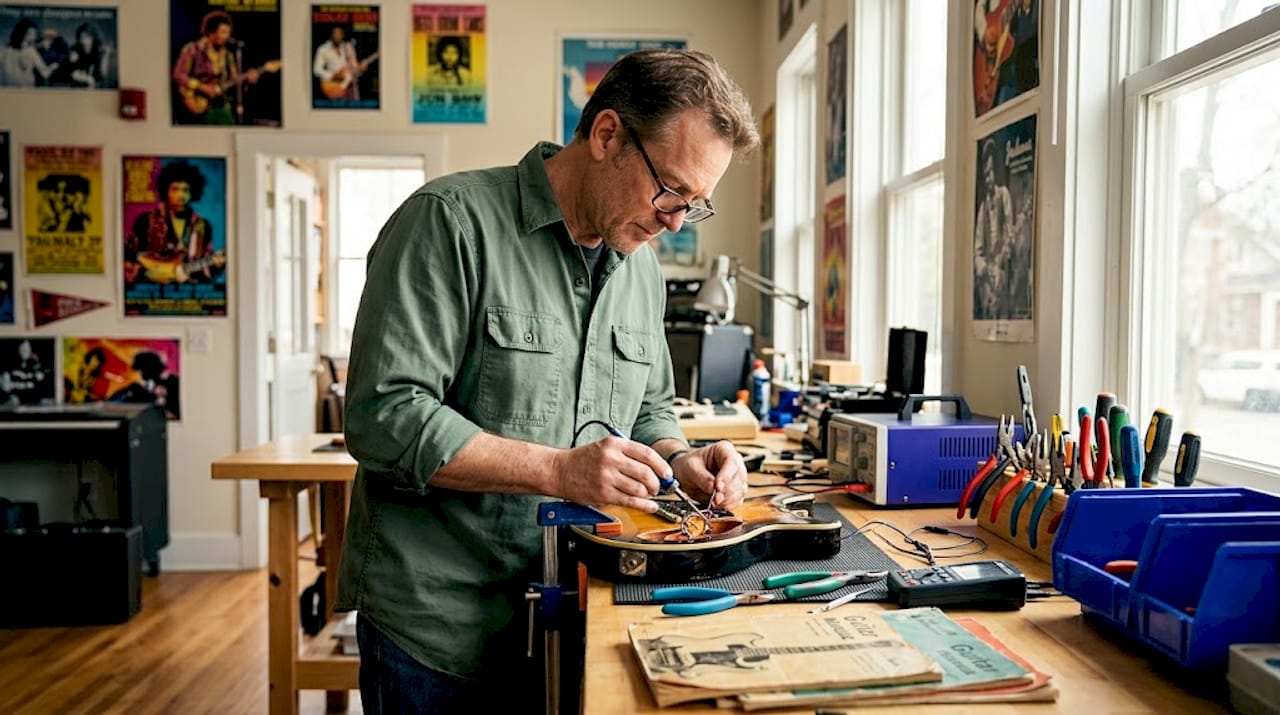
This influence runs in both directions. Artists shape manufacturer thinking, and manufacturers then offer tools that shape the next generation of artists. The impact of artist guitars on the broader music industry is genuinely cyclical, and it starts with the specific, personal choices an artist makes on their own instrument.
Pro Tip: If you want to understand what a particular artist-owned guitar contributed to design history, compare its specs to what that manufacturer released in the two to three years following the guitar’s period of public use. The timeline usually makes the connection obvious.
The dual identity of artist-owned guitars
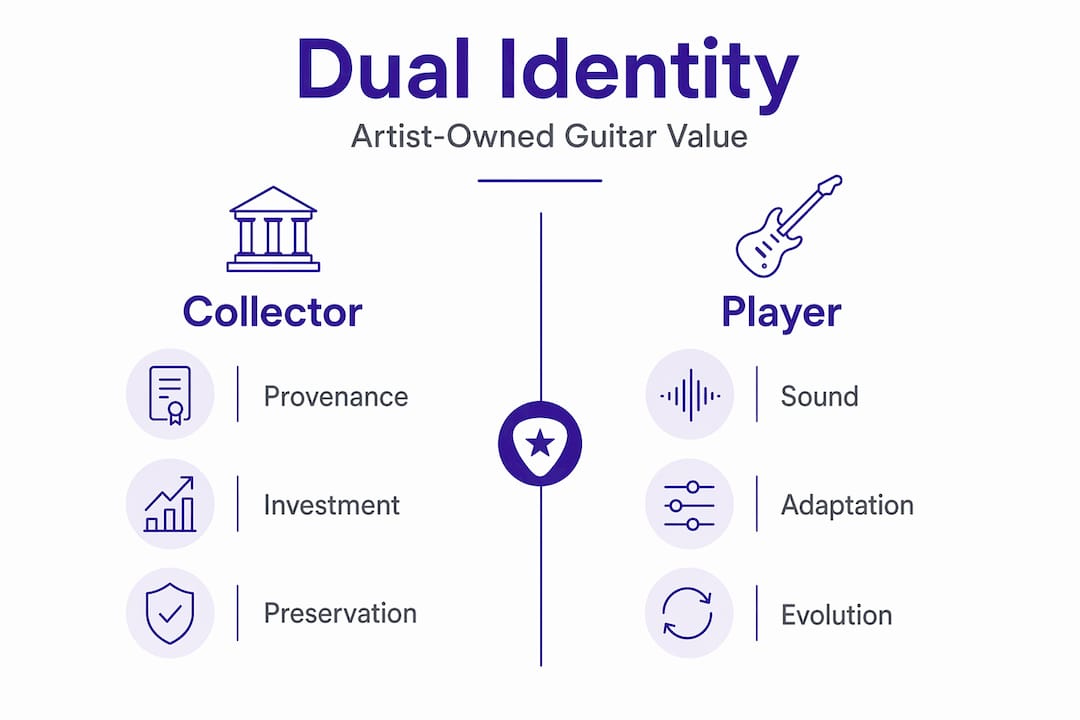
Collector culture sometimes creates a false binary: preserve it or play it. The reality is more nuanced, and understanding that nuance directly affects how you approach musician guitar ownership, whether as a buyer or a steward.
On the investment side, the numbers are clear. Vintage electric guitars have produced returns competitive with the S&P 500, and artist-owned examples sit at the top of that performance curve. The premium attached to documented ownership history is real and measurable.
| Factor | Impact on value |
|---|---|
| Documented provenance | Adds 50 to 300% premium over comparable undocumented examples |
| Original artist modifications | Treated as features; often increase desirability significantly |
| Auction sale history | Provides price anchoring and legitimacy for future transactions |
| Condition relative to use | Light wear consistent with use is acceptable; damage without context reduces value |
| Completeness of documentation | Letters, photos, receipts, and certificates all contribute to final price |
On the other side, many artists do not retain sentimentality for all their gear, which is why the market stays supplied. A guitar that shaped a career does not always stay in the artist’s hands forever. Some instruments are sold, gifted, lost, or traded. This means guitars with genuine creative history circulate more often than you might expect.
The key tension for buyers and collectors comes down to this: a guitar that gets played stays alive in a way a guitar sealed in a case does not. The “mojo” of artist-owned guitars is partly the continued use that connects owners to the original artist’s energy. Maintaining provenance documentation while still engaging with the instrument as a guitar, not a display object, is the position most serious collectors ultimately land on.
What artist guitar ownership means for different people
The role of artist-owned guitars shifts depending on who holds one. Three distinct groups relate to these instruments in meaningfully different ways.
-
Musicians approach artist-owned guitars as sources of inspiration and creative continuation. Artists develop lifelong connections to specific instruments, sometimes before they are even famous. Playing a guitar with a known creative history can unlock a different relationship with the instrument. The weight, the neck feel, the resonance. These physical qualities influenced the player who made it legendary, and they will influence you too.
-
Collectors focus on provenance, cultural significance, and long-term appreciation. For serious collectors, an artist-owned guitar represents tangible music history, something you can hold and examine in a way a recording or photograph cannot replicate. The guitar’s physical presence makes the connection to a specific moment in music real.
-
General enthusiasts are motivated by cultural connection more than investment returns. Owning or simply being near an artist-owned instrument offers a tactile relationship with music heritage. It is different from streaming an album. It is closer to reading a handwritten letter.
The examples of artists who deeply personalized their instruments are worth studying here. Carlos Santana’s association with PRS guitars, B.B. King’s lifelong bond with “Lucille,” Keith Richards and his open-G-tuned five-string Telecaster. In each case, the guitar is not separable from the artist’s identity or sound. Studying those relationships gives collectors and musicians a richer understanding of what musician guitar ownership actually produces, which is a feedback loop between person and instrument that neither could have created alone.
Pro Tip: When building a collection around artist associations, focus on guitars that were used during a specific creative period rather than guitars an artist merely endorsed. The difference in provenance quality, and in the story the guitar carries, is substantial.
Practical guidance for buying and preserving artist guitars
Getting into this space requires preparation. The market rewards knowledge and punishes hasty decisions.
- Verify provenance rigorously. Guitars without clear documented histories can lose significant value regardless of supposed association. Ask for photos, letters, receipts, setlist documentation, and any certification from appraisers or auction houses.
- Understand the modification history. What was changed, when, and by whom? Collectors value artist-driven modifications more highly than factory-original specs because those changes reflect creative milestones. But undocumented modifications from unknown sources can cloud authenticity.
- Work with credentialed appraisers. The provenance documentation process is rigorous for good reason. A qualified appraiser who specializes in vintage and artist-associated instruments will identify gaps that general valuers miss.
- Consider storage and maintenance carefully. Artist-owned guitars often carry non-standard components. Humidity control, case selection, and string gauge decisions all matter more when a guitar’s history is part of its value.
- Know the difference between artist-owned and artist-endorsed. A signature model made in the thousands is a different product than a guitar an artist actually played. Both have a place, but conflating them is a costly mistake.
For market context, Gibson and Fender hold 34% and 30% market shares respectively and dominate the artist-owned conversation simply because they are the brands most iconic players used. That concentration affects liquidity. Instruments tied to these brands tend to be easier to buy, sell, and appraise than guitars associated with boutique manufacturers.
My perspective on what these guitars actually represent
I have spent years evaluating, handling, and learning from instruments that passed through legendary hands. What I have come to believe, and what I see confirmed repeatedly, is that the financial story around artist-owned guitars is real but secondary.
What strikes me every time is the evidence of decision-making left in the wood and the metal. A replaced nut that changed the tuning stability. A pickup cavity routed at an angle nobody would do from the factory. These are not accidents. They are answers to creative problems the artist faced on a specific night, in a specific room, trying to make a specific sound. That is what you hold when you pick up one of these instruments.
I have also noticed that the people who get the most from artist guitar ownership, financially and personally, are the ones who resist the urge to freeze the instrument in amber. They study it, play it carefully when it makes sense, and invest in understanding what the artist was actually solving with each modification. The guitar rewards that curiosity in ways that a sealed display case simply cannot.
My honest take: the best reason to pursue artist-owned guitars is not what they are worth today. It is what they teach you about the relationship between a creative person and their primary tool. That education does not depreciate.
— Vintage
Explore vintage and artist-associated guitars with Vintage-guitar-world
If this article has deepened your appreciation for what artist-owned instruments represent, Vintage-guitar-world is the natural next step. The curated collection at Vintage-guitar-world spans vintage guitar types from classical and flamenco to rare electric models, each with detailed provenance context, expert evaluation, and certification services. Every instrument in the catalog is assessed for authenticity, condition, and historical significance. Whether you are looking to add a carefully documented piece to your collection, or simply want to explore guitars with genuine creative heritage, Vintage-guitar-world offers the 2026 market insights and personalized guidance that serious collectors and musicians deserve.
FAQ
What makes an artist-owned guitar different from a signature model?
An artist-owned guitar is a specific instrument an artist personally played and modified over time. A signature model is a mass-produced guitar inspired by that artist’s preferences, manufactured for the general market.
How does provenance affect an artist guitar’s value?
Documented provenance can add 50 to 300% to a guitar’s market value. Guitars with disputed or incomplete ownership histories lose significant collector appeal regardless of their claimed association.
Should you play an artist-owned guitar or preserve it?
Most serious collectors find a middle ground. Playing the instrument carefully while maintaining full provenance documentation preserves both the guitar’s history and its connection as a living instrument.
Why do artist modifications increase rather than decrease value?
Artist-driven modifications document a creative process and reflect the specific choices that shaped an artist’s sound. Collectors prize these changes as direct evidence of the artist’s work rather than as damage to factory specs.
Which guitar brands appear most often in artist ownership discussions?
Gibson and Fender dominate the conversation, holding 34% and 30% of the guitar market respectively and accounting for the majority of the most famous artist-owned and signature instruments in music history.